

Understanding medical titles can sometimes be confusing for patients. When looking for a doctor, you might notice different letters after a physician’s name, most commonly MD or DO. Both represent highly trained medical professionals, but many people still ask the same question: what is the difference between DO and MD?
In the United States, both MD and DO doctors are licensed physicians who diagnose illnesses, prescribe medications, perform surgery, and provide patient care. However, their training philosophies and educational backgrounds include a few important distinctions. Understanding these differences can help patients feel more confident when choosing a healthcare provider.
BIO
| Feature | DO (Doctor of Osteopathic Medicine) | MD (Doctor of Medicine) |
|---|---|---|
| Medical Philosophy | Focuses on whole-person care and prevention | Focuses on diagnosing and treating diseases |
| Medical School Type | Osteopathic medical school | Allopathic medical school |
| Approach to Treatment | Considers lifestyle, environment, and body systems together | Primarily focuses on medical treatments and procedures |
| Additional Training | Includes training in osteopathic manipulative treatment (OMT) | No OMT training included |
| Hands-On Techniques | May use manual techniques to treat muscles and joints | Usually relies on medication and procedures |
| View of the Body | Emphasizes the body’s ability to heal itself | Emphasizes medical intervention for treatment |
| Preventive Care | Strong emphasis on prevention and wellness | Prevention is important but not a central philosophy |
| Licensing Exam | COMLEX licensing exam | USMLE licensing exam |
| Patient Care Style | Often focuses on holistic and patient-centered care | Often focused on clinical diagnosis and treatment |
| Common Career Paths | Many enter primary care fields | More commonly found in specialized fields |
| Use of OMT | Can use osteopathic manipulative treatment | Does not use OMT |
| Overall Qualification | Fully licensed physician in the U.S. | Fully licensed physician in the U.S. |
Introduction
Many patients assume that MD doctors are more qualified than DO doctors, but this is a misunderstanding. In reality, both types of physicians complete rigorous medical training and must pass licensing exams before practicing medicine.
The main difference lies in the approach to patient care and the philosophy taught in medical school. Doctors with an MD degree follow what is known as allopathic medicine, while doctors with a DO degree are trained in osteopathic medicine, which emphasizes a holistic view of the body and its systems.
Although their training paths have unique features, both MDs and DOs work in hospitals, clinics, and medical practices across the United States. They treat patients in the same specialties and often work side by side.
Understanding Medical Degrees in the United States
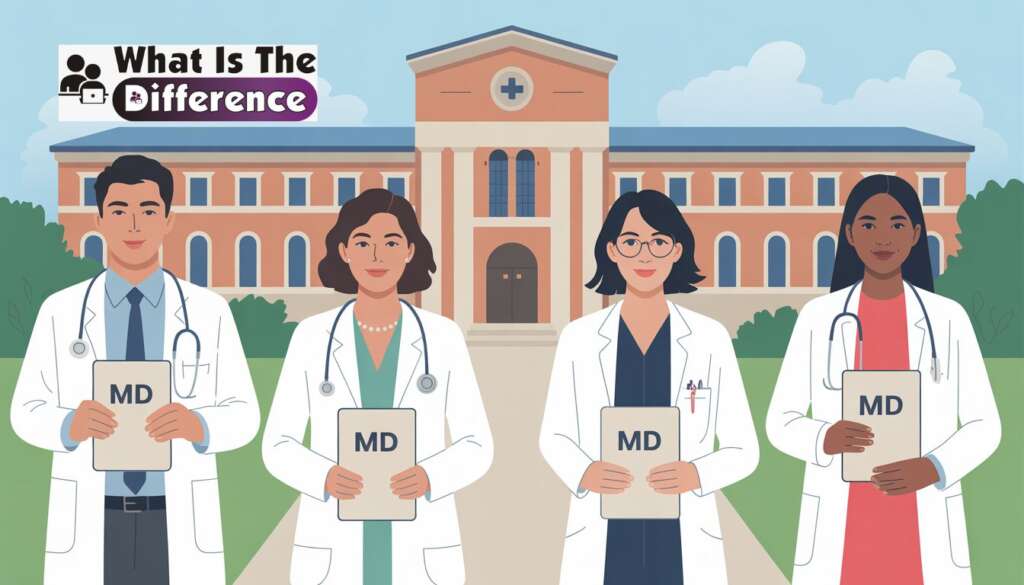
In the U.S. healthcare system, physicians generally earn one of two professional medical degrees: Doctor of Medicine (MD) or Doctor of Osteopathic Medicine (DO). Both degrees allow physicians to practice medicine and surgery in all states.
What Does MD Mean?
An MD, or Doctor of Medicine, is the traditional and most widely recognized medical degree in the United States and many other countries.
MD physicians attend allopathic medical schools, where the focus is primarily on diagnosing diseases, understanding biological processes, and treating illnesses using evidence-based medical practices.
Students who pursue an MD degree typically follow a path that includes:
- Completing a four-year undergraduate degree
- Taking the Medical College Admission Test (MCAT)
- Attending four years of medical school
- Passing licensing exams
- Completing residency training in a chosen specialty
MD programs often place a strong emphasis on medical research, clinical specialization, and advanced medical technology.
What Does DO Mean?
A DO, or Doctor of Osteopathic Medicine, is also a fully licensed physician in the United States.
DO doctors attend osteopathic medical schools, where they receive the same basic medical education as MD students but also study an additional philosophy of healthcare that focuses on treating the whole person rather than just the disease.
Osteopathic medicine emphasizes:
- The connection between the body’s structure and function
- Preventive care and healthy lifestyles
- The body’s ability to heal itself
DO students also learn a specialized technique known as osteopathic manipulative treatment (OMT), which involves hands-on manipulation of muscles and joints to relieve pain or improve physical function.
Medical Education and Training

Although their philosophies differ slightly, the educational journey for MD and DO doctors is very similar.
Admission Requirements
Both MD and DO programs require applicants to complete a rigorous academic background before medical school.
Typical requirements include:
- A bachelor’s degree in a science-related field
- High grades in subjects like biology and chemistry
- Strong performance on the MCAT exam
- Clinical experience or volunteering in healthcare
Admission to medical school is highly competitive, with thousands of applicants competing for limited seats each year.
Medical School Curriculum
Both MD and DO students attend four years of medical school.
The curriculum is generally divided into two main phases.
The first two years focus on classroom education, including subjects such as anatomy, physiology, pharmacology, pathology, and medical ethics.
The last two years involve clinical rotations in hospitals and clinics, where students work directly with patients under the supervision of experienced physicians.
The major difference is that DO students complete additional training in osteopathic manipulative medicine, often totaling more than 200 hours during medical school.
Licensing and Residency
After graduating from medical school, both MD and DO doctors must complete several more steps before they can practice independently.
These steps include:
- Passing licensing examinations
- Completing residency training in a medical specialty
- Obtaining certification from professional boards
MD graduates typically take the United States Medical Licensing Examination (USMLE), while DO graduates take the Comprehensive Osteopathic Medical Licensing Examination (COMLEX).
Once they pass these exams, both types of doctors enter residency programs, where they receive specialized training for three to seven years depending on their field.
Differences in Medical Philosophy
While the scientific training for both degrees is nearly identical, the philosophies taught in medical school differ slightly.
The Traditional MD Approach
MD doctors are trained using the allopathic model of medicine, which focuses primarily on identifying diseases and treating them with medications, surgery, or other medical procedures.
This approach emphasizes:
- Diagnosis of medical conditions
- Evidence-based treatments
- Research-driven medical practices
MD physicians often work in highly specialized areas of medicine such as cardiology, oncology, neurology, and surgery.
The Osteopathic DO Philosophy
The osteopathic approach focuses on the whole person rather than just symptoms.
DO physicians are trained to consider factors such as:
- Lifestyle and diet
- Emotional well-being
- Environmental influences
- Preventive healthcare
Osteopathic medicine also teaches that the body’s systems are interconnected, meaning that problems in one part of the body can affect others.
Because of this philosophy, many DO doctors emphasize preventive care and patient education.
Osteopathic Manipulative Treatment (OMT)
One of the most distinctive features of osteopathic medicine is osteopathic manipulative treatment, often abbreviated as OMT.
What Is OMT?
OMT involves a variety of hands-on techniques used to diagnose and treat medical problems.
These techniques may include:
- Gentle stretching
- Pressure on muscles or joints
- Movement of bones and tissues
The goal is to improve circulation, reduce pain, and support the body’s natural healing process.
When OMT Is Used
OMT is commonly used for conditions such as:
- Back pain
- Joint pain
- Muscle injuries
- Headaches
However, many DO physicians rarely use OMT in daily practice and instead rely on the same medical treatments used by MD physicians.
Specializations and Career Paths
Both MD and DO physicians can pursue any medical specialty.
Medical Specialties for MD Doctors
MD physicians often work in specialized areas of medicine.
Common examples include:
- Cardiology
- Neurology
- Surgery
- Dermatology
- Pediatrics
Many MD doctors work in large hospitals, research institutions, or academic medical centers.
Specialties Chosen by DO Doctors
DO physicians also practice in every medical specialty, including surgery and internal medicine.
However, many DO doctors historically choose careers in primary care, including family medicine, pediatrics, and internal medicine.
Primary care physicians often serve as the first point of contact for patients seeking medical treatment.
Similarities Between DO and MD Doctors
Despite their philosophical differences, MD and DO physicians share many similarities.
Both types of doctors:
- Attend four years of medical school
- Complete residency training
- Can prescribe medication
- Can perform surgery
- Can specialize in any field of medicine
- Must be licensed to practice
In fact, the training and practice of DO and MD physicians are now considered largely equivalent in the United States.
How Patients Experience the Difference
For most patients, the experience of visiting a DO or MD doctor is very similar.
Both physicians perform physical exams, diagnose illnesses, recommend treatments, and provide preventive healthcare.
The main difference a patient might notice is that DO physicians may spend more time discussing lifestyle, prevention, and overall health.
Some DO doctors may also incorporate hands-on treatment techniques when appropriate.
Choosing Between a DO and an MD
When selecting a doctor, the most important factor is not the degree but the physician’s experience, expertise, and communication style.
Patients should consider:
- The doctor’s specialization
- Their years of experience
- Patient reviews and reputation
- Comfort and trust during consultations
In most cases, the degree itself has little impact on the quality of care.
Common Misconceptions About DO and MD
There are several myths about these medical degrees.
One common misconception is that DO doctors are less qualified than MD doctors. In reality, both complete extensive medical training and must meet the same licensing requirements.
Another myth is that DO physicians only practice alternative medicine. In fact, DO doctors use the same scientific medical treatments as MD physicians.
Both groups rely on modern medicine, diagnostic tools, and evidence-based treatments.
The Growing Role of DO Physicians in the United States
Over the past two decades, the number of osteopathic physicians has grown significantly.
Today, DO doctors represent a growing portion of the American healthcare workforce, and many serve in leadership roles in hospitals, government agencies, and academic institutions.
Osteopathic medical schools have expanded across the country, helping address physician shortages in both urban and rural communities.
Conclusion
Understanding what is the difference between do and md helps patients navigate the healthcare system with greater confidence.
Both DO and MD physicians are fully licensed doctors who complete rigorous education and training. They diagnose illnesses, prescribe medication, perform surgery, and provide medical care in every specialty.
The primary distinction lies in their medical philosophy and training emphasis. MD doctors follow a traditional medical model focused on diagnosing and treating disease, while DO doctors receive additional training in a holistic approach and hands-on techniques.
In practice, however, the differences are small. Both types of physicians work together in hospitals and clinics across the United States, delivering high-quality care to millions of patients every year.
For patients choosing a doctor, the most important factor is not whether the physician is an MD or a DO, but whether that doctor provides knowledgeable, compassionate, and effective medical care.
What Is the Difference Between Assault and Battery in Law?
Frequently Asked Questions
1. Are DO doctors real medical doctors?
Yes, DO doctors are fully licensed physicians in the United States. They attend four years of medical school, complete residency training, and pass medical licensing exams just like MD doctors. Both can diagnose illnesses, prescribe medication, and perform surgery.
2. What is the difference between DO and MD in daily medical practice?
In everyday practice, the difference is usually small. Both treat patients using modern medical science. However, DO physicians are trained to consider the whole person and may place additional emphasis on preventive care, lifestyle factors, and the body’s natural healing abilities.
3. Can DO doctors become specialists like surgeons or cardiologists?
Yes. DO physicians can specialize in every area of medicine, including surgery, cardiology, dermatology, and neurology. After medical school, they complete the same residency training programs as MD physicians.
4. Do DO doctors use different treatments than MD doctors?
Most treatments are the same. Both MD and DO doctors rely on scientific evidence, medications, and medical procedures. Some DO physicians may also use osteopathic manipulative treatment, a hands-on technique used to relieve pain or improve body movement.
5. Should patients choose a DO or an MD doctor?
The choice often depends more on the individual doctor than the degree. Experience, communication style, and patient trust usually matter more than whether the physician is a DO or an MD.