Introduction
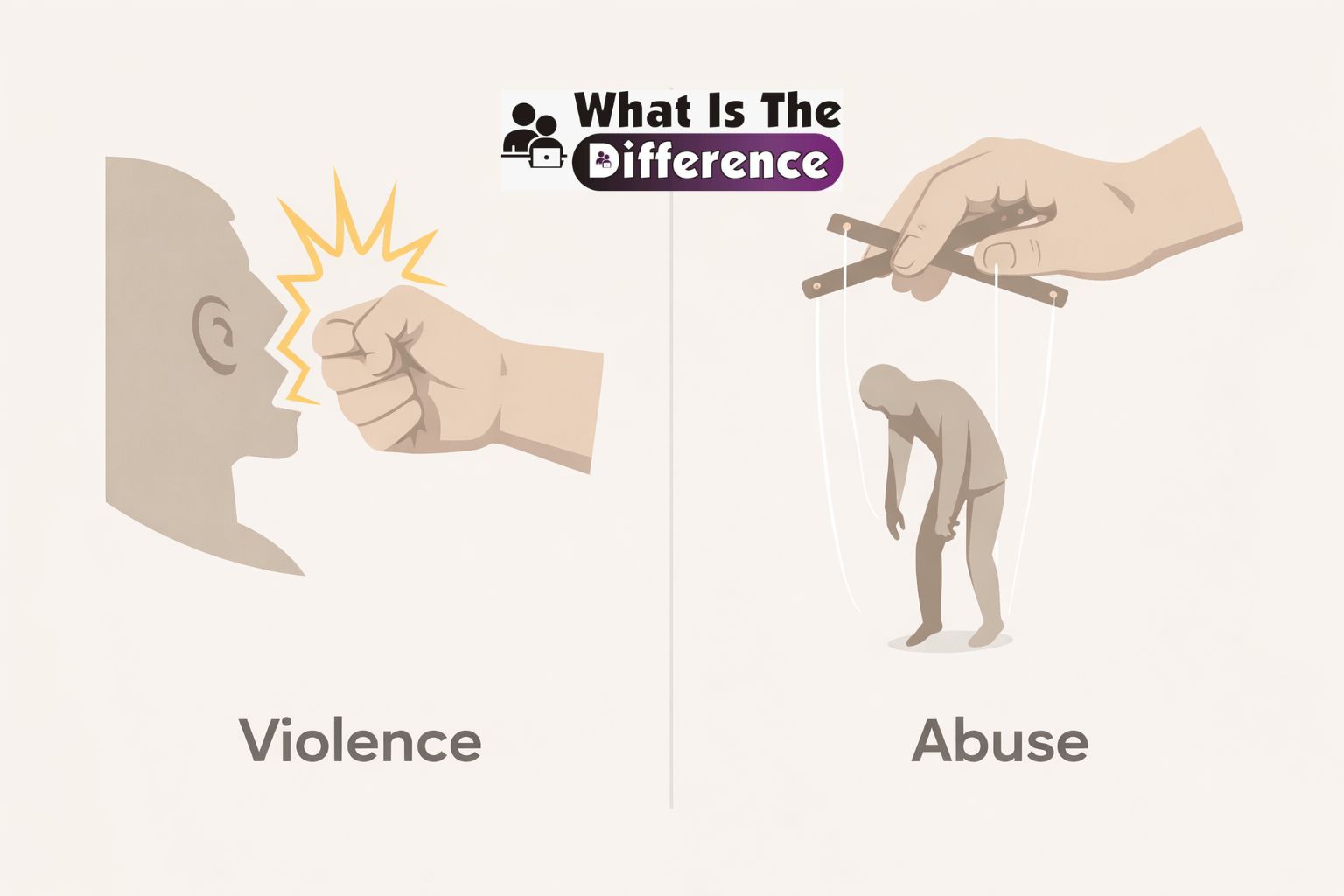
The terms violence and abuse are often used interchangeably in everyday conversation. While they are closely related, they are not exactly the same—and understanding the difference can be crucial, especially when it comes to relationships, safety, and awareness.
If you’ve ever wondered what is the difference between violence and abuse, this guide will explain it in simple, clear terms. We’ll explore definitions, real-life examples, key differences, and how to recognize each—so you can better understand and respond to these serious issues.
| Feature | Violence | Abuse |
|---|---|---|
| Definition | Act of force causing harm | Pattern of controlling or harmful behavior |
| Nature | Often a single incident | Usually repeated over time |
| Purpose | Immediate harm or reaction | Control, power, and manipulation |
| Frequency | Can be one-time | Ongoing and consistent |
| Control Element | Not always present | Core element (power and control) |
| Type of Harm | Physical or verbal | Physical, emotional, psychological, financial |
| Emotional Impact | Short-term or immediate | Long-term emotional damage |
| Context | Can happen anywhere | Often in close relationships |
| Intent | May be impulsive | Usually intentional and systematic |
| Visibility | Often visible (e.g., physical harm) | Can be hidden or subtle |
| Examples | Fight, assault, threats | Domestic abuse, emotional manipulation |
| Relationship Factor | May involve strangers | Often involves known individuals |
What Is Violence? (Simple Explanation)
Definition of Violence
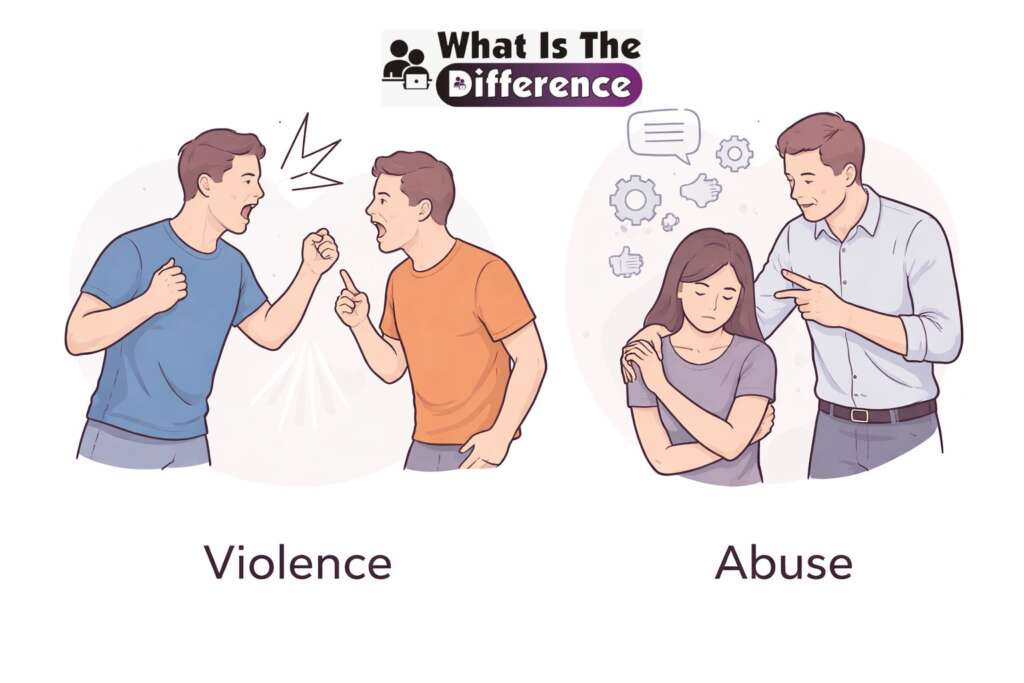
Violence refers to the intentional use of force or power to cause harm, injury, or damage. It can be physical, verbal, or psychological.
According to Wikipedia, violence involves behavior that can result in physical or emotional harm to others.
Types of Violence
Violence can take several forms:
- Physical violence – hitting, pushing, or assault
- Verbal violence – threats, yelling, or aggressive language
- Psychological violence – intimidation, fear, or coercion
Where Violence Happens in Real Life
Violence can occur in many settings:
- Public conflicts or fights
- Criminal activity
- Arguments that escalate quickly
Importantly, violence can be a one-time incident or part of a repeated pattern.
What Is Abuse? (Clear Breakdown)
Definition of Abuse
Abuse is a pattern of behavior used to control, manipulate, or harm another person. Unlike violence, abuse is typically ongoing and involves a power imbalance.
Types of Abuse
Abuse can take many forms, including:
- Physical abuse – repeated harm or injury
- Emotional abuse – manipulation, insults, or control
- Psychological abuse – intimidation or isolation
- Sexual abuse – non-consensual actions
- Financial abuse – controlling money or resources
Common Situations of Abuse
Abuse is most commonly seen in:
- Domestic or intimate relationships
- Family environments
- Workplace or institutional settings
Unlike isolated violence, abuse is often systematic and repeated over time.
What Is the Difference Between Violence and Abuse?
To fully understand what is the difference between violence and abuse, it helps to look at their core distinctions.
Key Differences Explained Simply
- Violence can be a single act of harm
- Abuse is usually a repeated pattern of behavior
- Abuse often involves control, manipulation, and power imbalance
- Violence may occur independently or as part of abuse
Violence vs Abuse: Side-by-Side Insight
- Frequency:
- Violence → may happen once
- Abuse → happens repeatedly
- Intent:
- Violence → immediate harm
- Abuse → long-term control
- Impact:
- Violence → physical or emotional damage
- Abuse → deep psychological and emotional effects
For a broader understanding of similar comparisons, you can explore this detailed explanation on WhatIsTheDifference.co.uk.
How Violence and Abuse Are Connected
Can Violence Lead to Abuse?
Yes. When violent behavior becomes repeated and intentional, it often turns into abuse. For example, a single act of aggression may be violence, but repeated acts with control and intimidation become abuse.
Is All Abuse Violent?
No. Abuse does not always involve physical violence. Emotional and psychological abuse can occur without any physical harm but still have serious consequences.
The Role of Power and Control
At the heart of abuse is power and control. Abusers often use various tactics—emotional, financial, or physical—to dominate another person.
Real-Life Examples of Violence and Abuse
Example 1: Public Conflict
A heated argument in public that turns into a physical fight is an example of violence. It may be serious, but it is not necessarily ongoing.
Example 2: Domestic Relationship
A partner who repeatedly insults, controls, or harms the other person is engaging in abuse. This pattern creates fear and dependency over time.
Example 3: Workplace Environment
- Occasional shouting or aggression → violence
- Continuous bullying or manipulation → abuse
These examples show how context and repetition matter.
How to Recognize Violence vs Abuse
Understanding the signs can help you identify and respond appropriately.
Signs of Violence
- Sudden physical aggression
- Threats or intimidation
- Isolated incidents of harm
Signs of Abuse
- Ongoing control or manipulation
- Emotional distress or fear
- Isolation from friends or family
- Repeated harmful behavior
When to Seek Help
If you notice patterns of abuse or feel unsafe, it’s important to seek support from trusted individuals or professionals. Early action can prevent further harm.
How to Deal With Violence and Abuse (Practical Guide)
Step 1: Recognize the Situation
Identify whether the behavior is a one-time act (violence) or a repeated pattern (abuse).
Step 2: Prioritize Safety
Your safety comes first. Remove yourself from dangerous situations whenever possible.
Step 3: Reach Out for Support
Talk to someone you trust—friends, family, or professionals. Support systems are essential.
Step 4: Document Patterns
In cases of abuse, keeping a record of incidents can help when seeking help or legal support.
Step 5: Seek Professional Help
Counselors, support organizations, and legal authorities can provide guidance and protection.
Common Mistakes People Make
Using the Terms Interchangeably
Many people assume violence and abuse mean the same thing. This can lead to misunderstanding serious situations.
Ignoring Emotional Abuse
Abuse is not always physical. Emotional and psychological harm can be just as damaging.
Minimizing Repeated Behavior
Repeated harmful actions are often dismissed as “normal” or “not serious,” which can allow abuse to continue.
Tips for Awareness and Prevention
Educate Yourself
Understanding the difference between violence and abuse helps you recognize unhealthy behaviors early.
Watch for Red Flags
Look for patterns of control, manipulation, or repeated harm.
Encourage Open Communication
Creating safe environments where people can speak openly helps prevent and address abuse.
What Is the Difference Between Vitamin D and Vitamin D3? Full Guide
FAQ: Violence vs Abuse Explained
1. Is violence the same as abuse?
No. Violence can be a single act, while abuse is usually a repeated pattern of harmful behavior.
2. Can abuse happen without physical violence?
Yes. Emotional and psychological abuse are common and can be very harmful.
3. When does violence become abuse?
When it becomes repeated and involves control or manipulation.
4. Which is more harmful: violence or abuse?
Both are harmful, but abuse often has long-term emotional and psychological effects.
5. How can I recognize abuse in a relationship?
Look for patterns of control, fear, isolation, and repeated harmful behavior.
6. What should I do if I experience violence or abuse?
Seek help from trusted individuals, support organizations, or professionals immediately.
Conclusion
So, what is the difference between violence and abuse?
- Violence is often a single act of harm or aggression
- Abuse is a repeated pattern of behavior aimed at control and manipulation
While the two are connected, understanding their differences is essential for recognizing harmful situations and taking the right steps.
By becoming more aware of these concepts, you not only protect yourself but also help create safer, healthier relationships and communities.