
Introduction
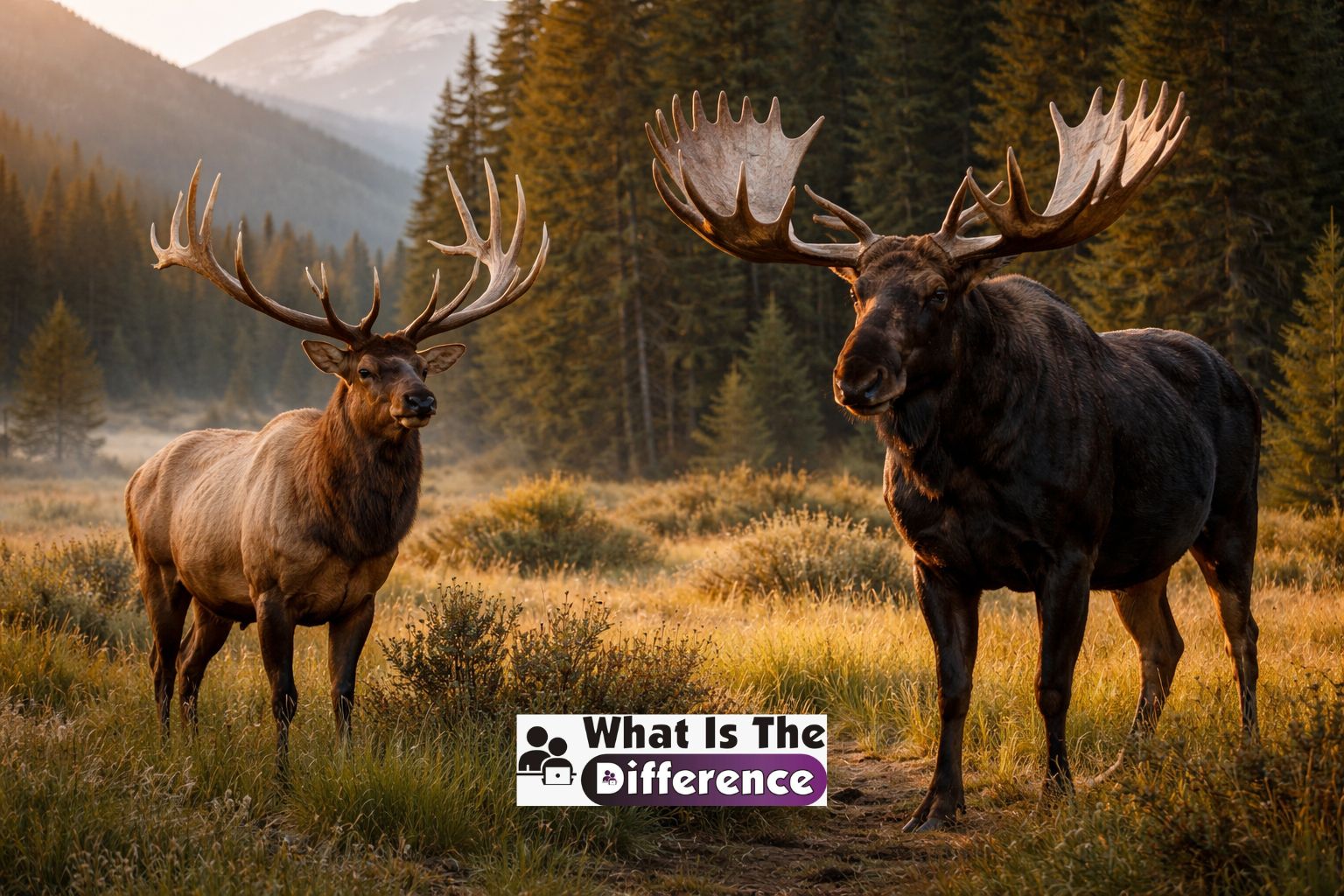
At first glance, elk and moose can look surprisingly similar both are large members of the deer family, both have impressive antlers, and both roam parts of North America and beyond. It’s no wonder many people confuse them.
But understanding the difference between elk and moose goes far beyond simple curiosity. Whether you’re a traveler, wildlife enthusiast, student, or hunter, knowing how to distinguish these animals can impact your safety, your knowledge, and your overall experience in nature.
In this guide, we’ll break down everything you need to know from physical traits to behavior so you can confidently tell elk and moose apart and understand why it truly matters.
| Feature | Elk | Moose |
|---|---|---|
| Size | Large, but smaller than moose | Largest member of deer family |
| Weight | 225–320 kg (500–700 lbs) | Up to 700 kg (1,500 lbs) |
| Height | Around 4–5 feet at shoulder | Over 6 feet at shoulder |
| Antlers | Long, thin, pointed | Broad, flat, palm-shaped |
| Body Shape | Slim and athletic | Bulky with shoulder hump |
| Face | Shorter, more refined | Long, drooping nose |
| Color | Light brown with pale rump | Dark brown to black |
| Habitat | Grasslands, forests, mountains | Wetlands, forests, cold regions |
| Social Behavior | Lives in herds | Mostly solitary |
| Diet | Grazes on grass | Browses on leaves and plants |
| Temperament | Less aggressive | Can be aggressive and unpredictable |
| Common Regions | Western North America, parts of Asia | Northern North America, Canada, Alaska |
What Is the Difference Between Elk and Moose?
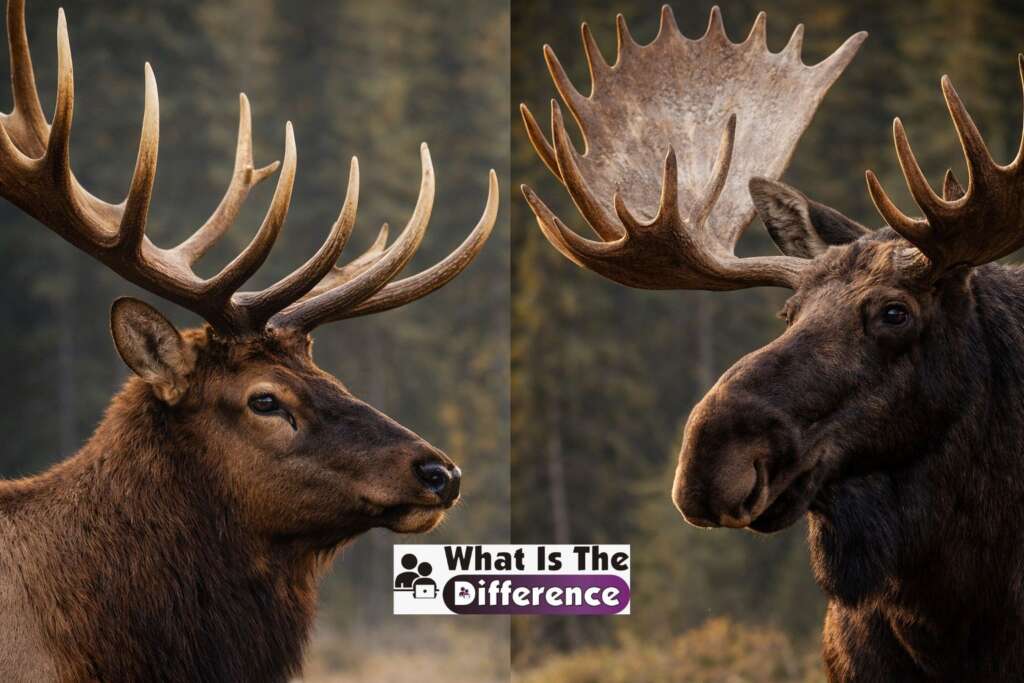
The difference between elk and moose comes down to several key factors: size, antlers, habitat, and behavior.
- Moose are larger, heavier, and more solitary
- Elk are smaller, more social, and live in herds
- Moose have broad, flat antlers, while elk have long, pointed ones
Both belong to the deer family (Cervidae), but they are distinct species with unique traits. If you want a deeper biological overview, from Wikipedia explains their classification in detail:
Understanding these differences helps you identify them quickly and avoid common mistakes.
Physical Differences Between Elk and Moose
Size and Weight Comparison
One of the most obvious differences is size.
Moose are the largest members of the deer family, often standing over 6 feet tall at the shoulder and weighing up to 700 kg (1,500 lbs).
Elk, while still large, are noticeably smaller. Adult elk typically weigh between 225–320 kg (500–700 lbs).
Key takeaway: If the animal looks massive and towering, it’s likely a moose.
Antlers: Shape and Structure
Antlers are one of the easiest ways to tell them apart.
- Moose antlers are wide, flat, and shaped like open hands
- Elk antlers are long, thin, and branch upward like tree limbs
Moose antlers can span over 6 feet across, making them truly impressive.
Quick tip: Flat equals moose, pointed equals elk.
Body Shape and Features
Moose and elk also differ in body structure:
- Moose have long legs, a drooping nose, and a hump on their shoulders
- Elk have a slimmer build, shorter face, and lighter-colored rump
Moose often appear more “awkward” or bulky, while elk look more balanced and athletic.
Habitat and Geographic Differences
Where Elk Are Commonly Found
Elk prefer open forests, grasslands, and mountainous regions. They are commonly seen in places like:
- Western United States
- Canada
- Parts of Europe and Asia
They thrive in areas where they can graze and move in groups.
Where Moose Prefer to Live
Moose are adapted to colder climates and are often found in:
- Northern forests
- Wetlands and swamps
- Boreal regions of Canada and Alaska
They are excellent swimmers and often feed on aquatic plants.
Overlapping Regions and Key Differences
In some areas, elk and moose share territory. However, their behavior and habitat preferences usually keep them apart.
Elk prefer open spaces, while moose stick to dense forests and water-rich environments.
Behavior and Lifestyle Differences
Social Behavior: Herd vs Solitary
One major difference between elk and moose is how they interact socially.
- Elk are highly social and live in large herds
- Moose are mostly solitary, especially males
This difference alone can help you identify them from a distance.
Diet and Feeding Habits
Both animals are herbivores, but they eat differently:
- Elk graze on grasses and plants
- Moose browse on leaves, twigs, and aquatic vegetation
Moose are often seen feeding in water, which is a strong identifying clue.
Temperament and Human Interaction
Moose are generally more unpredictable and can be aggressive, especially during mating season.
Elk, while still wild, are usually less aggressive and more accustomed to being seen in groups.
👉 Important: Never approach either animal, but be especially cautious around moose.
Why the Difference Between Elk and Moose Really Matters
Understanding the difference between elk and moose is not just about knowledge it has real-world importance.
Safety in the Wild
Misidentifying a moose as an elk could put you at risk. Moose can be highly territorial and dangerous if approached.
Knowing what you’re dealing with helps you keep a safe distance and react appropriately.
Wildlife Education and Awareness
For students, researchers, and nature lovers, correctly identifying animals builds deeper ecological understanding.
It also helps you appreciate biodiversity and animal behavior more accurately.
Hunting and Conservation Regulations
Elk and moose are managed differently under wildlife laws.
Hunters must correctly identify their target species to follow regulations and avoid legal issues.
Travel and Wildlife Watching Experiences
If you’re visiting national parks or nature reserves, knowing the difference enhances your experience.
It’s similar to how people learn about different animals in nature features, such as this engaging wildlife content on What Is the Difference Between a Donkey and a Mule and Why It Matters
Correct identification makes your sightings more meaningful and memorable.
How to Tell the Difference Between Elk and Moose Easily
If you’re out in the wild, here’s a simple step-by-step guide to help you identify them quickly.
Step 1: Look at the Antlers
Flat and wide? It’s a moose.
Long and pointed? It’s an elk.
Step 2: Observe Size and Body Shape
Moose are bulkier with longer legs and a hump.
Elk are slimmer and more proportionate.
Step 3: Check the Habitat
Near water and dense forest? Likely a moose.
Open land or mountains? Probably an elk.
Step 4: Watch Their Behavior
A lone animal is likely a moose.
A group of animals is almost certainly elk.
Real-Life Examples of Elk vs Moose Confusion
Common Mistakes Tourists Make
Many tourists visiting North American parks assume all large deer-like animals are the same.
A moose sighting is often mislabeled as an elk, especially by first-time visitors.
Wildlife Photography Mislabeling
Even experienced photographers sometimes confuse the two, particularly in areas where both species coexist.
This highlights how subtle differences can still be overlooked.
Tips to Avoid Confusing Elk and Moose
Focus on Key Visual Differences
Always prioritize antlers, size, and face shape.
Use Location as a Clue
Understanding where you are can narrow down the possibilities quickly.
Learn Through Observation
Spend time watching wildlife documentaries or visiting parks with guides.
The more you observe, the easier identification becomes.
Frequently Asked Questions (FAQ)
What is the main difference between elk and moose?
The main difference lies in size, antlers, and behavior. Moose are larger and solitary, while elk are smaller and live in herds.
Which is bigger, an elk or a moose?
Moose are significantly larger and heavier than elk.
Are elk or moose more dangerous to humans?
Moose are generally more dangerous due to their size and unpredictable behavior.
Can elk and moose live in the same area?
Yes, but they usually prefer different habitats within the same region.
Why do people confuse elk and moose so often?
Because both are large deer species with antlers and similar coloring, especially from a distance.
Are elk and moose related species?
Yes, both belong to the deer family (Cervidae), but they are different species.
Conclusion
The difference between elk and moose may seem subtle at first, but it becomes clear once you understand their size, antlers, habitat, and behavior.
More importantly, knowing these differences can improve your safety, deepen your understanding of wildlife, and enhance your outdoor experiences.
Next time you spot one of these majestic animals, you’ll not only recognize it you’ll truly understand it.