Introduction
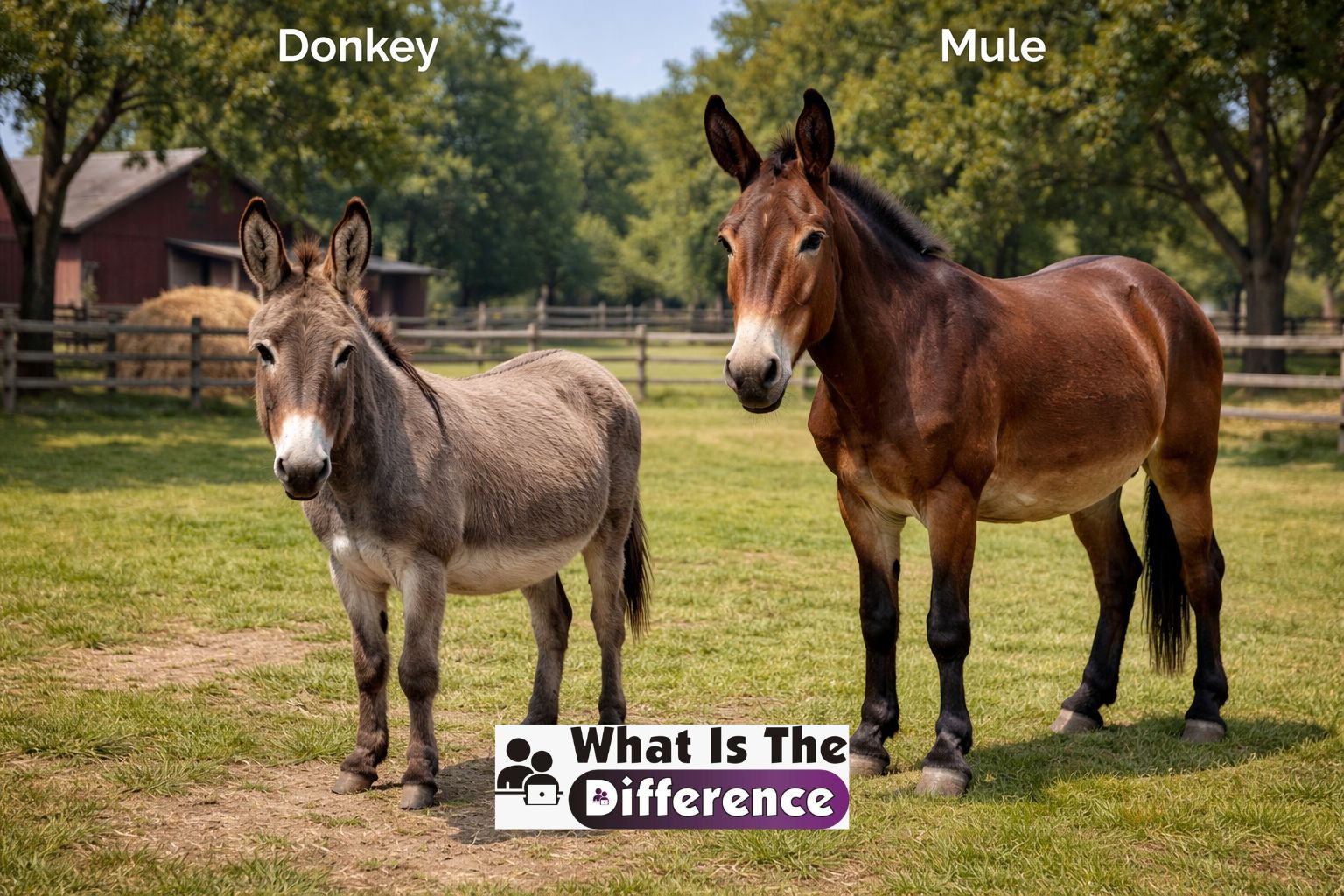
At first glance, donkeys and mules look quite similar. They both have long ears, sturdy bodies, and are often used for carrying loads or working on farms. This resemblance leads many people to ask: what is the difference between a donkey and a mule?
Understanding this difference isn’t just about curiosity it actually matters. Whether you’re a farmer, animal enthusiast, or simply learning about animals, knowing how these two differ can help you make better decisions about care, use, and expectations.
In this guide, we’ll explore their origins, physical traits, behavior, and practical uses, and explain why these differences are important in real life.
| Feature | Donkey | Mule |
|---|---|---|
| Type | Pure species | Hybrid (donkey + horse) |
| Scientific Status | Equus africanus asinus | Crossbreed, not a species |
| Parentage | Two donkeys | Male donkey + female horse |
| Fertility | Can reproduce | Usually infertile |
| Size | Smaller and compact | Larger and more muscular |
| Ears | Very long | Slightly shorter than donkey |
| Strength | Moderate strength | Stronger (hybrid vigor) |
| Endurance | Good endurance | Excellent endurance |
| Temperament | Calm and cautious | Intelligent and adaptable |
| Movement Style | Slower, steady gait | More horse-like movement |
| Work Use | Light work, guarding | Heavy work, transport |
| Maintenance | Easier to manage | Requires more handling |
What Is a Donkey?
Basic Overview of Donkeys
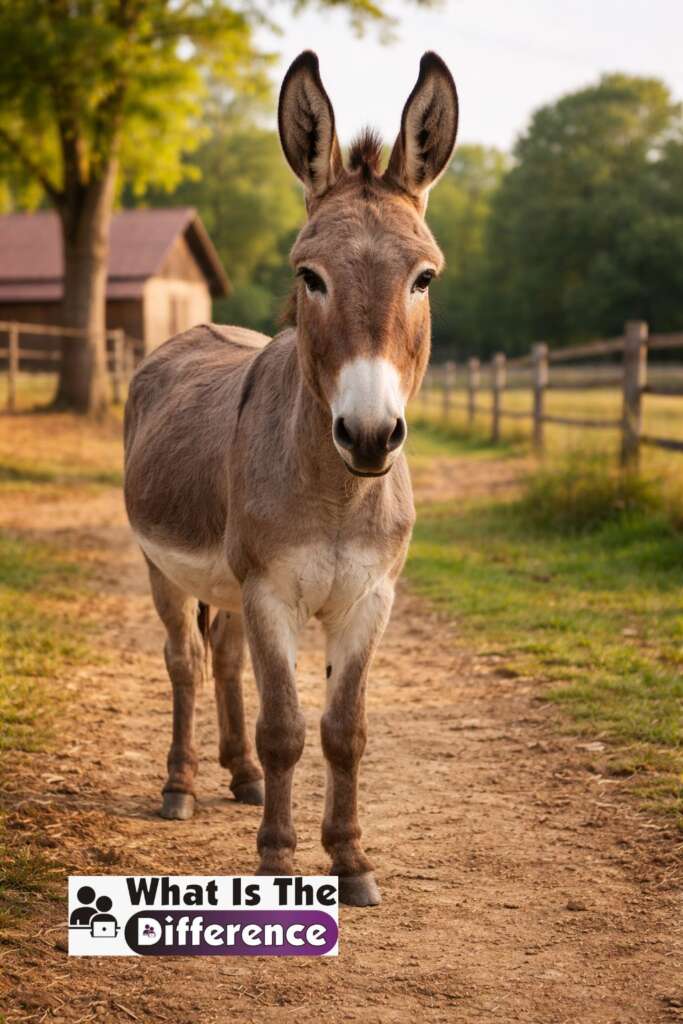
A donkey is a domesticated member of the equine family, closely related to horses. Scientifically known as Equus africanus asinus, donkeys have been used by humans for thousands of years.
They were originally domesticated in Africa and have since become valuable working animals worldwide.
Physical Characteristics of Donkeys
Donkeys are known for their:
- Long ears, which help regulate body temperature
- Compact and sturdy bodies
- Short mane and a tufted tail
They are generally smaller than horses but vary in size depending on the breed.
Behavior and Temperament
Donkeys are often labeled as stubborn, but this is a misunderstanding. In reality, they are:
- Highly intelligent and cautious
- Likely to stop and assess danger rather than panic
This thoughtful nature makes them reliable in risky environments.
Common Uses of Donkeys
Donkeys are widely used for:
- Carrying loads in rural areas
- Guarding livestock (especially sheep and goats)
- Light farm work
Their calm temperament also makes them suitable as companion animals.
What Is a Mule?
How Mules Are Created
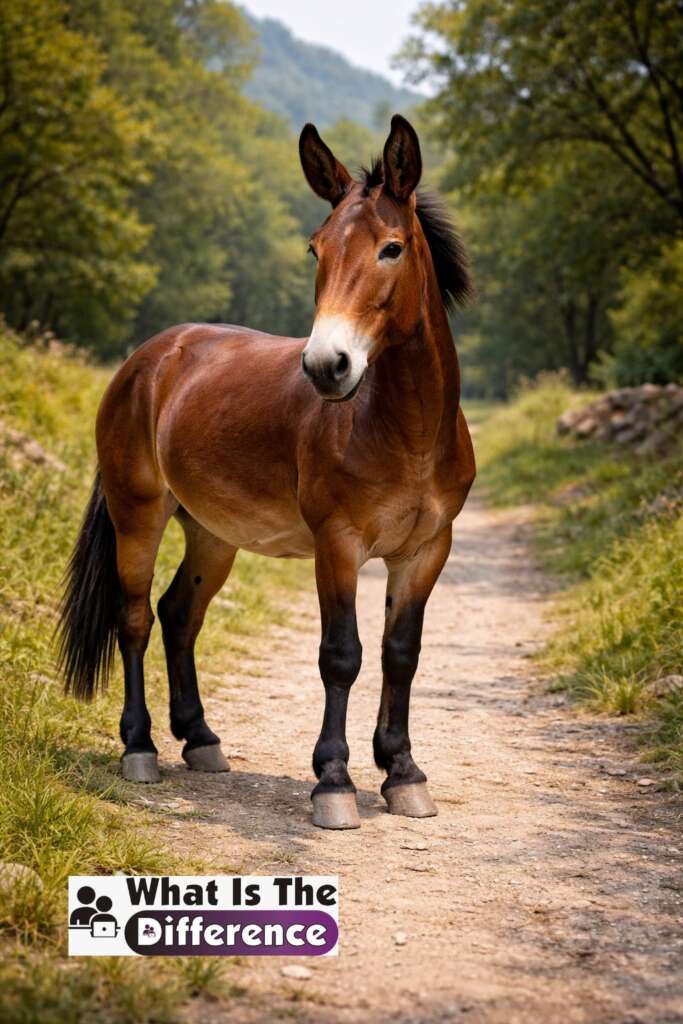
A mule is not a separate species but a hybrid animal. It is created by breeding:
- A male donkey (jack)
- A female horse (mare)
This unique combination gives mules traits from both parents.
Physical Traits of Mules
Mules often display a mix of donkey and horse features:
- Ears similar to donkeys but slightly shorter
- Larger and more muscular bodies
- Strong legs and solid hooves
They are typically stronger than donkeys and more durable than horses.
Behavior and Intelligence
Mules are known for their:
- High intelligence and problem-solving ability
- Balanced temperament (less reactive than horses)
They inherit caution from donkeys and strength from horses, making them highly dependable.
Common Uses of Mules
Mules are commonly used for:
- Heavy farm work
- Transporting goods in mountainous areas
- Trekking and tourism
Their endurance makes them ideal for difficult terrain.
What Is the Difference Between a Donkey and a Mule?
To fully understand what is the difference between a donkey and a mule, let’s break it down into key areas:
Genetic Differences
- Donkey: A pure species capable of reproduction
- Mule: A hybrid (donkey + horse), usually sterile
This is one of the most important distinctions.
Physical Appearance
- Donkeys are smaller with a simpler body structure
- Mules are larger, combining horse size with donkey features
Strength and Endurance
Mules benefit from something called hybrid vigor, which means:
- Greater strength
- Better endurance
Donkeys, however, are still very resilient and efficient.
Behavior and Temperament
- Donkeys are cautious and independent
- Mules are intelligent but often more adaptable
Both animals are known for their reliability when properly trained.
Reproduction
- Donkeys can reproduce normally
- Mules are almost always infertile
This affects breeding and long-term use.
Work Ability
- Donkeys are best for lighter tasks
- Mules excel in heavy-duty work and long-distance travel
Donkey vs Mule: Which Is Better for You?
For Farming and Agriculture
If you need an animal for basic farm tasks, a donkey may be enough. However, for heavier work, a mule is usually the better choice.
For Transportation
Mules are preferred for transporting goods over long distances, especially in rough terrain.
For Companionship or Guarding
Donkeys are excellent guard animals and companions due to their calm and protective nature.
How to Tell the Difference Between a Donkey and a Mule
If you’re unsure which animal you’re looking at, follow these steps:
Step 1: Look at the Ears
Both have long ears, but donkey ears are usually longer and more prominent.
Step 2: Observe Body Shape
Mules tend to have:
- A more muscular build
- A body shape closer to a horse
Step 3: Watch Their Movement
Mules move more like horses, while donkeys have a slower, more deliberate gait.
Step 4: Consider Their Background
If you know the animal’s parents, this is the easiest way to identify it.
Real-Life Examples and Use Cases
Donkeys in Rural Communities
In many parts of the world, donkeys are essential for:
- Carrying water
- Transporting goods
- Supporting small-scale farming
Mules in Mountain Regions
Mules are widely used in mountainous areas because they can:
- Carry heavy loads
- Navigate narrow, rocky paths
Historical Importance
Mules have played a major role in history, especially in trade and military logistics due to their strength and endurance.
For more comparisons, you can explore
What Is the Difference Between Violence and Abuse? Explained Clearly
to deepen your understanding of equine differences.
Tips for Choosing Between a Donkey and a Mule
Match the Animal to Your Needs
Choose based on workload:
- Light tasks → Donkey
- Heavy tasks → Mule
Consider Maintenance
Both animals are hardy, but mules may require more management due to their size and strength.
Understand Temperament
Spend time observing the animal before choosing, as personality can vary.
Get Expert Advice
Consult breeders or veterinarians to make an informed decision.
Common Misconceptions to Avoid
“Donkeys Are Stubborn”
This is a myth. Donkeys are actually cautious and intelligent.
“Mules Are Just Horses”
Mules are hybrids with unique traits—not simply a type of horse.
Confusing Their Appearance
While similar, careful observation reveals clear differences in body structure and behavior.
Why Understanding the Difference Matters
Knowing what is the difference between a donkey and a mule helps you:
- Choose the right animal for your needs
- Provide better care and training
- Avoid costly mistakes
According to
mules are valued for their strength and endurance, which explains their widespread use in demanding environments.
This practical knowledge is especially important for farmers, animal owners, and anyone working with livestock.
FAQ About Donkeys and Mules
Can a mule reproduce like a donkey?
No, mules are typically infertile and cannot reproduce.
Why are mules stronger than donkeys?
Mules benefit from hybrid vigor, combining the strength of horses with the endurance of donkeys.
Are donkeys easier to care for than mules?
Generally, yes. Donkeys are smaller and require less intensive management.
Which is more intelligent?
Both are intelligent, but mules are often considered more adaptable and quick to learn.
Can they be used for the same tasks?
Some tasks overlap, but mules are better for heavy work, while donkeys are ideal for lighter duties.
Conclusion
So, what is the difference between a donkey and a mule? While they may look alike, they differ in genetics, strength, behavior, and purpose.
A donkey is a pure species known for its resilience and calm nature. A mule, on the other hand, is a powerful hybrid built for endurance and heavy work.
Understanding these differences allows you to choose the right animal, care for it properly, and make the most of its unique strengths.