Introduction
sheep vs lamb: Many people use the words “sheep” and “lamb” as if they mean the same thing. While they are closely related, there is actually a simple but important difference between the two. A lamb is a young sheep, while a sheep is a fully grown adult animal. Even though the distinction sounds straightforward, people still confuse these terms in farming, cooking, and everyday conversation.
The confusion becomes even more common because lambs eventually grow into sheep, and both animals belong to the same species. Their appearance can also look similar to those unfamiliar with farm animals. However, there are noticeable differences in age, size, behavior, wool, and even meat quality.
Understanding the difference between sheep and lamb is useful whether you are learning about animals, farming, food, or simply satisfying your curiosity. This guide explains everything in a clear and natural way, helping you recognize the real difference between sheep and lamb without confusion.
| Feature | Sheep | Lamb |
|---|---|---|
| Age | Fully grown animal | Young sheep under 1 year |
| Size | Larger and heavier | Smaller and lighter |
| Body Shape | Thick and broad | Slim and compact |
| Wool | Dense and heavy | Soft and fine |
| Behavior | Calm and steady | Playful and energetic |
| Facial Features | More defined face | Softer and rounder face |
| Diet Needs | Standard grazing diet | Needs extra nutrition for growth |
| Meat Name | Mutton | Lamb meat |
| Meat Flavor | Strong and rich | Mild and tender |
| Farming Use | Wool, breeding, milk | Meat and early growth |
| Independence | Mostly independent | Depends on mother |
| Growth Stage | Mature stage | Early life stage |
Sheep vs Lamb: The Main Difference
What Is a Sheep?
A sheep is an adult domesticated animal raised mainly for wool, milk, and meat. Sheep have been farmed by humans for thousands of years and are considered one of the oldest domesticated livestock animals in the world.
Adult sheep are generally larger, heavier, and covered with thick wool. They are social animals that live comfortably in groups called flocks. Sheep can adapt to different climates and are raised in many countries for agricultural purposes.
Male sheep are called rams, while female sheep are known as ewes. Once a young lamb matures, it becomes an adult sheep.
What Is a Lamb?
A lamb is simply a baby or young sheep. In most cases, a sheep under one year old is called a lamb. Lambs are smaller, softer, and more playful than adult sheep. Their wool is usually finer and less dense during the early stages of life.
Lambs depend heavily on their mothers shortly after birth. During this stage, they grow quickly and develop the characteristics that eventually make them adult sheep.
In farming, the age of the animal is important because it affects feeding, care, wool quality, and meat production.
Quick Difference Between Sheep and Lamb
The easiest way to understand sheep vs lamb is by age and maturity.
Lamb
- Young sheep under one year old
- Smaller body size
- Softer wool
- More energetic and playful
- Tender meat flavor
Sheep
- Fully grown adult
- Larger and heavier
- Thick wool coat
- Calmer behavior
- Stronger meat flavor
Although they belong to the same species, their physical and behavioral differences are easy to notice once you know what to look for.
How to Tell the Difference Between Sheep and Lamb
Size and Appearance
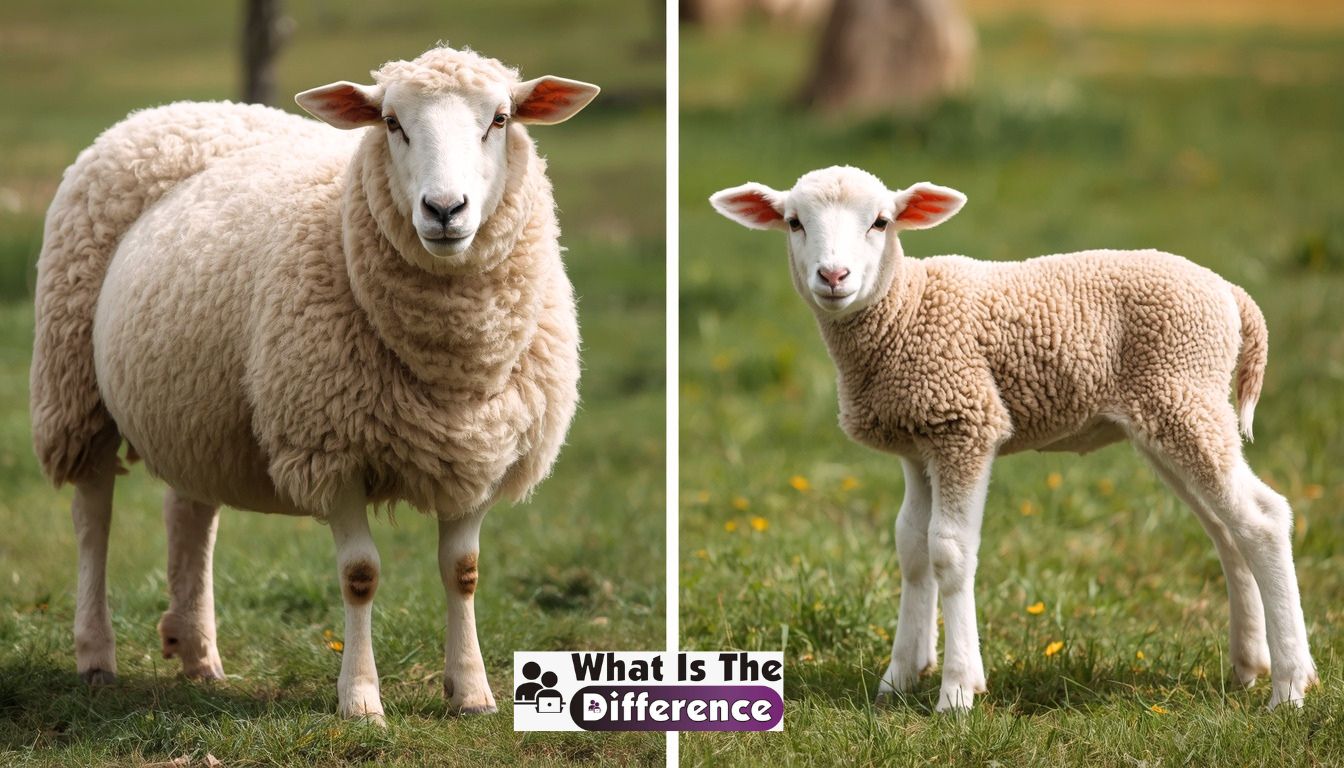
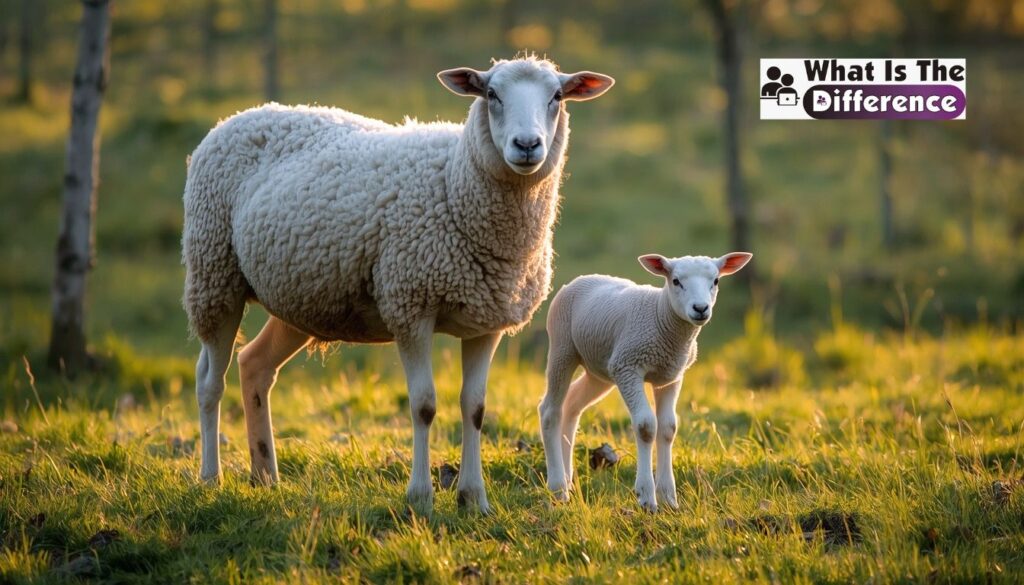
One of the most noticeable differences is body size. Lambs are much smaller and lighter compared to adult sheep. Their bodies look leaner and less developed because they are still growing.
Adult sheep have broader bodies, thicker muscles, and fuller wool coats. Mature sheep often appear slower and sturdier than lambs.
When standing side by side, the difference becomes very clear.
Wool Texture
Lamb wool is softer and finer than sheep wool. Young lambs usually have short and delicate fleece because their coats are still developing.
Adult sheep produce thicker and heavier wool. Some breeds grow extremely dense fleece that requires regular shearing. Wool texture can vary depending on breed, climate, and diet, but mature sheep almost always have more substantial coats than lambs.
Merino sheep, for example, are famous for producing high-quality wool used in clothing and textiles.
Facial Features
Lambs tend to have softer facial features and smaller heads. Their faces often appear rounder and more youthful.
Adult sheep develop more defined facial structures as they mature. Rams, especially, can develop large curved horns depending on the breed.
These changes become more visible as the animal ages.
Behavior Differences
Lambs are active, curious, and playful animals. They often run, jump, and stay close to their mothers. Young lambs are known for their energetic behavior in fields and farms.
Adult sheep are calmer and more relaxed. They move more slowly and spend most of their time grazing. Mature sheep also show stronger flocking instincts and tend to stay together for protection.
Behavior alone can often help identify whether the animal is a lamb or a sheep.
At What Age Does a Lamb Become a Sheep?
A lamb is generally considered a sheep once it reaches around one year of age. However, the exact timing can vary slightly depending on farming practices and breed development.
As lambs grow older, their bodies become larger and stronger. Their wool thickens, and their behavior becomes calmer. Farmers often separate animals by age because younger lambs need different nutrition and care compared to adult sheep.
This transition from lamb to sheep is an important stage in livestock farming because it affects breeding, wool production, and meat classification.
Types of Sheep and Lamb Breeds
Popular Sheep Breeds
There are hundreds of sheep breeds around the world, each developed for specific purposes such as wool, meat, or milk production.
Some well-known sheep breeds include:
Merino
Known for extremely soft and valuable wool.
Suffolk
Popular meat-producing sheep with muscular bodies.
Dorset
A hardy breed valued for both meat and reproduction.
Romney
Recognized for strong wool and adaptability.
Different breeds vary greatly in appearance, size, and wool quality.
Lamb Varieties Around the World
Lambs also differ depending on breed and region. In some countries, lambs are raised mainly for meat production, while others focus on wool quality.
For example:
- New Zealand is famous for lamb farming
- Australia is known for wool-producing sheep
- Mediterranean regions often use sheep for milk and cheese production
Regional farming traditions influence how sheep and lambs are raised worldwide.
Sheep vs Lamb in Farming
Why Farmers Separate Lambs From Sheep
Farmers separate lambs from adult sheep because younger animals require specialized care. Lambs need higher nutrition levels to support rapid growth.
Young lambs are also more vulnerable to disease and harsh weather. Farmers carefully monitor their health during the first months of life.
Adult sheep, on the other hand, are more independent and resilient.
Wool Production
Adult sheep are one of the world’s main sources of natural wool. Their fleece is used in clothing, blankets, carpets, and textiles.
Lamb wool is softer and finer but less abundant because the animal is still young. Some premium clothing products use lamb wool because of its smooth texture.
Regular shearing is necessary to keep sheep healthy and comfortable.
Meat Production
Another major difference between sheep and lamb appears in meat production.
Lamb meat comes from younger animals and is known for its tender texture and mild flavor. It is popular in many cuisines around the world.
Meat from older sheep is called mutton. Mutton has a stronger flavor and firmer texture because the animal is more mature.
Many people prefer lamb because it is softer and easier to cook.
Sheep vs Lamb Meat: Is There a Difference?
Taste and Texture
Lamb meat is usually tender, juicy, and mild in flavor. Since the animal is younger, the meat contains less fat buildup and softer muscle fibers.
Mutton from adult sheep has a richer and stronger taste. Some people enjoy its deeper flavor, especially in slow-cooked dishes and traditional recipes.
The difference in taste is mainly caused by age.
Nutritional Value
Both lamb and sheep meat provide high-quality protein, iron, zinc, and essential vitamins.
Lamb tends to contain:
- Softer fat texture
- High protein content
- Important B vitamins
Mutton may contain:
- Stronger flavor compounds
- Slightly firmer meat texture
- Higher fat content in some cuts
Both can be nutritious when eaten in moderation.
Global Popularity
Lamb is especially popular in Middle Eastern, Mediterranean, Indian, and European cuisines. Many traditional dishes use lamb because of its delicate taste.
Mutton remains common in certain Asian, African, and rural cuisines where stronger meat flavors are appreciated.
Cultural preferences often determine whether people choose lamb or sheep meat.
Common Misconceptions About Sheep and Lamb
Is Every Sheep a Lamb?
No. Every lamb eventually becomes a sheep, but not every sheep is a lamb. The word “lamb” only refers to young sheep under a certain age.
This is one of the most common misunderstandings people have.
Are Lambs a Different Species?
Lambs and sheep are not separate species. They belong to the same animal species. The difference is simply based on age and maturity.
A lamb grows into an adult sheep over time.
Why Do People Confuse the Terms?
People often confuse sheep and lamb because the words are commonly used interchangeably in daily language. Restaurants, grocery stores, and media also contribute to the misunderstanding.
Since lamb meat is more commonly sold than mutton in many countries, some people associate the word “lamb” with the animal itself rather than its age.
Interesting Facts About Sheep and Lambs
Sheep are surprisingly intelligent animals. Studies have shown they can recognize faces and remember them for long periods.
Lambs can identify their mothers by sound shortly after birth. This helps them stay connected within large flocks.
Some sheep breeds can grow extremely heavy wool coats if they are not sheared regularly.
Sheep also have strong social bonds and often become stressed when isolated from their flock.
Lambs are naturally playful and often leap into the air while running, a behavior many farmers describe as a sign of excitement and health.
Conclusion
The difference between sheep and lamb is actually very simple once you understand it clearly. A lamb is a young sheep, while a sheep is a fully grown adult animal. Although they belong to the same species, they differ in age, size, wool texture, behavior, and meat quality.
Lambs are smaller, softer, and more energetic, while adult sheep are larger, calmer, and produce thicker wool. These differences matter in farming, cooking, and livestock management.
Understanding sheep vs lamb not only clears up common confusion but also helps people better appreciate these important farm animals. Whether you are learning for farming knowledge, food awareness, or general curiosity, recognizing the distinction becomes easy once you know what to observe.
Water Bug vs Roach: Which One Is More Harmful to Your Health?
Frequently Asked Questions
Is a lamb the same as a sheep?
No. A lamb is a young sheep that is usually less than one year old. Once it grows older and matures, it is called a sheep.
Why do people confuse sheep and lamb?
People often confuse the terms because lambs grow into sheep, and both animals belong to the same species. The words are also commonly used interchangeably in daily conversation.
What is the biggest difference between sheep and lamb?
The main difference is age. Lambs are young and smaller, while sheep are fully grown adults with thicker wool and larger bodies.
Is lamb meat different from sheep meat?
Yes. Lamb meat comes from younger animals and is softer with a mild flavor. Meat from older sheep, called mutton, has a stronger taste and firmer texture.
Can lambs survive without their mothers?
Young lambs depend heavily on their mothers for milk and protection during the early stages of life. As they grow, they gradually become more independent.