
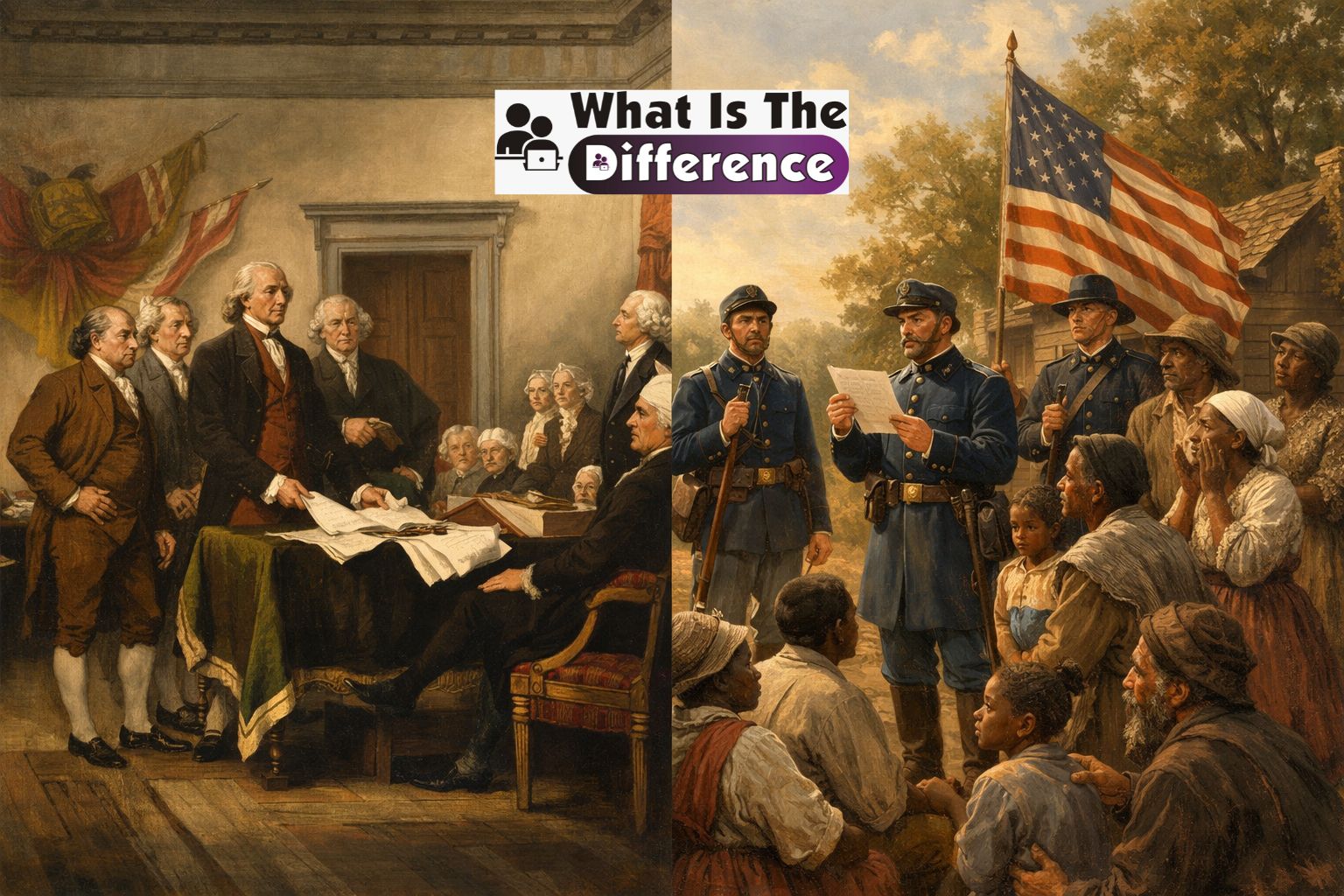
What is the difference between Juneteenth and Independence Day? It’s a question that more people are asking today, especially as both holidays gain attention across the United States. On the surface, they seem similar. Both celebrate freedom. Both are tied to American history. And both are marked with gatherings, reflection, and national pride.
But when you look closer, the two holidays tell very different stories.
Independence Day celebrates the birth of a nation in 1776. Juneteenth, on the other hand, marks a much later moment in 1865 when freedom was finally extended to those who had been enslaved. Understanding this distinction is not just about dates. It’s about understanding how freedom unfolded in stages and how history is often more complex than it first appears.
This article breaks down both holidays clearly, so you can see where they connect and where they differ.
BIO
| Feature | Juneteenth | Independence Day |
|---|---|---|
| Date | June 19, 1865 | July 4, 1776 |
| Historical Event | End of slavery in Texas | Declaration of independence from Britain |
| Main Meaning | Freedom for enslaved people | National independence |
| Type of Freedom | Personal and civil freedom | Political freedom |
| Time Gap | Happened later in history | Happened earlier in history |
| Who It Impacted Most | Enslaved African Americans | American colonies |
| Origin Location | Texas, United States | Philadelphia, United States |
| Recognition | Federal holiday since 2021 | Celebrated since 18th century |
| Cultural Focus | Reflection and education | Celebration and patriotism |
| Common Activities | Cultural events, learning, community gatherings | Fireworks, parades, barbecues |
| Emotional Tone | Reflective and meaningful | Festive and patriotic |
| Historical Importance | Marks delayed justice | Marks nation’s founding |
What Is Independence Day?

The Historical Background
Independence Day is rooted in one of the most well-known events in American history. On July 4, 1776, the thirteen American colonies formally declared independence from British rule. This declaration marked the beginning of the United States as a self-governing nation.
The document behind this moment, the Declaration of Independence, expressed a powerful idea: that people have the right to freedom and self-determination. It was a bold move that led to the American Revolutionary War and ultimately the creation of a new country.
However, it is important to note that this freedom was not universal at the time. While independence from Britain was declared, millions of enslaved people remained without freedom.
What Independence Day Represents
Independence Day represents national freedom and the founding of the United States. It is a celebration of independence from colonial rule and the beginning of a new political system built on ideals of liberty and equality.
For many Americans, it is also a symbol of unity and national identity. It reflects the principles that shaped the country, even though those principles were not fully realized for everyone at the time.
How It Is Celebrated
The Fourth of July is widely celebrated with traditions that are instantly recognizable. Fireworks light up the sky. Families gather for barbecues. Parades fill the streets with music and flags.
These celebrations are often festive and patriotic. They focus on national pride and the shared identity of being part of the United States.
What Is Juneteenth?
The Historical Background
Juneteenth has a very different origin story.
It marks June 19, 1865, the day when Union troops arrived in Galveston, Texas, and announced that all enslaved people were free. This came more than two years after the Emancipation Proclamation had been issued.
For those in Texas, slavery had effectively continued until that moment. When the news finally arrived, it represented not just freedom, but delayed justice.
Juneteenth is now recognized as the day that slavery truly ended in the United States in practice, even if the legal process had begun earlier.
What Juneteenth Represents
Juneteenth represents liberation. Not the founding of a nation, but the realization of freedom for people who had been denied it.
It is often described as a second independence day, especially within African American communities.
More deeply, it stands for resilience, struggle, and the long journey toward equality. It acknowledges a part of history that was overlooked for many years and brings it into the national conversation.
How It Is Celebrated
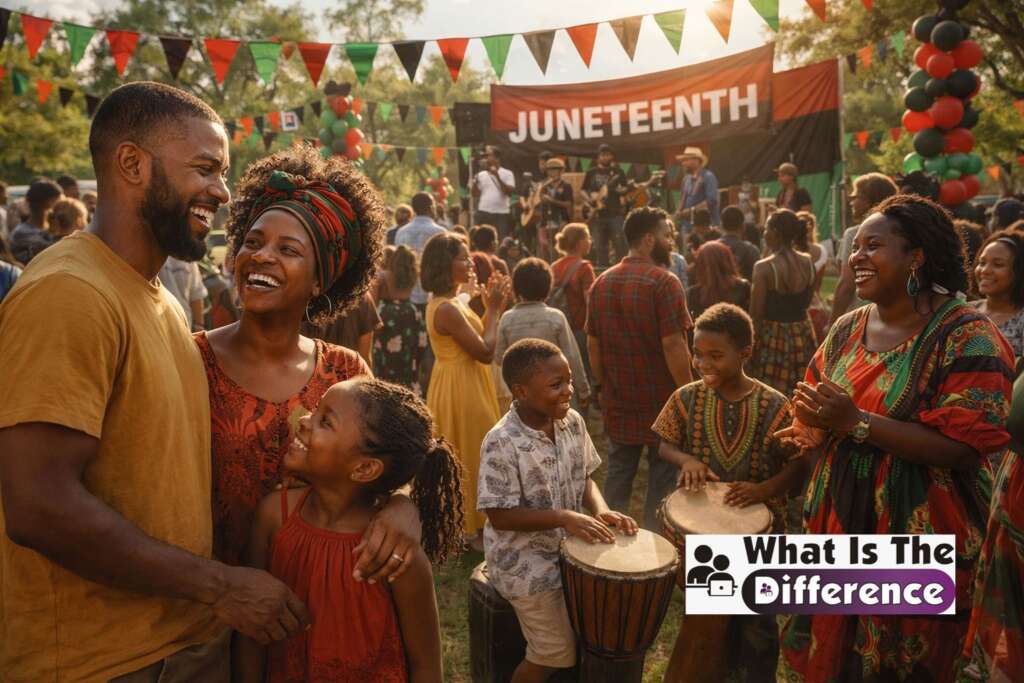
Juneteenth celebrations are often centered around community and reflection.
Events include cultural festivals, music, storytelling, and educational programs. Many people use the day to learn about African American history and honor the experiences of those who lived through slavery and its aftermath.
Food, family gatherings, and local events are also part of the tradition, but there is often a stronger focus on meaning and remembrance compared to typical holiday celebrations.
Key Differences Between Juneteenth and Independence Day
Difference in Historical Context
The most important difference lies in what each holiday commemorates.
Independence Day marks freedom from British rule in 1776. It is about the birth of a nation.
Juneteenth marks the end of slavery in 1865. It is about personal freedom for those who had been enslaved.
In simple terms, one celebrates national independence, while the other celebrates human liberation.
Difference in Timing
There is nearly a 90-year gap between the two events.
Independence Day comes first, representing the beginning of the United States. Juneteenth comes later, showing that freedom was not fully realized at the country’s founding.
This gap highlights an important truth: freedom in America was not immediate or equal for everyone.
Difference in Meaning
Independence Day is about ideals. It reflects the vision of freedom and democracy.
Juneteenth is about reality. It reflects the moment when those ideals finally reached people who had been excluded.
One celebrates a promise. The other marks the fulfillment of that promise, at least in part.
Difference in Cultural Significance
Independence Day has long been a nationwide celebration, recognized and observed across the country.
Juneteenth, while now a federal holiday, was for many years primarily observed within African American communities.
Today, its recognition is growing, and more people are beginning to understand its importance.
Why Juneteenth Matters Today
Recognition as a Federal Holiday
Juneteenth became a federal holiday in 2021, making it one of the newest national holidays in the United States.
This recognition reflects a broader effort to acknowledge the full scope of American history.
Reflection on History and Equality
Juneteenth encourages people to reflect on the legacy of slavery and the ongoing struggle for equality.
It is not just about the past. It connects directly to present-day conversations about justice, opportunity, and fairness.
By recognizing Juneteenth, people are invited to look honestly at history and consider how it shapes the world today.
Why Independence Day Still Holds Importance
A Symbol of National Unity
Independence Day remains one of the most important national holidays.
It represents the founding ideals of the country and the shared identity of its people. It is a day when communities come together to celebrate what it means to be part of the nation.
Evolving Meaning Over Time
Over time, the meaning of Independence Day has evolved.
While it once focused primarily on independence from Britain, it now also represents broader ideas of freedom and progress. Many people use the day to reflect on how far the country has come and how far it still has to go.
How the Two Holidays Connect
Shared Theme of Freedom
Despite their differences, Juneteenth and Independence Day are connected by a common theme: freedom.
Both holidays celebrate moments when freedom expanded. One marks the beginning, the other marks a crucial step toward inclusion.
A Broader Understanding of American History
Together, these holidays tell a more complete story.
Independence Day shows when the nation was founded. Juneteenth shows when freedom became more fully realized for all its people.
Understanding both helps create a deeper and more honest view of history.
Common Misunderstandings
Are They the Same?
One of the most common misconceptions is that Juneteenth and Independence Day are essentially the same.
They are not.
They mark different events, different timelines, and different experiences of freedom.
Why Juneteenth Was Overlooked
For many years, Juneteenth was not widely recognized outside certain communities.
This was partly due to gaps in education and partly due to the way history has been told. As awareness grows, more people are beginning to understand its significance.
Conclusion
So, what is the difference between Juneteenth and Independence Day?
At its core, the difference lies in timing, meaning, and experience.
Independence Day celebrates the birth of a nation and the idea of freedom. Juneteenth marks the moment when that freedom was finally extended to those who had been denied it.
Both holidays matter. Both are worth recognizing. But together, they tell a more complete story, one that includes both the promise of freedom and the long journey to achieve it.
Understanding that story allows us to see history more clearly and appreciate the meaning of freedom in a deeper, more honest way.
What Is the Difference Between a Sequential Program and an Event-Driven Program? A Simple Guide
FAQs
What is the main difference between Juneteenth and Independence Day?
The main difference is what each holiday represents. Independence Day marks the United States gaining freedom from British rule in 1776, while Juneteenth marks the end of slavery in 1865. One reflects national independence, and the other represents personal freedom for enslaved people.
Why is Juneteenth celebrated later than Independence Day?
Juneteenth is celebrated on June 19, 1865, because that is when enslaved people in Texas were finally informed of their freedom. This happened nearly 90 years after Independence Day, showing that freedom was not immediate or equal for everyone.
Is Juneteenth considered a national holiday?
Yes, Juneteenth became an official federal holiday in the United States in 2021. This recognition highlights its importance in American history and encourages broader awareness and education.
Do Juneteenth and Independence Day celebrate the same idea of freedom?
Both holidays focus on freedom, but in different ways. Independence Day celebrates the idea of freedom from colonial rule, while Juneteenth celebrates the reality of freedom for those who were enslaved.