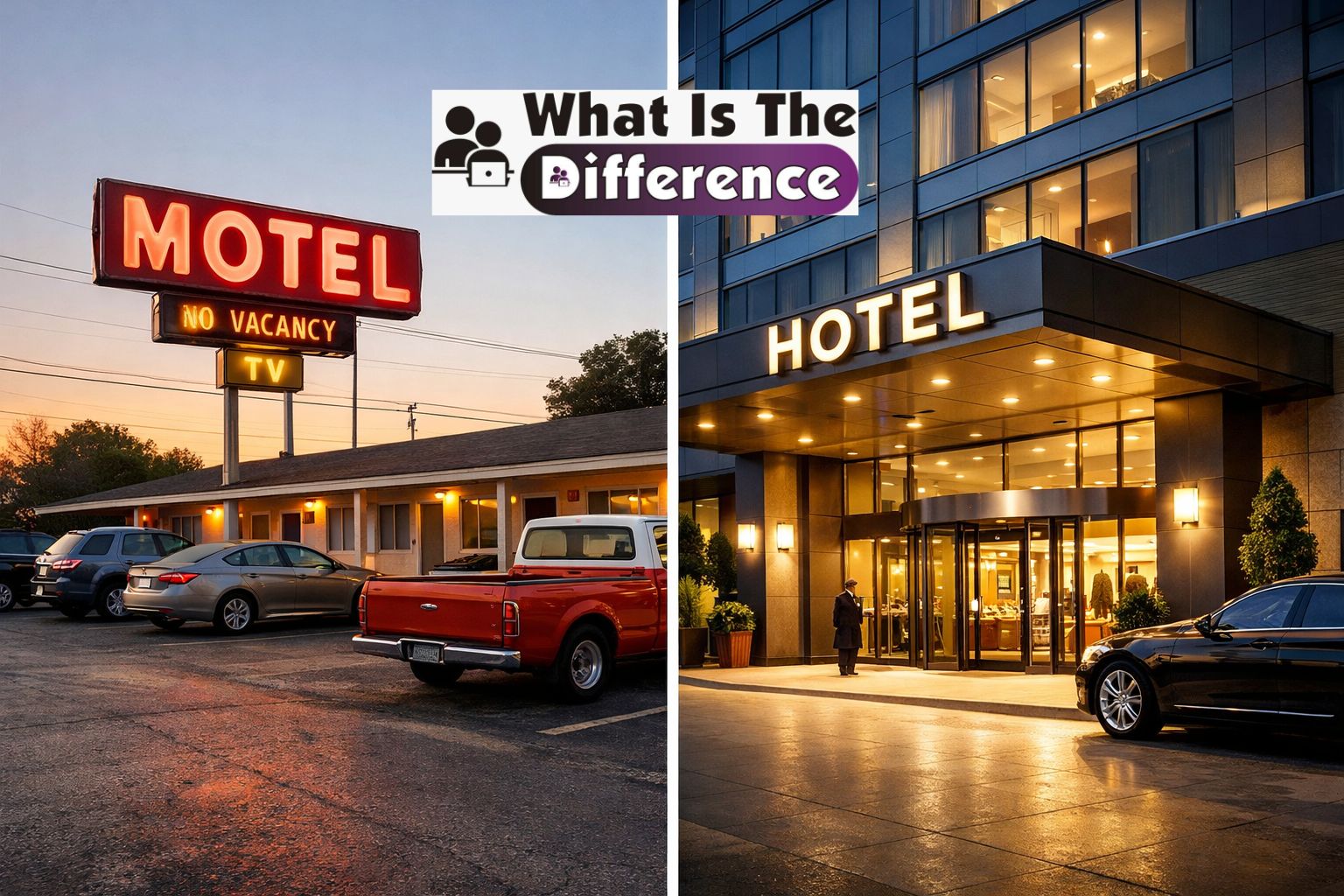
What is the difference between a motel and a hotel? It’s a simple question, but one that often causes confusion among travelers. At first glance, both offer a place to sleep, rest, and recharge. Yet when you look a little closer, the experience they provide can be very different.
The distinction between a motel and a hotel goes beyond just price. It involves location, structure, services, and the kind of traveler each is designed for. Motels grew alongside highways to serve motorists, while hotels developed in cities and tourist areas to provide a fuller hospitality experience.
Understanding these differences helps you make better travel choices. Whether you’re planning a quick overnight stop or a comfortable vacation stay, knowing what to expect can save time, money, and unnecessary stress.
BIO
| Feature | Motel | Hotel |
|---|---|---|
| Definition | Designed for motorists | Full-service accommodation |
| Origin | From “motor hotel” | Traditional lodging concept |
| Location | Near highways and roads | Cities, tourist and business areas |
| Building Style | One or two floors | Multi-story buildings |
| Room Access | Direct outdoor access | Indoor corridors |
| Parking | Right outside rooms | Separate or underground parking |
| Amenities | Basic facilities | Wide range of services |
| Price Range | Usually low-cost | Varies from budget to luxury |
| Length of Stay | Short stays | Short or long stays |
| Comfort Level | Simple and practical | More comfortable and refined |
| Security | Basic security | Higher security systems |
| Target Travelers | Road trip and budget travelers | Tourists, families, business travelers |
What Is a Motel?
Definition and Origin
A motel is a type of lodging designed mainly for travelers on the road. The term itself comes from “motor hotel,” highlighting its original purpose: serving motorists with easy access to their rooms.
Motels became popular in the early 20th century as road travel increased. They were built along highways to give drivers a convenient place to rest for the night without straying far from their route.
Key Features of a Motel
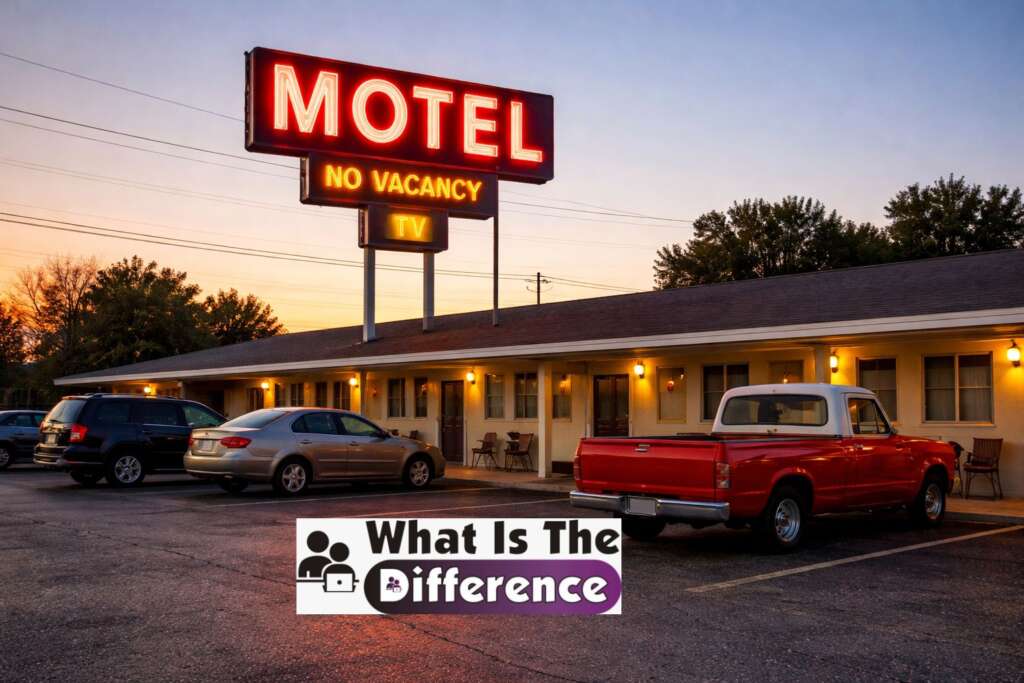
Motels are known for their simple and practical design. Most are one or two stories tall, with rooms arranged in a straight line or a U-shaped layout. One of their most noticeable features is that room doors usually open directly to the outside or parking area.
Parking is typically right outside the room, making it easy to unload luggage quickly. Amenities are usually limited, often including just basic furniture, a bed, and a bathroom.
Motels are built for convenience rather than luxury. They provide what travelers need for a short stay, without extra services.
Typical Use Cases
Motels are ideal for short stays, especially during road trips. Travelers often stay for one night before continuing their journey.
They are also popular with budget-conscious travelers who want an affordable and straightforward place to sleep. If the goal is simply rest and quick access, a motel often fits perfectly.
What Is a Hotel?
Definition and Concept
A hotel is a more comprehensive form of accommodation. It is designed to provide not just a place to sleep, but a complete guest experience.
Hotels are usually located in cities, tourist destinations, or business districts. They cater to a wide range of guests, including families, business travelers, and vacationers.
Key Features of a Hotel
Hotels are typically larger buildings with multiple floors and interior hallways. Guests enter through a central lobby and access their rooms from inside the building.
They offer a variety of amenities, which may include restaurants, gyms, room service, and conference facilities. Many hotels also provide 24-hour front desk service and additional support for guests.
This focus on comfort and service is what sets hotels apart. They aim to create a more complete and enjoyable stay.
Typical Use Cases
Hotels are suitable for longer stays, whether for vacations or business trips. They are designed to accommodate guests who want more than just a place to sleep.
Travelers often choose hotels when they need comfort, convenience, and access to services like dining, Wi-Fi, and housekeeping.
Key Differences Between a Motel and a Hotel
Location
One of the clearest differences is location.
Motels are usually found along highways or on the outskirts of towns. They are positioned for easy access by car and are ideal for travelers passing through.
Hotels, on the other hand, are typically located in city centers, near airports, or in tourist areas. They are designed to be close to attractions and business hubs.
Structure and Layout
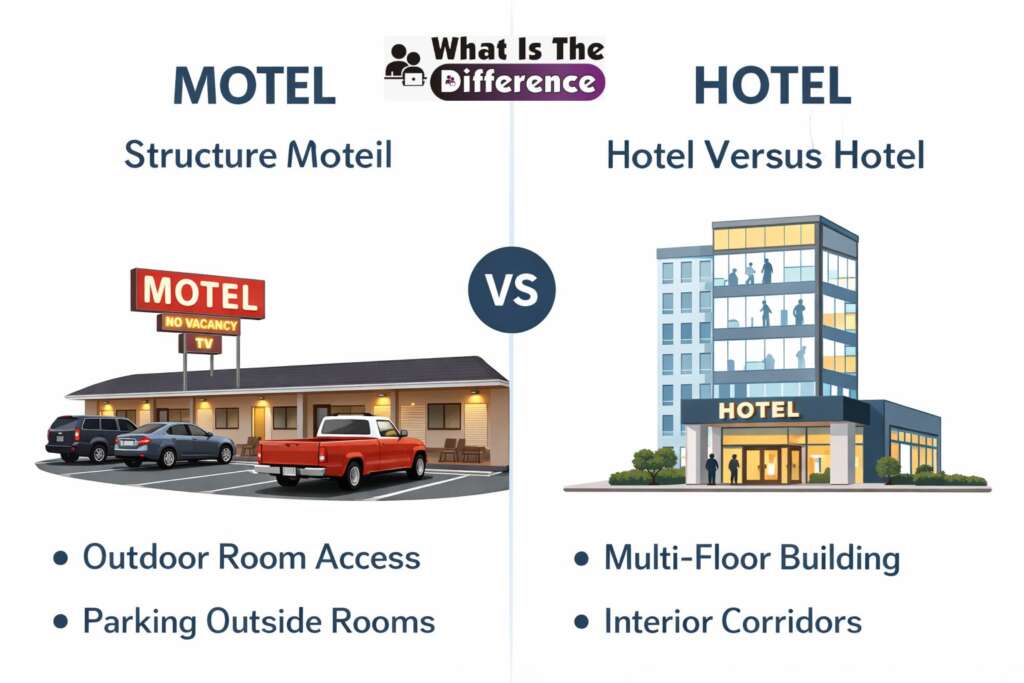
Motels are simple in structure. They are often low-rise buildings with rooms that open directly outside.
Hotels are more complex. They usually have multiple floors, elevators, and indoor corridors, along with a central lobby area.
This difference affects not just appearance, but also how guests move through the space.
Amenities and Services
Motels offer basic amenities, focusing on essentials like a bed, bathroom, and sometimes a small TV.
Hotels provide a wider range of services, including dining options, fitness centers, and sometimes luxury features like spas or pools.
This difference plays a major role in the overall experience.
Price Range
Motels are generally more affordable. They are designed to be budget-friendly, which makes them appealing for short stays and quick stops.
Hotels vary in price. Some are budget options, while others are high-end and expensive, depending on the level of comfort and services offered.
Length of Stay
Motels are typically used for short stays, often just one night.
Hotels are better suited for longer stays. They are equipped to handle guests who plan to stay for several days or even weeks.
Pros and Cons of Motels
Advantages
Motels offer clear benefits for certain types of travelers. They are affordable, easy to access, and convenient for road trips. Parking right outside the room saves time and effort.
For travelers who value simplicity and speed, motels are a practical choice.
Disadvantages
However, motels have limitations. They usually offer fewer amenities and less comfort compared to hotels.
Security and privacy can also be lower, since rooms open directly to the outside. For longer stays, they may not provide the level of comfort many travelers expect.
Pros and Cons of Hotels
Advantages
Hotels provide a more comfortable and complete experience. They offer better services, improved security, and a wider range of facilities.
Guests can enjoy conveniences like room service, housekeeping, and access to restaurants or gyms.
Disadvantages
The main drawback is cost. Hotels are often more expensive than motels, especially in prime locations.
They can also feel more crowded, and parking may not always be as convenient as it is at a motel.
Which One Should You Choose?
When a Motel Is the Better Choice
A motel is the right choice when you need a quick, affordable place to stay.
If you are on a road trip, stopping for a single night, or traveling on a tight budget, a motel provides exactly what you need without unnecessary extras.
When a Hotel Is the Better Choice
A hotel is a better option when comfort and services matter.
If you are planning a vacation, attending a business trip, or staying for several days, a hotel offers the facilities and environment to make your stay more enjoyable.
Common Misunderstandings
Are Motels Always Low Quality?
Not necessarily. While motels are simpler, many are clean, well-maintained, and perfectly suitable for short stays.
Quality can vary widely, just like hotels.
Are Hotels Always Expensive?
No. Hotels come in many price ranges. While luxury hotels can be costly, there are also budget-friendly options that offer good value.
The key difference is not always price, but the level of service and amenities provided.
Conclusion
So, what is the difference between a motel and a hotel?
At its core, the difference lies in purpose and experience.
Motels are built for convenience. They serve travelers who need a quick, affordable stop along the road. Hotels are built for comfort. They provide a full range of services and are designed for longer, more enjoyable stays.
Both options have their place. The right choice depends on your needs, your budget, and the kind of travel experience you are looking for.
By understanding these differences, you can choose more confidently and make your trip smoother from the start.
What Is the Difference Between Juneteenth and Independence Day? A Clear Explanation
FAQs
What is the main difference between a motel and a hotel?
The main difference is in design and purpose. Motels are built for short stays with direct outdoor access to rooms, while hotels offer indoor access, more services, and a more comfortable stay.
Which is cheaper, a motel or a hotel?
Motels are usually cheaper because they provide basic facilities. Hotels can range from budget to luxury, depending on the level of comfort and services offered.
Are motels safe for travelers?
Most motels are safe, but they may have fewer security features compared to hotels. It’s always a good idea to check reviews and choose well-maintained properties.
Can families stay in motels?
Yes, families can stay in motels, especially for short trips. However, hotels are often more suitable for families due to better amenities and space.
Which is better for long stays, a motel or a hotel?
Hotels are generally better for long stays because they offer more comfort, services, and facilities that make extended visits more convenient.