Introduction
At first glance, hedgehogs and porcupines look surprisingly similar. Both have spiky bodies, both use those spikes for defense, and both are often misunderstood. It’s no wonder many people assume they’re closely related or even the same animal.
However, the difference between hedgehog and porcupine goes far beyond appearance. These animals differ in size, behavior, habitat, diet, and even how their spines work. In this guide, we’ll break everything down in a clear and practical way so you can easily tell them apart.
| Feature | Hedgehog | Porcupine |
|---|---|---|
| Size | Small and compact | Large and bulky |
| Body Shape | Rounded body | Long and elongated |
| Spines/Quills | Short, stiff spines | Long, sharp quills |
| Quill Type | Fixed, not detachable | Detachable and sometimes barbed |
| Defense Method | Rolls into a ball | Raises quills to defend |
| Diet | Insects and small creatures | Plants, bark, and leaves |
| Classification | Not a rodent | Rodent |
| Habitat | Europe, Asia, Africa | Americas, Africa, Asia |
| Behavior | Active and quick | Slow and cautious |
| Danger Level | Mostly harmless | Can cause injury with quills |
| Pet Suitability | Sometimes kept as pets | Rarely kept as pets |
| Appearance | Cute and small | Larger and rugged look |
What Is a Hedgehog?
Basic Definition and Overview
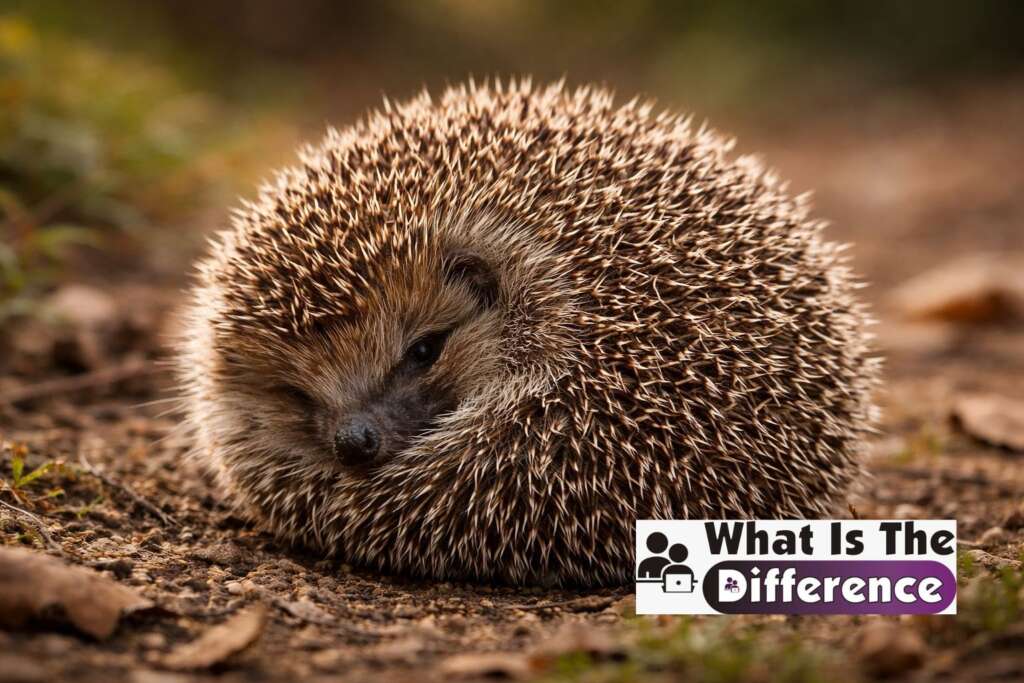
A hedgehog is a small, insect-eating mammal covered in short, stiff spines. It belongs to the Erinaceidae family and is commonly found in parts of Europe, Asia, and Africa.
Unlike larger spiny animals, hedgehogs are known for their compact size and gentle nature.
Key Characteristics of Hedgehogs
- Small body size (typically 15–30 cm long)
- Covered with short, non-detachable spines
- Nocturnal (active at night)
- Can roll into a tight protective ball
Where Hedgehogs Live
Hedgehogs prefer:
- Gardens and parks
- Grasslands and forests
- Areas with plenty of insects
They are adaptable and often live close to human settlements.
What Is a Porcupine?
Basic Definition and Overview
A porcupine is a much larger rodent known for its long, sharp quills. Unlike hedgehogs, porcupines belong to a completely different group of animals and are found in various parts of the world.
According to Wikipedia, porcupines are rodents characterized by their coat of sharp spines, which serve as a defense against predators.
Key Characteristics of Porcupines
- Large body size (can exceed 60 cm)
- Long, sharp quills that can detach easily
- Slow-moving but well-defended
- Strong teeth for chewing plants and bark
Where Porcupines Live
Porcupines are found in:
- North and South America
- Africa and Asia
They thrive in forests, deserts, and rocky terrains.
Difference Between Hedgehog and Porcupine Explained
Understanding the difference between hedgehog and porcupine becomes easier when you compare their key traits side by side.
Size and Appearance
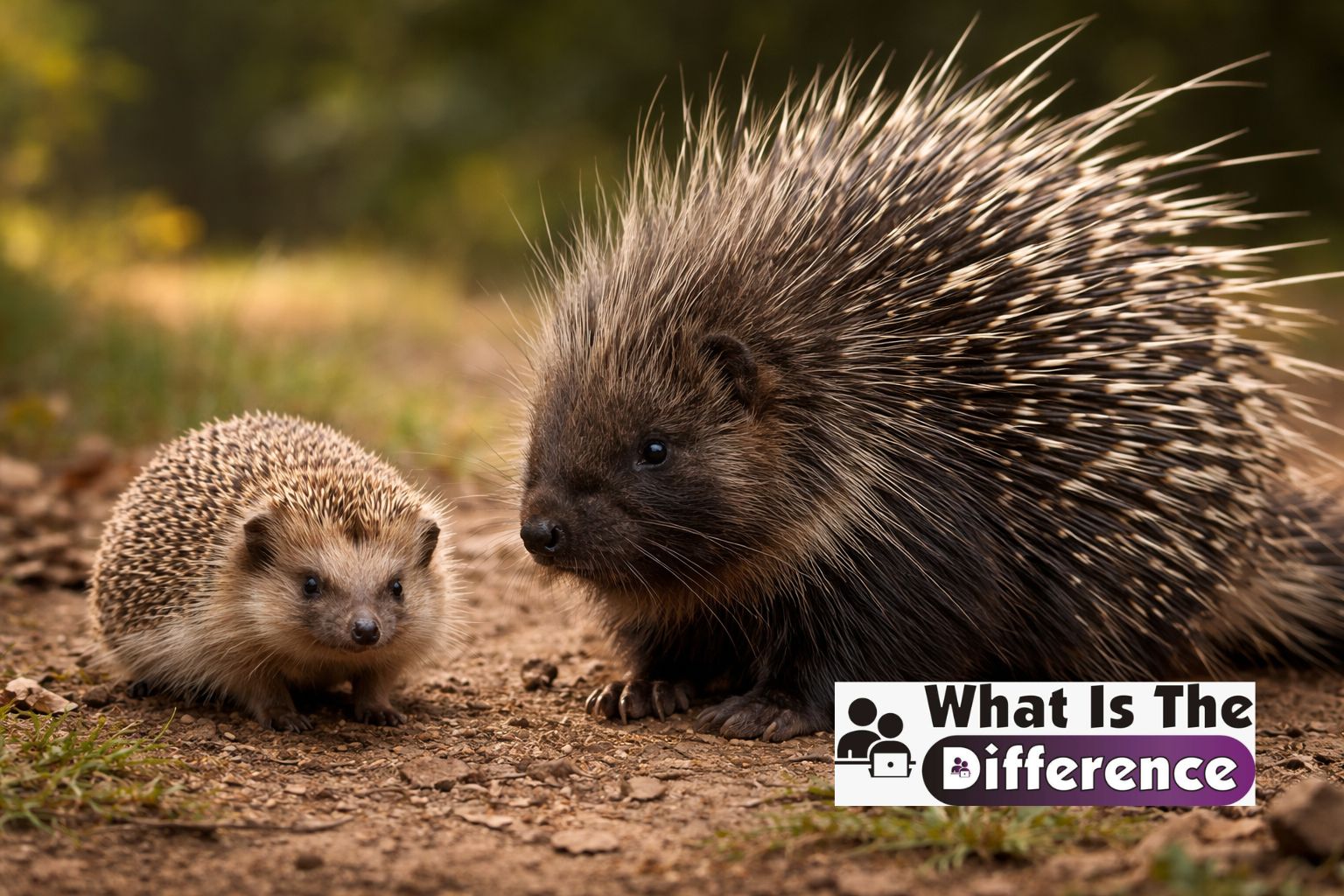
- Hedgehog: Small, rounded, and compact
- Porcupine: Large, bulky, and elongated
A porcupine can be several times larger than a hedgehog.
Spines vs Quills
This is one of the most important differences.
- Hedgehog spines:
- Short and fixed
- Not easily detachable
- Used mainly for passive defense
- Porcupine quills:
- Long, sharp, and loosely attached
- Can detach when touched
- Some species have barbed quills
Defense Mechanism
- Hedgehog: Rolls into a tight ball, hiding its face and limbs
- Porcupine: Raises quills and may back into predators
Contrary to popular belief, porcupines do not “shoot” their quills they detach on contact.
Diet and Eating Habits
- Hedgehog:
- Insectivore (eats insects, worms, small creatures)
- Porcupine:
- Herbivore (feeds on leaves, bark, fruits, and plants)
Habitat and Distribution
- Hedgehogs: Europe, Asia, Africa
- Porcupines: Americas, Africa, Asia
They rarely share the same environments.
Behavior and Lifestyle
- Both are generally nocturnal
- Both are mostly solitary animals
- However, porcupines are slower and more cautious, while hedgehogs are more active
Hedgehog vs Porcupine: Quick Comparison
| Feature | Hedgehog | Porcupine |
|---|---|---|
| Size | Small | Large |
| Spines/Quills | Short, fixed spines | Long, detachable quills |
| Diet | Insects | Plants |
| Defense | Rolls into a ball | Raises quills |
| Habitat | Europe, Asia, Africa | Americas, Africa, Asia |
How to Tell the Difference Between Hedgehog and Porcupine
If you ever spot one of these animals, here’s a simple step-by-step guide to identify it.
Step 1: Look at the Size
- Small and palm-sized? Likely a hedgehog
- Large and heavy? It’s a porcupine
Step 2: Observe the Spines or Quills
- Short, dense spines = hedgehog
- Long, sharp quills = porcupine
Step 3: Check the Body Shape
- Rounded and compact = hedgehog
- Elongated and bulky = porcupine
Step 4: Notice Behavior
- Curling into a ball = hedgehog
- Standing ground with raised quills = porcupine
Real-Life Examples and Situations
In the Wild
A hedgehog encountering danger will quickly roll up and remain still. A porcupine, on the other hand, may turn its back and display its quills as a warning.
Human Encounters
Hedgehogs are sometimes kept as pets in certain regions due to their small size and manageable nature. Porcupines, however, are rarely domesticated due to their size and defensive quills.
Common Misidentification
Many people confuse baby porcupines with hedgehogs. However, even young porcupines have noticeable quills and a different body structure.
Unique Traits of Each Animal
What Makes Hedgehogs Unique
- Ability to form a complete protective ball
- Small and relatively harmless
- Adaptable to human environments
What Makes Porcupines Unique
- One of the most effective natural defense systems
- Quills that can deter large predators
- Strong teeth capable of chewing wood and bark
Tips to Avoid Confusing Hedgehogs and Porcupines
Focus on Size First
This is the quickest way to identify the animal correctly.
Look Closely at the Spines
The structure and length of spines/quills are very different.
Observe the Environment
- Hedgehogs are often seen in gardens
- Porcupines are more common in forests or wild areas
Common Mistakes to Avoid
Assuming They Are Related
Despite their similar appearance, they are not closely related. Porcupines are rodents, while hedgehogs belong to a different mammal group.
Believing Porcupines Shoot Quills
This is a myth. Quills detach only when touched.
Judging Only by Appearance
Behavior, size, and habitat provide more reliable clues than looks alone.
Why the Difference Between Elk and Moose Really Matters
Frequently Asked Questions (FAQ)
Are hedgehogs and porcupines related?
No, they are not closely related. They belong to entirely different animal families.
Can a porcupine shoot its quills?
No, porcupines cannot shoot quills. The quills detach upon contact.
Which is more dangerous: hedgehog or porcupine?
Porcupines are more dangerous due to their long, sharp quills.
Do hedgehogs and porcupines live in the same places?
Generally no. Their habitats differ based on species and geography.
Can hedgehogs be kept as pets?
Yes, in some regions hedgehogs are kept as pets, but regulations vary.
Conclusion
The difference between hedgehog and porcupine is clear once you understand their key traits. While they may look alike at first, they differ significantly in size, diet, behavior, and defense mechanisms.
- Hedgehogs are small, insect-eating animals that rely on curling up for protection
- Porcupines are larger, plant-eating rodents with powerful quills for defense
By focusing on size, spines, and behavior, you can easily tell them apart in any situation. Understanding these differences not only clears up confusion but also helps you appreciate how unique each animal truly is.