Choosing the right business structure is one of the most important decisions you’ll make when starting or running a business in Florida. Many people—especially professionals—often wonder about the difference between LLC and PA in Florida, and which option is better for their situation.
While both structures offer liability protection, they serve very different purposes. In this guide, we’ll break everything down in simple terms so you can understand how each entity works, who should use them, and how to make the right choice.
| Feature | LLC in Florida | PA in Florida |
|---|---|---|
| Definition | Flexible business entity | Corporation for licensed professionals |
| Who Can Form | Anyone | Only licensed professionals |
| Ownership | Individuals or entities | Licensed individuals only |
| Purpose | General business activities | Professional services (law, medicine, etc.) |
| Liability Protection | Protects personal assets from business debts | Protects business liabilities, not malpractice |
| Professional Liability | Not applicable | Owners liable for their own malpractice |
| Taxation | Flexible (pass-through or corporate) | Typically corporate taxation |
| Management Structure | Flexible (member or manager-managed) | Formal corporate structure |
| Setup Requirements | Simple and quick | More regulated and strict |
| Compliance | Fewer ongoing requirements | Must meet professional regulations |
| Best For | Entrepreneurs and small businesses | Doctors, lawyers, accountants |
| Flexibility | High flexibility | Limited flexibility due to rules |
What Is an LLC in Florida?
Definition of a Limited Liability Company (LLC)
A Limited Liability Company (LLC) is a flexible business structure that combines elements of a corporation and a sole proprietorship. It’s one of the most popular choices for small businesses in Florida.
An LLC protects the owner’s personal assets from business debts and liabilities, which is why it’s often the go-to option for entrepreneurs.
Key Features of an LLC
Here are the main characteristics that define an LLC:
- Limited liability protection for owners (called members)
- Flexible management structure (member-managed or manager-managed)
- Pass-through taxation, meaning profits are taxed on the owner’s personal return
- Fewer formalities compared to corporations
These features make LLCs attractive for startups, freelancers, and growing businesses.
Who Should Choose an LLC?
An LLC is ideal for:
- Small business owners
- Online businesses or e-commerce stores
- Consultants and freelancers
- Investors and real estate businesses
If your business doesn’t require a professional license, an LLC is often the simplest and most flexible choice.
What Is a PA in Florida?
Definition of a Professional Association (PA)
A Professional Association (PA) is a type of corporation specifically designed for licensed professionals in Florida. It allows individuals in regulated fields to operate their practice while maintaining a formal business structure.
Key Features of a PA
A PA differs from an LLC in several important ways:
- Ownership is limited to licensed professionals
- Structured similarly to a corporation
- Provides liability protection for business debts
- Does not fully protect against professional malpractice
This distinction is crucial when understanding the difference between LLC and PA in Florida.
Who Needs a PA?
A PA is typically required for professionals such as:
- Doctors and dentists
- Lawyers
- Accountants
- Architects
If your profession is regulated by the state, forming a PA may not just be an option—it may be a requirement.
Key Difference Between LLC and PA in Florida
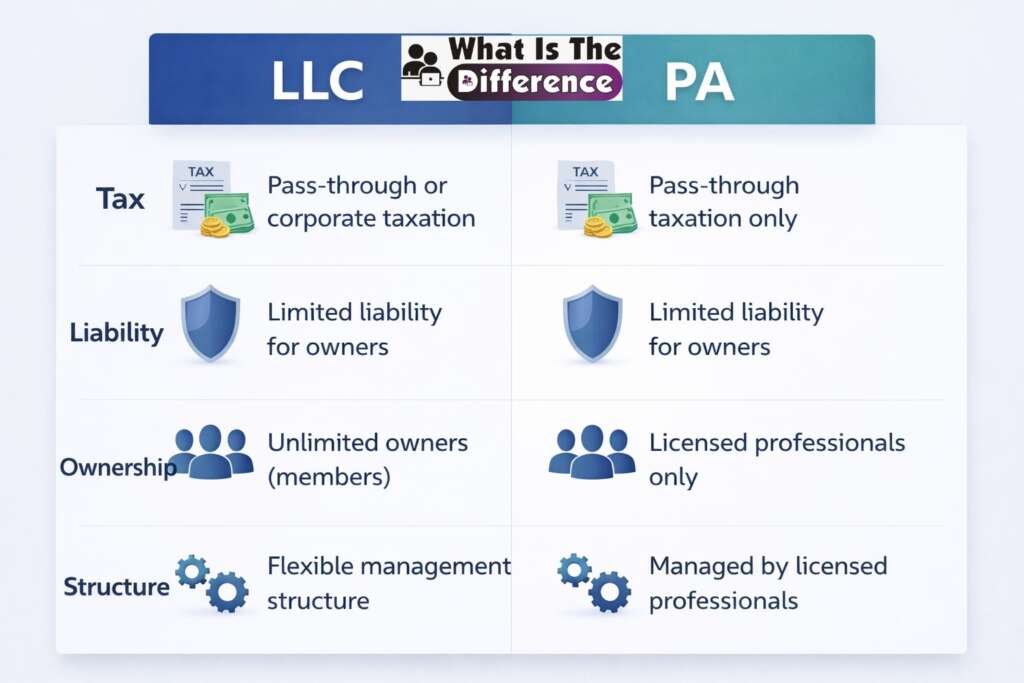
Understanding the difference between LLC and PA in Florida becomes clearer when you compare their core features.
Ownership Requirements
- LLC: Open to anyone, including individuals and other entities
- PA: Only licensed professionals can own and operate
Liability Protection
- LLC: Protects personal assets from business debts and lawsuits
- PA: Protects against business liabilities but not personal malpractice claims
This means professionals are still responsible for their own actions, even within a PA.
Tax Treatment
- LLC: Flexible taxation (can be taxed as sole proprietor, partnership, or corporation)
- PA: Typically taxed as a corporation
For more details on how corporate taxation works, see Corporate tax.
Management Structure
- LLC: Flexible and informal
- PA: More structured, similar to a corporation with directors and officers
Legal and Regulatory Requirements
- LLC: Fewer restrictions and easier to set up
- PA: Must comply with licensing boards and professional regulations
LLC vs PA in Florida: Which One Is Right for You?
Choosing between these two depends on your profession and business goals.
Based on Your Profession
- If you’re a licensed professional, you may be required to form a PA
- If not, an LLC is usually the better option
Based on Business Goals
- Want flexibility and simplicity? Choose an LLC
- Need a formal structure for a professional practice? Choose a PA
Based on Liability Needs
- LLCs are great for general business risks
- PAs are designed for professional environments but don’t shield malpractice
How to Choose Between LLC and PA in Florida (Step-by-Step Guide)
If you’re still unsure, follow this simple process.
Step 1: Identify Your Profession
Check whether your profession requires a licensed structure. If yes, a PA may be necessary.
Step 2: Understand Liability Risks
Consider the type of risks your business faces. Professional services often carry higher personal liability.
Step 3: Compare Tax Options
LLCs offer more flexibility, while PAs follow stricter corporate taxation rules.
Step 4: Consider Management Style
Do you prefer a flexible setup or a formal corporate structure?
Step 5: Consult a Professional
It’s always wise to speak with a lawyer or accountant before making your final decision.
Real-Life Examples and Use Cases
Example of an LLC in Florida
Imagine someone starting an online clothing store. They choose an LLC because:
- No professional license is required
- They want simple management
- They benefit from pass-through taxation
Example of a PA in Florida
Now consider a group of doctors opening a clinic. They form a PA because:
- Their profession requires licensing
- They need a formal structure
- They must comply with medical regulations
Tips for Choosing the Right Business Structure
Making the right choice early can save time and money later.
- Check licensing requirements before registering your business
- Think about your long-term growth plans
- Understand how each structure affects taxes
- Keep compliance and paperwork in mind
- Seek advice from qualified professionals
Common Mistakes to Avoid
Many business owners make avoidable errors when choosing a structure.
- Choosing an LLC when a PA is legally required
- Ignoring professional licensing rules
- Overlooking tax implications
- Not planning for future expansion
Avoiding these mistakes will help you build a solid foundation.
Related Comparison
If you’re exploring different legal structures, you might also find this helpful guide on useful for understanding broader business entity differences.
Is There a Lanzarote Time Difference? Everything Explained
FAQs About LLC vs PA in Florida
What is the main difference between LLC and PA in Florida?
The main difference is that LLCs are open to all businesses, while PAs are specifically for licensed professionals.
Can a professional choose an LLC instead of a PA?
In many cases, no. Certain professions in Florida are required to operate as a PA or similar entity.
Which offers better liability protection?
LLCs protect against business liabilities, while PAs protect the business but not individual malpractice.
How are LLCs and PAs taxed in Florida?
LLCs offer flexible taxation options, while PAs are generally taxed as corporations.
Is a PA more expensive to maintain than an LLC?
Yes, PAs often involve more compliance, paperwork, and costs due to regulatory requirements.
Can a PA convert into an LLC?
In some cases, yes—but it depends on licensing laws and should be done with legal guidance.
Conclusion
Understanding the difference between LLC and PA in Florida is essential for making the right business decision. While both structures offer liability protection, they serve different purposes.
An LLC is flexible, simple, and suitable for most businesses. A PA, on the other hand, is designed specifically for licensed professionals who must meet strict regulatory standards.
The best choice depends on your profession, goals, and risk exposure. Take the time to evaluate your needs carefully—and when in doubt, seek professional advice to ensure you’re on the right path.