
Introduction
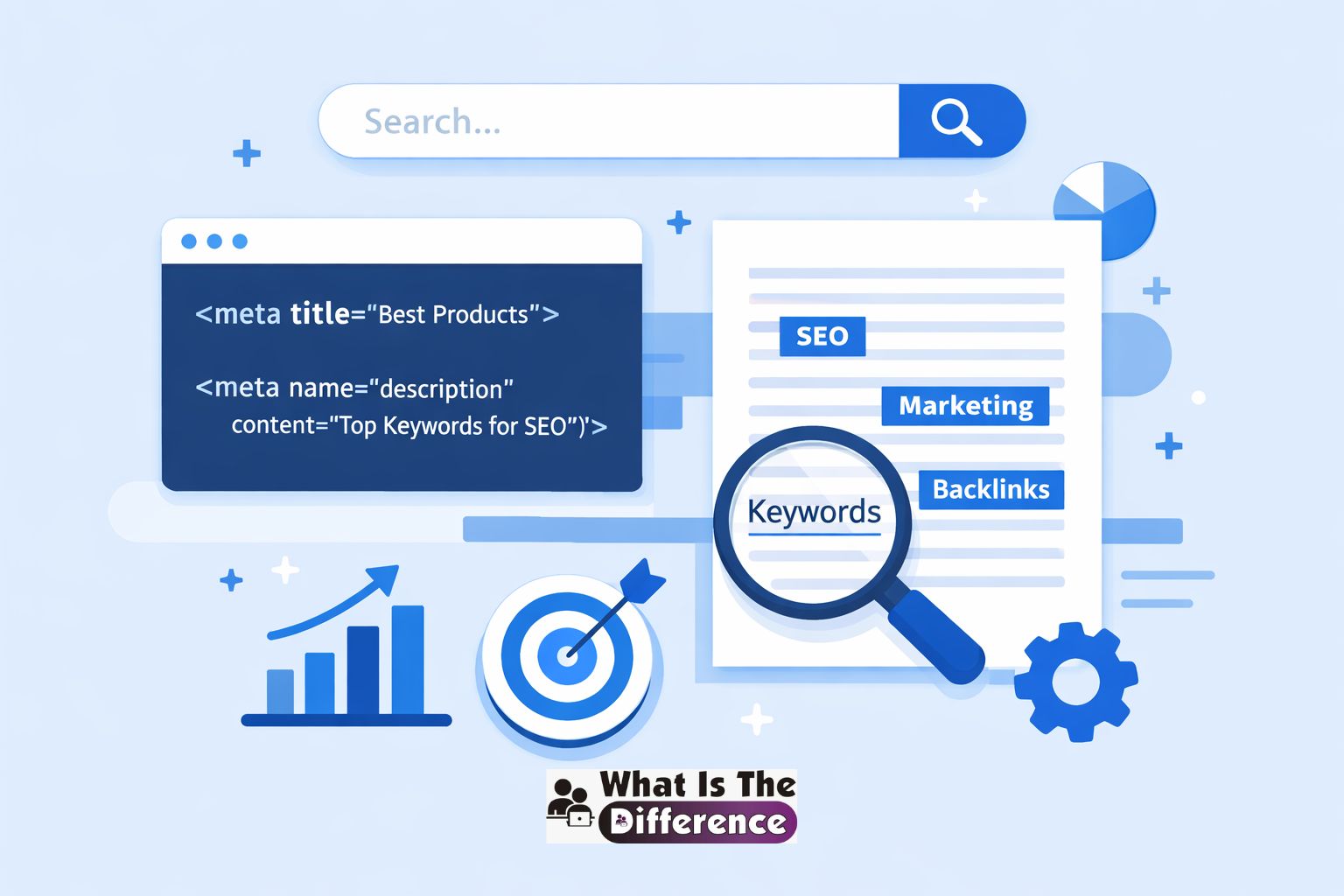
If you’re new to SEO, you’ve probably heard about meta tags and keywords. They often come up together, which leads many people to assume they’re the same thing. In reality, they serve very different purposes.
Understanding the difference between meta tags and keywords is essential if you want your content to rank well on search engines and attract the right audience.
In this guide, we’ll break down both concepts in simple terms, explain how they work together, and show you how to use them effectively.
| Feature | Meta Tags | Keywords |
|---|---|---|
| Definition | HTML elements describing a webpage | Words users search on engines |
| Purpose | Provide page information to search engines | Match content with user queries |
| Location | In HTML head section | In content (text, headings) |
| Visibility | Mostly hidden (except title/description) | Visible to users in content |
| Role in SEO | Helps display and indexing | Helps ranking and relevance |
| User Interaction | Indirect (affects clicks) | Direct (matches search intent) |
| Types | Title, description, robots | Short-tail, long-tail, LSI |
| Usage | Written once per page | Used multiple times naturally |
| Impact on CTR | High (title & description) | Indirect impact |
| Control | Fully controlled by website owner | Based on user search behavior |
| Importance Today | Still important for SEO | Essential for SEO success |
| Risk of Misuse | Poor CTR if badly written | Penalties if overused |
What Are Meta Tags?
Simple Definition of Meta Tags
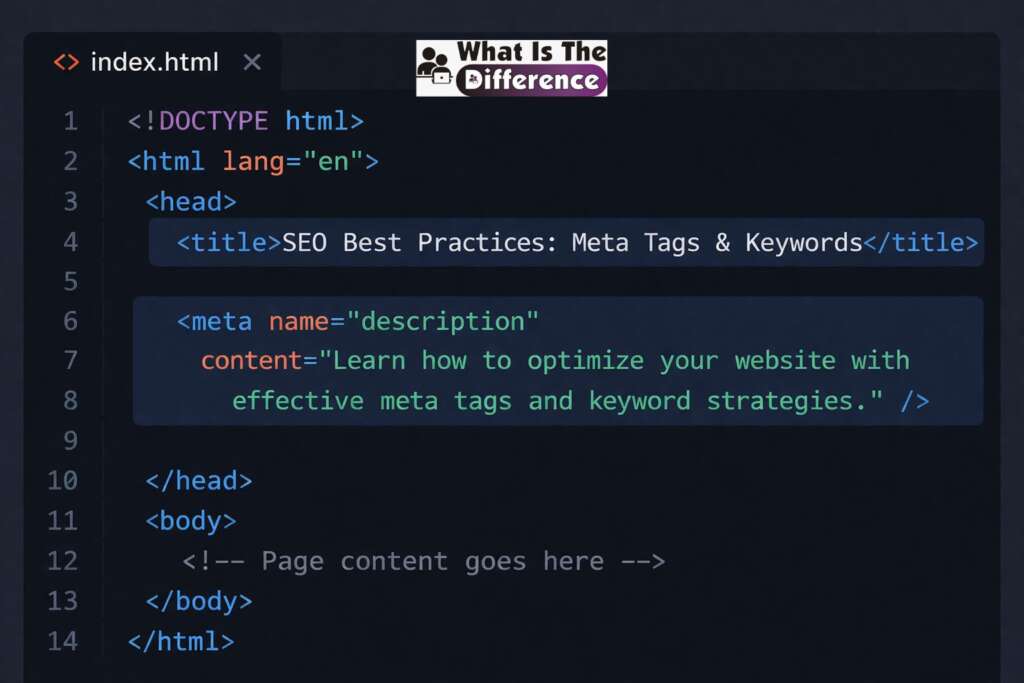
Meta tags are snippets of HTML code that provide information about a webpage to search engines. They are placed in the “head” section of a page and help search engines understand what your content is about.
While users don’t usually see most meta tags, they play a key role behind the scenes.
Types of Meta Tags
Meta Title (Title Tag)
This is the clickable headline that appears in search results. It’s one of the most important SEO elements.
Meta Description
A short summary of your page that appears below the title in search results. It helps users decide whether to click.
Meta Robots Tag
This tells search engines how to crawl and index your page (e.g., index or noindex).
Other Meta Tags
Includes viewport, charset, and more—mainly for technical or display purposes.
Why Meta Tags Matter in SEO
- Improve click-through rate (CTR)
- Help search engines understand page context
- Control how your page appears in search results
Meta tags don’t directly boost rankings, but they strongly influence visibility and user behavior.
What Are Keywords in SEO?
Simple Definition of Keywords
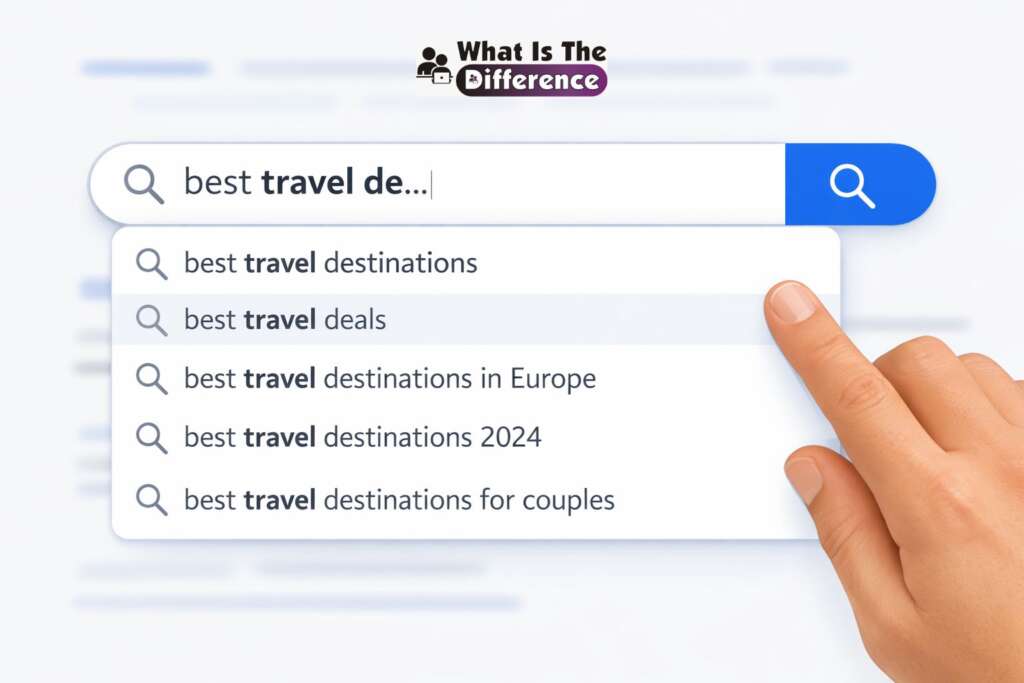
Keywords are the words and phrases people type into search engines when looking for information. They represent user intent and guide content creation.
For example, someone searching “best SEO tips” is using keywords to find relevant content.
Types of Keywords
Short-Tail Keywords
Broad terms like “SEO” or “marketing”
Long-Tail Keywords
More specific phrases like “difference between meta tags and keywords”
LSI Keywords
Related terms that give context, such as “on-page SEO” or “search engine optimization”
Intent-Based Keywords
- Informational
- Transactional
- Navigational
Why Keywords Are Important
- Help content rank in search engines
- Match user search intent
- Drive targeted traffic to your website
Without keywords, search engines wouldn’t know when to show your content.
Difference Between Meta Tags and Keywords (Key Comparison)
To fully understand the difference between meta tags and keywords, let’s compare them directly.
Purpose
- Meta tags: Provide information about a webpage
- Keywords: Represent what users are searching for
Placement
- Meta tags: Located in the HTML code
- Keywords: Used throughout your content
Function in SEO
- Meta tags: Help search engines display your page
- Keywords: Help search engines match your content to queries
Visibility
- Meta tags: Mostly hidden (except title and description)
- Keywords: Visible within headings and paragraphs
Role in Ranking
- Meta tags: Indirect impact (CTR and indexing)
- Keywords: Direct impact when used naturally
In short, meta tags describe your page, while keywords connect your page to users.
Why Understanding the Difference Between Meta Tags and Keywords Matters
Better SEO Strategy
When you understand both elements, you can optimize your content more effectively.
Improved Content Quality
Using keywords correctly ensures your content answers real user queries.
Higher Search Visibility
Well-optimized meta tags can improve clicks, while keywords improve rankings.
Avoiding Common Mistakes
Many beginners misuse keywords or ignore meta tags entirely—both can hurt performance.
If you’re working on improving your digital habits and productivity alongside SEO learning, this guide on how to improve your daily routine can be surprisingly helpful.
How to Use Meta Tags and Keywords Together Effectively
To get the best results, you need to combine both elements strategically.
Step 1: Perform Keyword Research
Use tools to find relevant keywords based on search volume and intent.
Step 2: Add Keywords Naturally in Content
Include your main keyword in headings, paragraphs, and introductions—but keep it natural.
Step 3: Optimize Meta Title
Include your primary keyword in the title tag to improve relevance and visibility.
Step 4: Write a Strong Meta Description
Summarize your content clearly and include keywords where appropriate.
Step 5: Avoid Keyword Stuffing
Overusing keywords can harm readability and rankings. Focus on quality instead.
Step 6: Monitor Performance
Track rankings and adjust your strategy based on results.
Real-Life Examples of Meta Tags and Keywords
Example of a Meta Title and Description
- Meta Title: Difference Between Meta Tags and Keywords Explained
- Meta Description: Learn the key differences and how to use both for better SEO results
Example of Keyword Usage
In a blog post, you might naturally include phrases like:
- “difference between meta tags and keywords”
- “SEO meta tags guide”
- “keyword optimization tips”
How Both Work Together
Meta tags attract clicks, while keywords help your content rank. Together, they create a complete SEO strategy.
Common Mistakes to Avoid
Overusing Keywords
Keyword stuffing makes content unreadable and can lead to penalties.
Ignoring Meta Descriptions
Missing or poorly written descriptions reduce your chances of getting clicks.
Using Irrelevant Keywords
Targeting the wrong keywords brings the wrong audience.
Not Updating Meta Tags
Outdated meta tags can hurt performance over time.
Best Practices for SEO Optimization
Write Clear Meta Titles
Keep them concise, relevant, and engaging.
Use Long-Tail Keywords
They are easier to rank for and more targeted.
Focus on User Intent
Always write for people first, search engines second.
Keep Meta Descriptions Concise
Aim for 140–160 characters with a clear message.
Maintain Content Quality
Good SEO starts with valuable, helpful content.
Understanding SEO in a Broader Context
SEO is not just about keywords or meta tags—it’s about delivering the right content to the right audience.
According to Wikipedia’s explanation of search engine optimization, SEO involves improving visibility through both technical and content-related strategies.
This highlights why both meta tags and keywords are essential—they work together as part of a larger system.
The Real Difference Between Job and Career Explained
FAQ About the Difference Between Meta Tags and Keywords
What is the main difference between meta tags and keywords?
Meta tags describe your page to search engines, while keywords help match your content to user searches.
Do meta tags still matter for SEO?
Yes, especially meta titles and descriptions, as they influence click-through rates.
How many keywords should I use in a blog post?
There’s no fixed number. Focus on natural usage and relevance rather than quantity.
Can keywords replace meta tags?
No, both serve different purposes and are needed for a complete SEO strategy.
Are meta keywords still used by search engines?
Most search engines no longer use meta keywords for ranking.
Conclusion
The difference between meta tags and keywords comes down to their roles in SEO. Meta tags help search engines understand and display your content, while keywords connect your content to user intent.
When used together effectively, they create a strong foundation for better rankings, higher traffic, and improved user engagement.
By applying the strategies in this guide, you can optimize your content with confidence and build a smarter, more effective SEO approach moving forward.