Introduction
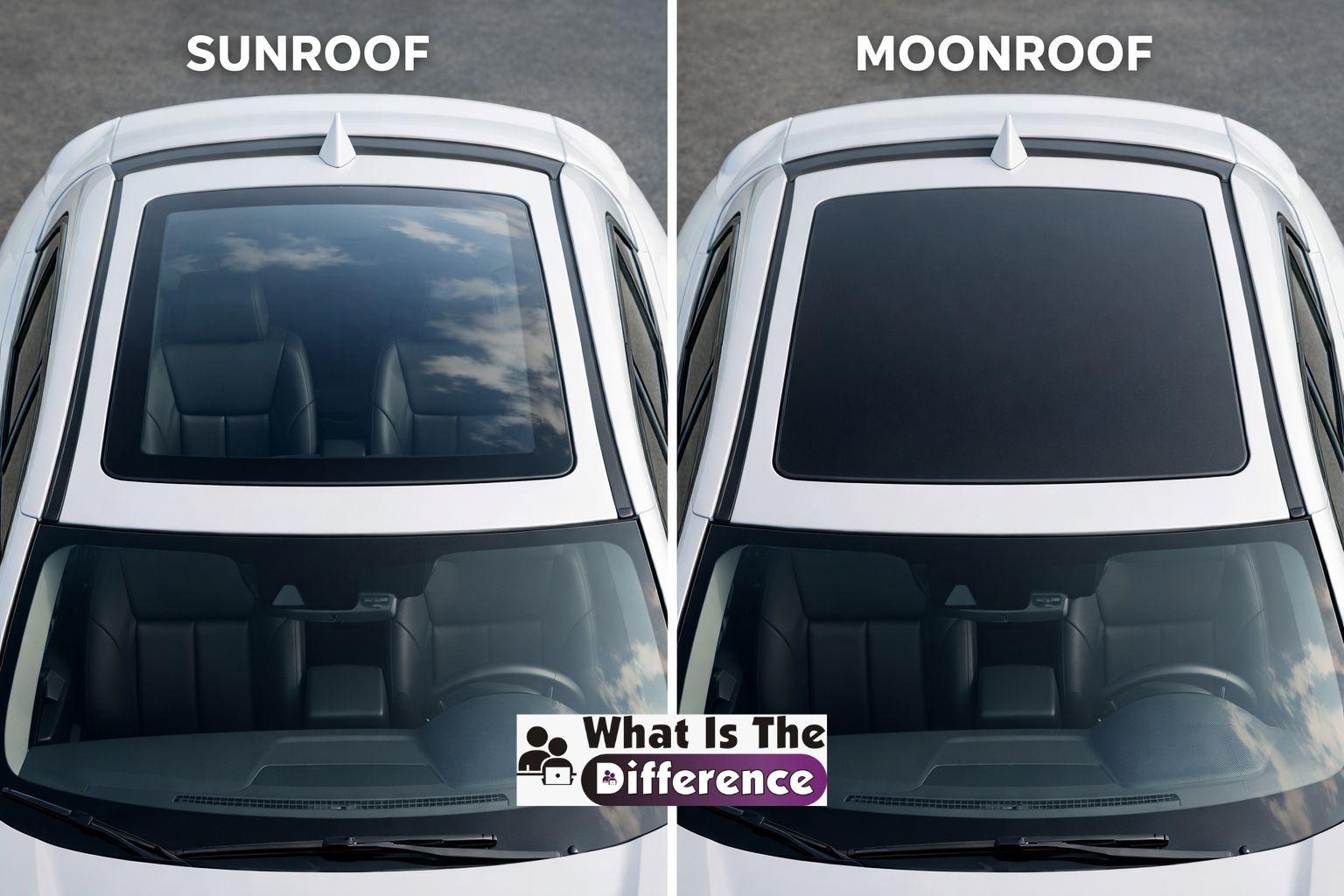
If you’ve ever browsed car listings or talked to a salesperson, you’ve probably heard the terms sunroof and moonroof used interchangeably. For many drivers, they seem like the same feature just a panel on the roof that opens up.
But there is a real difference between sunroof and moonroof, and understanding it can help you make a better decision when buying a car. The distinction affects everything from comfort and design to cost and driving experience.
In this guide, we’ll break down what each term actually means, how they differ, and which option might be right for you.
| Feature | Sunroof | Moonroof |
|---|---|---|
| Material | Solid, usually metal | Glass, often tinted |
| Transparency | Opaque (blocks light) | Transparent (lets light in) |
| Design | Matches car roof | Visible glass panel |
| Light دخول | No light when closed | Allows natural light inside |
| Opening Style | Tilt or removable | Tilt or slide open |
| Interior Shade | Not always included | Usually has sliding shade |
| Modern Usage | Less common today | Common in modern cars |
| Aesthetic | Basic and functional | Premium and stylish |
| Heat دخول | Less heat enters | Can increase cabin heat |
| Cost | Usually cheaper | Typically more expensive |
| Maintenance | Lower maintenance | Slightly higher maintenance |
| Popularity | Older vehicle feature | Standard in newer models |
Difference Between Sunroof and Moonroof: Quick Overview
At a basic level, both features are roof panels that allow light or air into your car. However, the difference between sunroof and moonroof comes down to material, design, and function.
- A sunroof is typically an opaque panel (often metal) that can be tilted or removed
- A moonroof is usually a transparent or tinted glass panel that slides open
Sunroof vs Moonroof in One Sentence
A sunroof blocks light when closed, while a moonroof lets light in even when shut.
Why People Confuse Them
Modern cars mostly come with glass panels, which has blurred the distinction. Many manufacturers now use “sunroof” as a general term, even when they’re technically referring to a moonroof.
What Is a Sunroof?
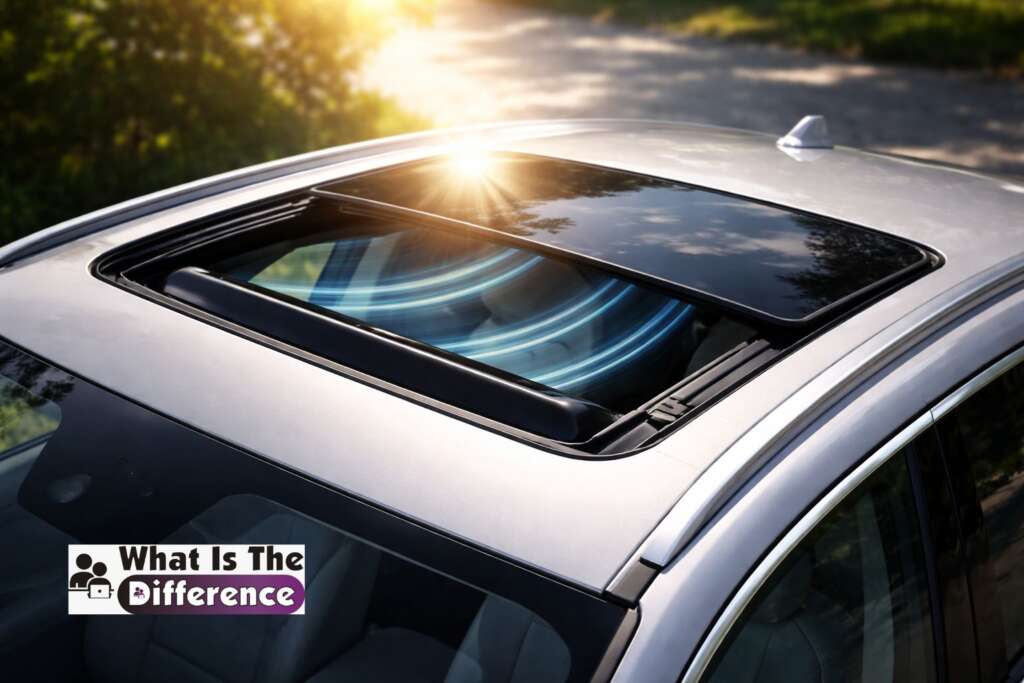
A sunroof is a solid panel built into a car’s roof that can be opened to allow fresh air and sunlight inside.
Basic Features of a Sunroof
- Usually made of metal or opaque material
- Can tilt open or be fully removed
- Often matches the color of the car’s roof
Sunroofs were more common in older vehicles and are less frequently seen in modern designs.
Types of Sunroofs
Pop-up Sunroof
A manually operated panel that tilts open for ventilation.
Spoiler Sunroof
Slides open slightly above the roof, often found in compact cars.
Inbuilt Sunroof
Slides completely into the roof, offering a cleaner look.
Pros and Cons of Sunroofs
Pros:
- Better airflow and ventilation
- Simpler design
- Often more durable
Cons:
- Blocks natural light when closed
- Less modern aesthetic
- Limited visibility
What Is a Moonroof?
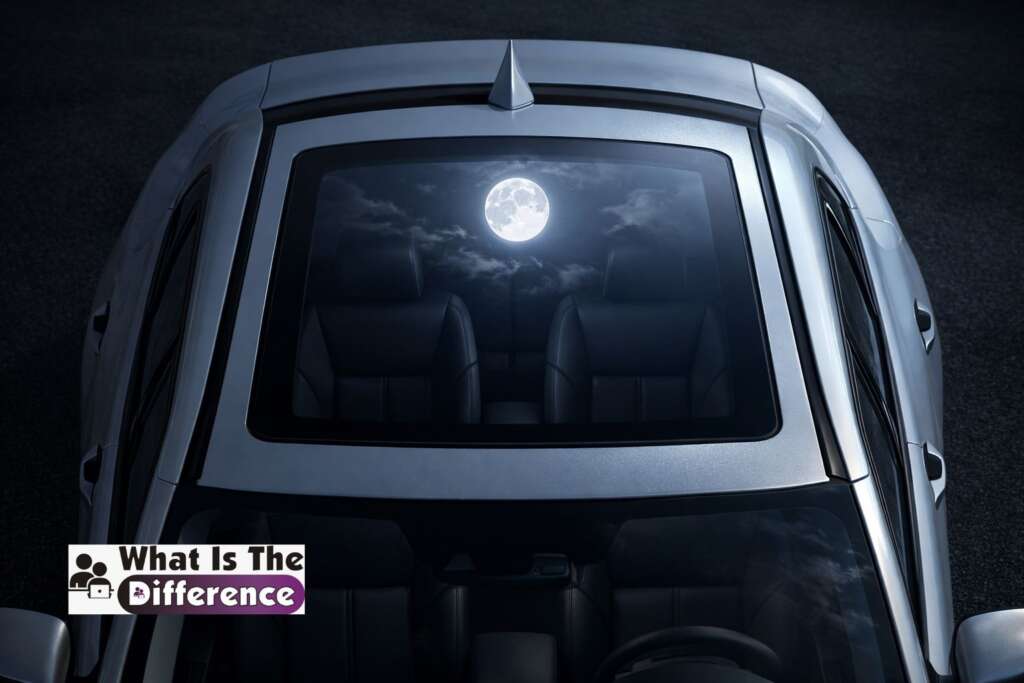
A moonroof is a type of sunroof made from glass, usually tinted, that allows light to enter even when closed.
Key Features of a Moonroof
- Transparent or tinted glass panel
- Can tilt or slide open
- Often includes an interior sliding shade
Most modern vehicles now come with moonroofs rather than traditional sunroofs.
For a deeper technical explanation of roof systems, you can explore this overview on from Wikipedia.
Types of Moonroofs
Panoramic Moonroof
Extends across a large portion of the roof, sometimes covering both front and rear seats.
Built-in Moonroof
Slides between the roof and headliner for a seamless look.
Pros and Cons of Moonroofs
Pros:
- Lets in natural light even when closed
- Modern, premium appearance
- Enhances the driving experience
Cons:
- Can increase cabin heat
- More expensive
- Slightly higher maintenance
Key Differences Between Sunroof and Moonroof
Understanding the difference between sunroof and moonroof becomes easier when you compare their core features side by side.
Material and Design
- Sunroof: Solid, opaque panel
- Moonroof: Glass, transparent panel
Visibility and Light
- Sunroof: Blocks sunlight when closed
- Moonroof: Allows light inside even when shut
Functionality and Operation
- Both can tilt or slide open
- Moonroofs often include an internal sunshade
Cost and Popularity
- Sunroofs are less common today
- Moonroofs dominate modern car designs and are often included in premium models
How to Choose Between a Sunroof and Moonroof
Choosing between the two depends on your lifestyle, preferences, and budget. Here’s a simple guide to help you decide.
Step 1: Consider Your Climate
If you live in a hot region, a moonroof may let in too much heat unless you use the shade.
A sunroof may offer better insulation when closed.
Step 2: Think About Your Driving Experience
Do you enjoy natural light and an open feel? A moonroof enhances cabin brightness.
Prefer a more controlled environment? A sunroof may suit you better.
Step 3: Evaluate Your Budget
Moonroofs are generally more expensive due to their design and materials.
Sunroofs are simpler and may cost less to maintain.
Step 4: Check Vehicle Availability
Most modern cars come with moonroofs rather than traditional sunroofs.
Your choice may depend on what’s available in your preferred model.
Real-Life Use Cases: Which One Fits Your Needs?
Daily Commuters
If you mainly drive short distances, a moonroof can make your daily commute feel more open and enjoyable.
Road Trip Lovers
For long drives and scenic routes, a moonroof especially a panoramic one adds a sense of space and connection to the surroundings.
Luxury Car Buyers
Moonroofs are often associated with premium vehicles and upscale features.
They enhance both aesthetics and resale value.
You’ll often see these features highlighted in lifestyle and automotive trends, like those covered in whatisthedifference.co.uk article on car features and upgrades:What Is the Difference Between AWD and 4WD? A Practical Explanation for Car Buyers
Tips and Common Mistakes to Avoid
Don’t Assume They’re the Same
Many people use the terms interchangeably, but knowing the difference helps you choose wisely.
Check Maintenance Requirements
Glass panels (moonroofs) may require more care, especially seals and tracks.
Avoid Choosing Based on Looks Alone
While moonroofs look more modern, functionality and comfort should guide your decision.
Test Before You Buy
Always try opening and closing the roof system during a test drive to see how it feels.
Frequently Asked Questions (FAQ)
What is the main difference between sunroof and moonroof?
The main difference is that a sunroof is opaque, while a moonroof is made of glass and lets light in even when closed.
Is a moonroof better than a sunroof?
It depends on preference. Moonroofs offer more light and a modern look, while sunroofs provide better insulation.
Do all modern cars have moonroofs instead of sunroofs?
Most modern vehicles use moonroofs, though the term “sunroof” is still commonly used.
Which is more expensive, sunroof or moonroof?
Moonroofs are generally more expensive due to their glass design and added features.
Can a sunroof be converted into a moonroof?
Not easily. It usually requires significant modifications and is not recommended.
Does a moonroof increase car value?
Yes, especially in premium vehicles, as it enhances comfort and aesthetics.
Conclusion
The difference between sunroof and moonroof may seem small, but it plays a big role in your driving experience. From materials and design to comfort and cost, each option offers unique advantages.
If you prefer a modern, light-filled cabin, a moonroof is likely the better choice. If you value simplicity and insulation, a traditional sunroof may still appeal to you.
Ultimately, the right choice depends on your needs, climate, and personal preferences. Understanding these differences ensures you make a smarter, more satisfying decision when choosing your next car.