When people think about managing their money, two types of financial institutions often come to mind: retail banks and credit unions. Both provide essential services such as savings accounts, checking accounts, loans, and payment options. At first glance, they can appear almost identical. Many people deposit money, take out loans, and use debit cards without thinking much about the institution behind those services.
However, understanding the structure of these organizations can help you make better financial decisions. The central question many consumers ask is simple: what is a major difference between retail banks and credit unions?
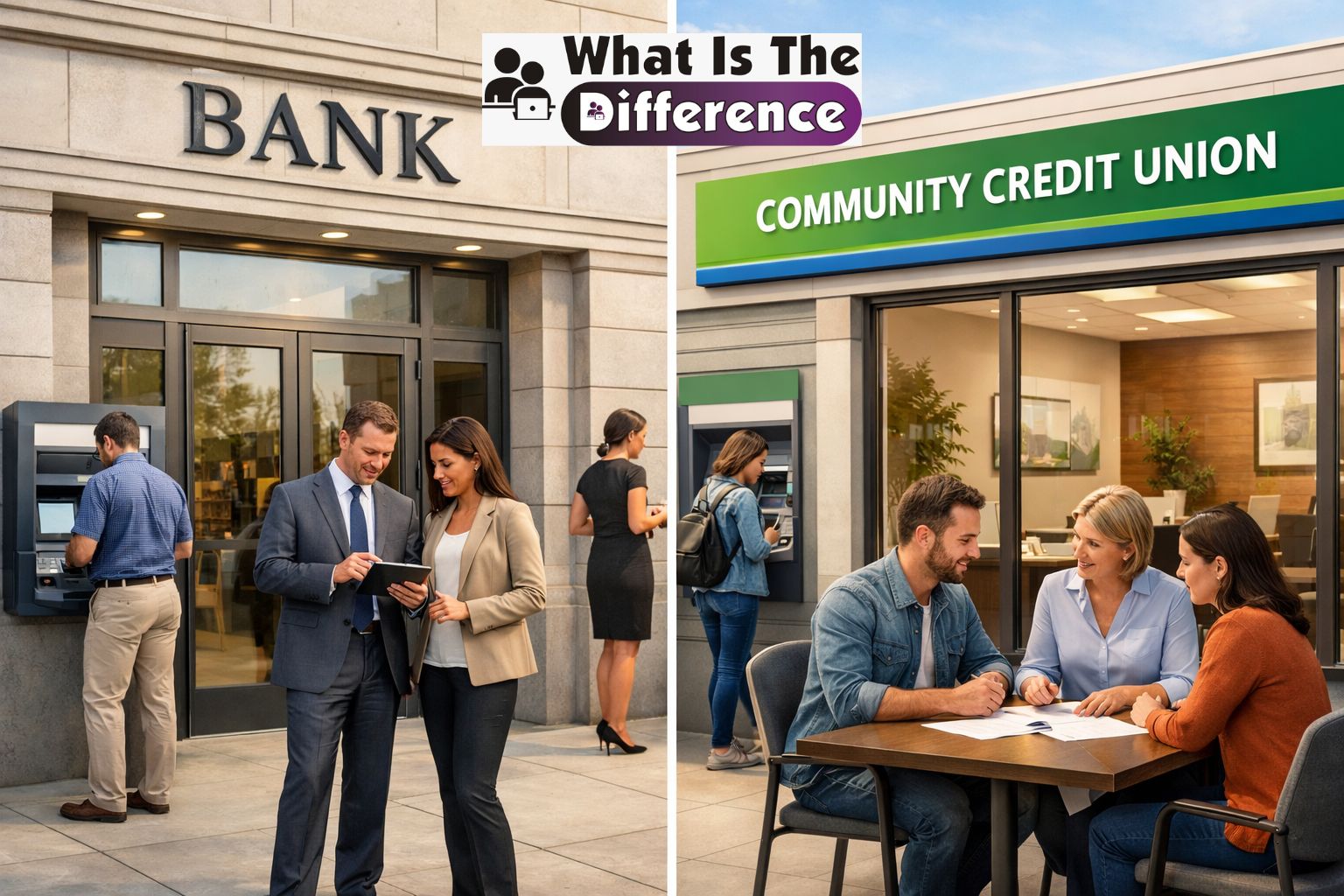
The answer lies in how these institutions are owned and how they operate. Retail banks are typically profit-driven corporations owned by shareholders, while credit unions are cooperative institutions owned by their members. This distinction shapes everything from fees and interest rates to the overall customer experience.
This article explores the differences in detail, explaining how retail banks and credit unions operate, what services they offer, and how their business models affect customers.
BIO
| Feature | Retail Banks | Credit Unions |
|---|---|---|
| Ownership | Owned by shareholders or investors | Owned by members who use the services |
| Purpose | Operate to generate profit | Operate to serve members rather than make profit |
| Governance | Controlled by corporate leadership and shareholders | Members vote for the board and leadership |
| Membership | Open to the general public | Membership often requires eligibility (community, job, or group) |
| Profit Distribution | Profits go to shareholders | Earnings are returned to members through better rates and services |
| Fees | May have higher service fees | Often lower fees for accounts and services |
| Loan Interest Rates | Rates can be higher depending on the bank | Often offer lower loan interest rates |
| Savings Rates | Usually moderate interest on savings | Often higher interest rates on savings accounts |
| Branch Network | Typically large national or regional networks | Usually smaller local branch networks |
| Technology | Advanced mobile apps and digital banking tools | Technology available but sometimes more limited |
| Customer Service | Can feel less personal in large institutions | Often more personal and community-focused |
| Community Focus | Focused mainly on business growth | Strong focus on community and member support |
Understanding Retail Banks
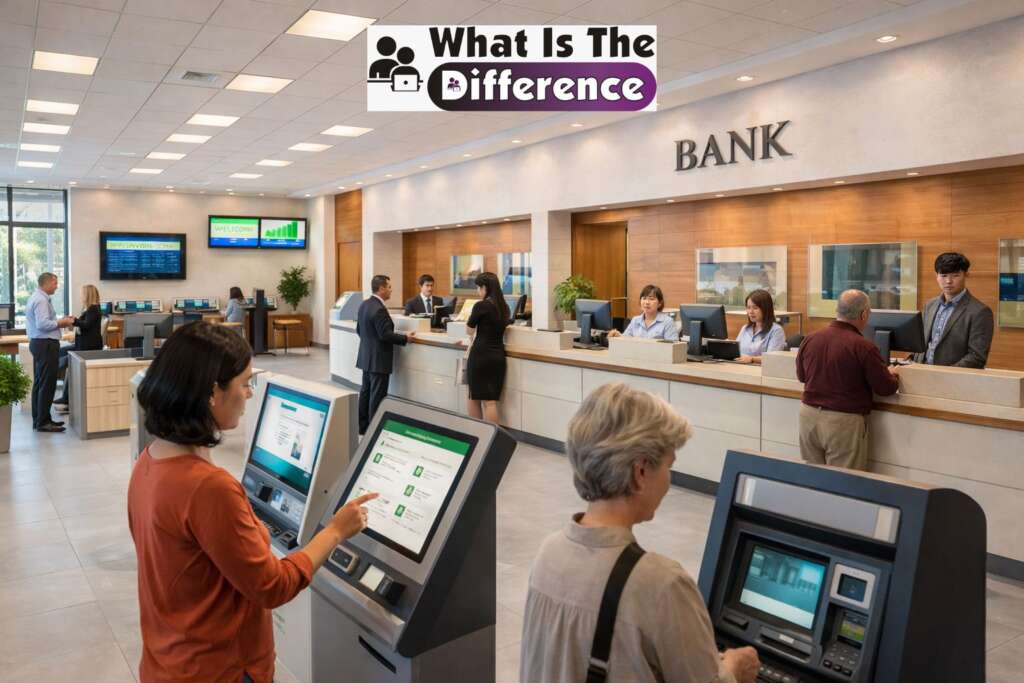
Retail banks are the most familiar type of financial institution. They serve individuals and households by offering everyday banking services that help people manage money, save, and borrow.
A retail bank operates as a financial business that provides services directly to consumers rather than large corporations. Customers can open checking accounts, deposit money, withdraw funds, and access credit products through these institutions.
Retail banks can be small community banks with only a few branches or large national institutions with thousands of locations. Regardless of size, their basic role is to manage deposits and provide financial products to individuals.
Common services offered by retail banks include savings accounts, checking accounts, debit cards, credit cards, mortgages, auto loans, and personal loans. Many banks also provide digital tools such as mobile banking apps, online bill payment systems, and financial planning tools.
Another defining feature of retail banks is their ownership structure. Most banks are for-profit institutions owned by shareholders or investors, meaning their operations are designed to generate returns for those shareholders.
This profit-driven model influences how banks set fees, interest rates, and product offerings. Banks often reinvest profits into expanding their services, improving technology, and increasing shareholder value.
Because of their scale and resources, retail banks often have extensive branch networks, large ATM systems, and advanced digital banking platforms. These advantages make them highly accessible and convenient for many customers.
Understanding Credit Unions
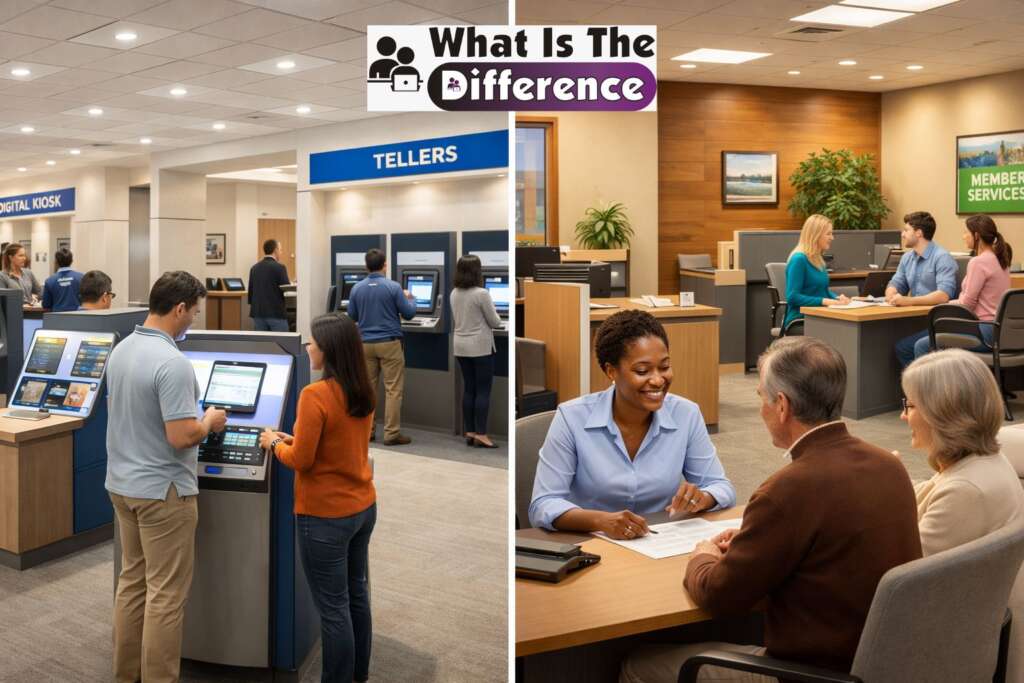
Credit unions are financial institutions that operate in a different way from retail banks. While they offer many of the same services, their structure and purpose are fundamentally different.
A credit union is a member-owned financial cooperative. When a person joins a credit union and opens an account, they become a member and partial owner of the organization.
This ownership model is one of the defining features of credit unions. Instead of shareholders or investors controlling the institution, the members themselves collectively own it.
Credit unions are also not-for-profit organizations. Rather than distributing profits to investors, they typically return earnings to members in the form of lower fees, better loan rates, or higher interest rates on savings.
Another important characteristic of credit unions is membership eligibility. Unlike banks, where anyone can open an account, credit unions often require individuals to meet certain criteria before joining. These requirements may include living in a specific community, working for a particular employer, or belonging to a certain organization.
Despite these membership rules, credit unions offer many of the same services as retail banks. Members can open savings and checking accounts, apply for loans, use debit cards, and access digital banking tools.
Credit unions also emphasize community involvement and personal relationships with members. Because they are typically smaller than large banks, they often focus on customer service and financial education.
What Is a Major Difference Between Retail Banks and Credit Unions?
The most important distinction between these two institutions is their ownership and purpose.
Retail banks operate as for-profit corporations, meaning they aim to generate profits for shareholders who own stock in the bank. In contrast, credit unions are not-for-profit cooperatives owned by the people who use their services.
This structural difference influences how each institution handles profits. Banks distribute earnings to shareholders, while credit unions typically reinvest earnings back into the organization or return them to members through better rates and lower fees.
Ownership also affects governance. In a credit union, members usually have voting rights and can participate in electing the board of directors. In a retail bank, decision-making power belongs primarily to shareholders and corporate leadership.
Because of these differences, credit unions often focus on member benefits and community support, while retail banks concentrate on expanding their business and maximizing financial returns.
Other Important Differences
While ownership is the most significant difference, several other distinctions arise from this core structural contrast.
One area where differences appear is in fees and interest rates. Because credit unions are not-for-profit, they often charge lower service fees and provide more favorable loan rates than traditional banks.
Retail banks, on the other hand, may charge higher fees for certain services. This does not mean banks always have higher costs, but the profit-driven model can influence pricing structures.
Technology and accessibility also vary between the two institutions. Large retail banks usually invest heavily in digital platforms and nationwide branch networks. As a result, customers may find it easier to access ATMs, mobile apps, and financial products.
Credit unions tend to operate on a smaller scale, which can limit branch availability. However, many credit unions participate in shared ATM networks and cooperative systems that expand access for members.
Customer service is another area where differences may appear. Credit unions often emphasize personalized service because they focus on member relationships and community engagement. Retail banks, particularly large ones, may offer efficient service but sometimes feel less personal due to their size.
Similarities Between Retail Banks and Credit Unions
Despite their differences, retail banks and credit unions share many similarities. Both institutions exist to help individuals manage money and access financial services.
Customers at both institutions can open savings accounts, deposit money, withdraw funds, and apply for loans. They can also use debit cards, online banking platforms, and mobile payment systems.
Another important similarity is safety. Deposits at banks and credit unions are typically insured by government programs up to a certain limit, which protects customers in case the institution fails.
Both types of institutions are also regulated by financial authorities to ensure stability and consumer protection.
Because of these similarities, many people choose between a bank and a credit union based on convenience, fees, and personal preference rather than fundamental differences in services.
Advantages of Retail Banks
Retail banks offer several advantages that make them appealing to many customers.
One of the most obvious benefits is accessibility. Large banks often have extensive branch networks and ATM systems, allowing customers to access their money in many locations.
Another advantage is the range of financial products available. Retail banks may offer investment services, wealth management, international banking options, and specialized financial tools.
Technology is also a major strength for banks. Many large banks provide sophisticated mobile apps, online financial dashboards, and advanced security features.
These capabilities make retail banks especially attractive for people who prioritize convenience and digital banking.
Advantages of Credit Unions
Credit unions offer a different set of advantages that appeal to many individuals.
One of the biggest benefits is lower fees. Because credit unions operate as nonprofit organizations, they often charge fewer service fees and provide better loan rates than banks.
Credit unions may also offer higher interest rates on savings accounts, allowing members to earn more from their deposits.
Another advantage is the emphasis on personal service. Credit unions often develop strong relationships with their members and may provide tailored financial advice.
Community involvement is another important feature. Many credit unions focus on supporting local communities and promoting financial education.
These characteristics can make credit unions attractive for individuals who value a more personal and community-oriented banking experience.
Which Option Is Right for You?
Choosing between a retail bank and a credit union depends on individual priorities.
If convenience, advanced technology, and access to a large network of branches are important, a retail bank may be the better choice. Large banks often offer a wide range of services and extensive digital tools.
On the other hand, if lower fees, better loan rates, and personalized service are your priorities, a credit union may be a strong option.
It is also possible for individuals to use both types of institutions. Some people maintain a checking account at a retail bank for convenience while using a credit union for savings or loans.
Evaluating your financial goals, lifestyle, and preferences can help determine which institution best meets your needs.
Conclusion
Understanding the difference between retail banks and credit unions can help you make smarter decisions about where to manage your money.
The key answer to the question what is a major difference between retail banks and credit unions? lies in their structure and purpose. Retail banks are for-profit institutions owned by shareholders, while credit unions are nonprofit cooperatives owned by their members.
This distinction influences how profits are used, how services are structured, and how customers experience banking.
Both types of institutions provide valuable financial services, and neither is inherently better than the other. The right choice depends on what matters most to you: convenience, technology, community involvement, or cost savings.
By understanding these differences, you can select the financial institution that aligns best with your personal financial goals and lifestyle.
What Is the Difference Between AWD and 4WD? A Practical Explanation for Car Buyers
FAQs
What is a major difference between retail banks and credit unions?
The major difference is ownership. Retail banks are owned by shareholders and operate as for-profit institutions, while credit unions are owned by their members and operate as nonprofit cooperatives designed to benefit those members.
Do credit unions offer the same services as retail banks?
Yes, most credit unions provide many of the same services as retail banks. These include savings accounts, checking accounts, loans, credit cards, and online banking tools. However, the range of services may sometimes be smaller depending on the size of the credit union.
Are credit unions safer than retail banks?
Both retail banks and credit unions are considered safe places to keep money. Deposits in banks are typically insured by government-backed programs, and credit unions have similar deposit insurance systems that protect members’ funds up to certain limits.
Why do credit unions often have lower fees?
Credit unions operate as nonprofit organizations, which means their goal is to serve members rather than generate profits. Because of this structure, they often return earnings to members through lower fees and better interest rates.
Who can join a credit union?
Membership rules vary by credit union. Some require members to live in a specific community, work for a certain employer, or belong to a particular organization. Once you qualify and join, you become both a customer and a partial owner of the credit union.