Introduction
If you’ve ever looked at supplements, you’ve probably seen both vitamin D and vitamin D3 listed—and wondered if they’re the same thing. Many people assume they are, but there’s actually an important difference that can impact your health.
Understanding what is the difference between vitamin D and vitamin D3 is essential if you want to choose the right supplement, improve your bone health, or support your immune system. In this guide, we’ll break everything down in simple terms so you can make informed decisions.
| Feature | Vitamin D | Vitamin D3 |
|---|---|---|
| Definition | General term for a group of compounds | A specific form of vitamin D |
| Type | Includes D2 and D3 | One type (cholecalciferol) |
| Source | Plants and animals | Mainly sunlight and animal sources |
| Natural Production | Not produced directly | Produced in skin via sunlight |
| Effectiveness | Moderate | More effective |
| Absorption | Less efficient | Better absorbed |
| Duration in Body | Shorter-lasting | Longer-lasting |
| Main Function | Supports calcium absorption | Same function, but more efficiently |
| Common Sources | Mushrooms, fortified foods | Fish, eggs, sunlight |
| Supplement Form | D2 or mixed forms | Most common supplement form |
| Preferred Choice | Sometimes used | Usually recommended |
| Suitability | Good for general use | Best for raising vitamin D levels |
What Is Vitamin D? (Basic Overview)

Definition of Vitamin D
Vitamin D is a fat-soluble vitamin that plays a key role in maintaining strong bones and overall health. It helps your body absorb calcium, which is essential for bone strength.
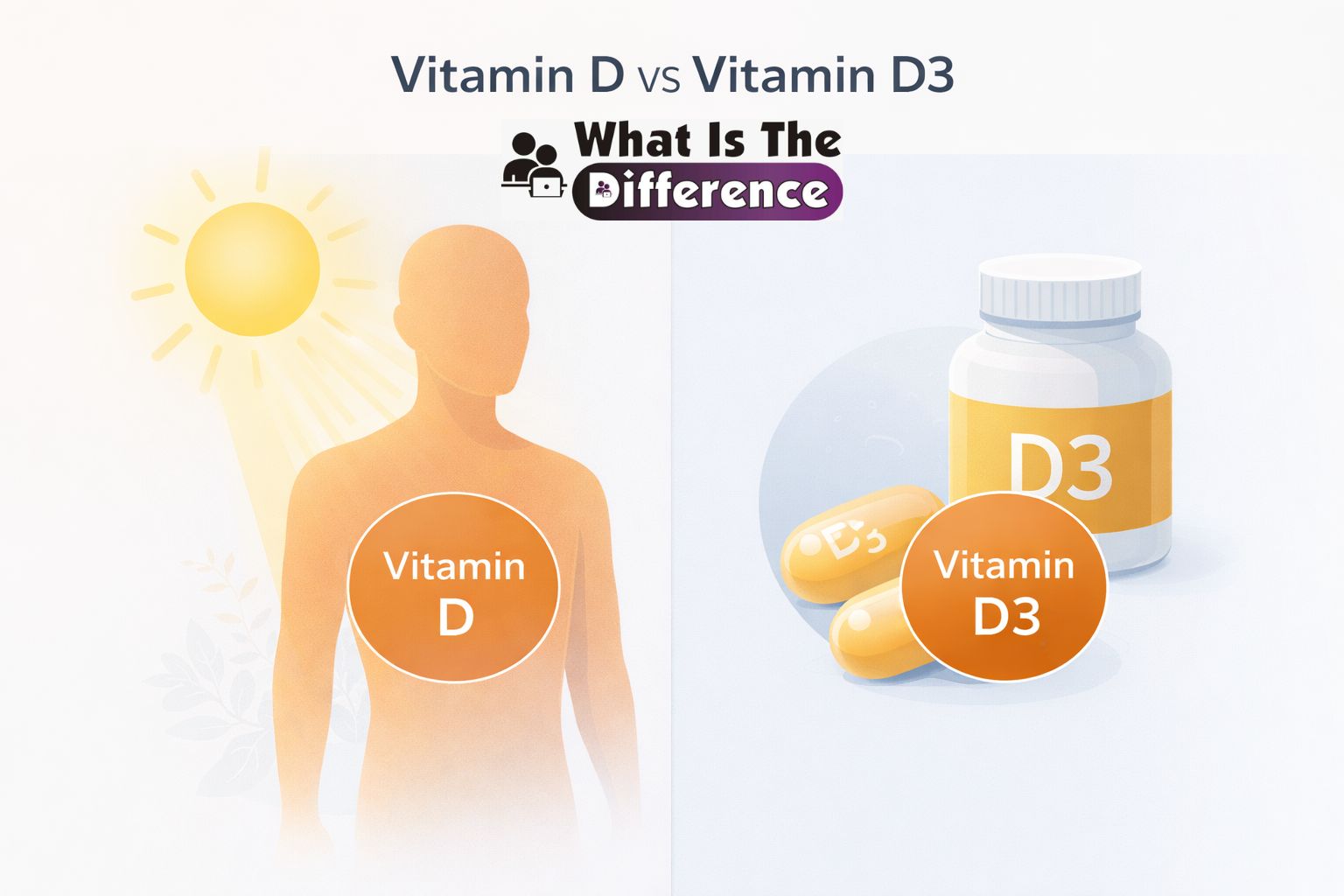
It’s often called the “sunshine vitamin” because your body produces it when your skin is exposed to sunlight.
Types of Vitamin D
Vitamin D is not just one compound—it’s a group of related nutrients:
- Vitamin D2 (ergocalciferol) – found in plant-based sources
- Vitamin D3 (cholecalciferol) – produced in the skin and found in animal sources
Both types help raise vitamin D levels, but they don’t work exactly the same way.
Why Vitamin D Is Important
Vitamin D supports several critical functions:
- Bone health – helps absorb calcium and phosphorus
- Immune system – supports your body’s defense mechanisms
- Muscle function – contributes to strength and balance
- Mood regulation – linked to mental well-being
What Is Vitamin D3? (Simple Explanation)
Definition of Vitamin D3
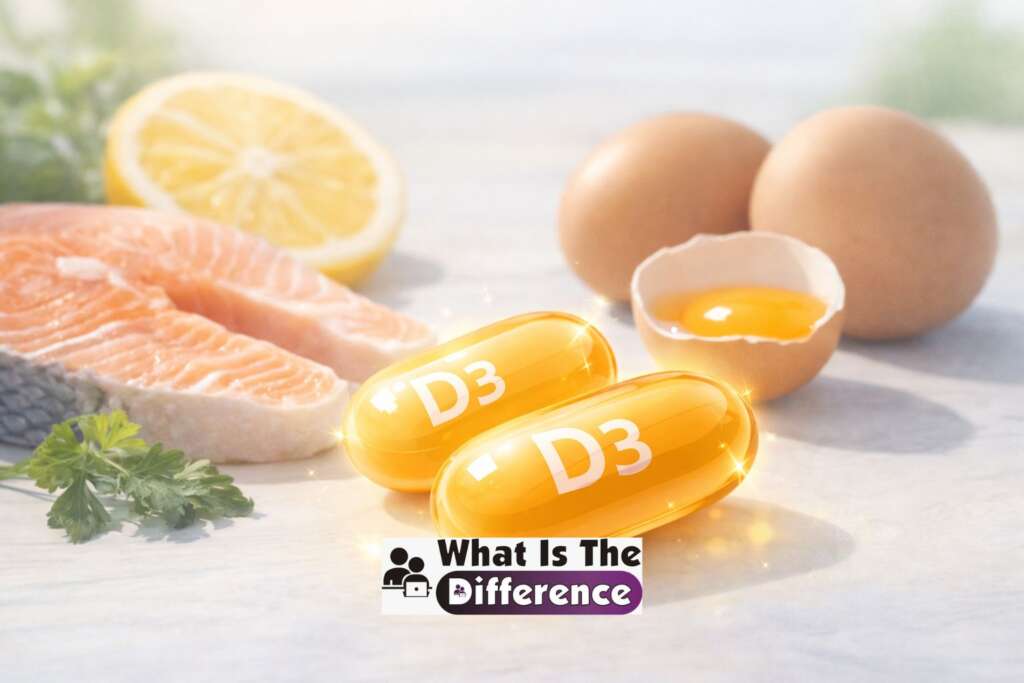
Vitamin D3 is a specific type of vitamin D that your body naturally produces when exposed to sunlight. It is considered the most effective form of vitamin D for raising and maintaining levels in the body.
How Vitamin D3 Is Produced
Your body creates vitamin D3 when ultraviolet (UVB) rays from the sun hit your skin. It is also found in certain foods, such as:
- Fatty fish (salmon, mackerel)
- Egg yolks
- Fortified dairy products
Why Vitamin D3 Is Widely Recommended
Vitamin D3 is often preferred because:
- It is more easily absorbed by the body
- It raises vitamin D levels more effectively
- It stays in the bloodstream longer
These factors make it the go-to choice for most supplements.
What Is the Difference Between Vitamin D and Vitamin D3?
At its core, understanding what is the difference between vitamin D and vitamin D3 comes down to one simple idea:
- Vitamin D is a general term
- Vitamin D3 is a specific, more effective form of vitamin D
Key Differences Explained
- Vitamin D includes both D2 and D3
- Vitamin D3 is the form your body naturally produces
- D3 is generally more potent and longer-lasting
Vitamin D vs Vitamin D3 Comparison
| Aspect | Vitamin D | Vitamin D3 |
|---|---|---|
| Type | General category | Specific form |
| Source | Plants and animals | Mainly animal-based & sunlight |
| Effectiveness | Moderate | Higher |
| Absorption | Lower | Better |
| Duration in body | Shorter | Longer |
For a broader understanding of similar comparisons, you can explore this helpful guide on WhatIsTheDifference.co.uk about related topics.
How Vitamin D and Vitamin D3 Work in the Body
How Vitamin D Functions
Vitamin D helps your body absorb calcium from food. Without it, your bones can become weak or brittle.
It also plays a role in:
- Supporting immune responses
- Reducing inflammation
- Maintaining overall health
How Vitamin D3 Works Specifically
Vitamin D3 is converted into the active form of vitamin D more efficiently than D2. This means your body can use it more effectively.
According to Wikipedia, vitamin D3 is more effective at increasing blood levels of vitamin D compared to D2.
Vitamin D2 vs Vitamin D3: Which Is Better?
Effectiveness Comparison
Research consistently shows that vitamin D3 is more effective at raising and maintaining vitamin D levels in the blood.
This makes it the preferred option for most people.
When Vitamin D2 Might Be Used
Vitamin D2 is still useful in certain cases:
- For people following a vegan diet
- When plant-based supplements are preferred
However, it may require higher doses to achieve the same effect as D3.
Real-Life Examples and Use Cases
Supplements and Daily Use
Most over-the-counter supplements use vitamin D3 because of its effectiveness. Multivitamins may contain either D2 or D3.
Sunlight vs Supplements
- Sunlight: Natural source of vitamin D3
- Supplements: Helpful when sun exposure is limited
For example, people living in areas with limited sunlight or those who spend most of their time indoors often rely on supplements.
Dietary Sources
- Vitamin D2: Mushrooms exposed to UV light
- Vitamin D3: Fish, eggs, fortified foods
How to Choose Between Vitamin D and Vitamin D3
Step-by-Step Guide
Choosing the right option doesn’t have to be complicated:
- Check your vitamin D levels with a blood test
- Evaluate your lifestyle (sun exposure, diet)
- Choose vitamin D3 for better absorption
- Follow recommended dosage guidelines
Who Should Take Vitamin D3?
Vitamin D3 is especially beneficial for:
- People with vitamin D deficiency
- Older adults
- Individuals with limited sun exposure
- People with darker skin tones (who may produce less vitamin D from sunlight)
Common Mistakes to Avoid
Assuming All Vitamin D Is the Same
Many people don’t realize there are different types of vitamin D. This can lead to choosing less effective supplements.
Taking the Wrong Dosage
Too little vitamin D won’t help, while too much can be harmful. Always follow recommended guidelines or consult a professional.
Ignoring Natural Sources
Sunlight is one of the best sources of vitamin D, yet it’s often overlooked.
Tips for Better Vitamin D Absorption
Take It With Food
Vitamin D is fat-soluble, which means it absorbs better when taken with meals containing healthy fats.
Combine With Other Nutrients
Pairing vitamin D with calcium and magnesium can improve its effectiveness.
Stay Consistent
Consistency matters more than occasional high doses. Regular intake helps maintain stable levels.
What Is the Difference Between Growth and Development?
FAQ: Vitamin D vs Vitamin D3
1. Is vitamin D the same as vitamin D3?
No. Vitamin D is a general term, while vitamin D3 is a specific and more effective form.
2. Which is better: vitamin D or vitamin D3?
Vitamin D3 is generally better because it is more easily absorbed and lasts longer in the body.
3. Can I take vitamin D3 every day?
Yes, daily intake is safe within recommended limits.
4. Is vitamin D3 safe?
Yes, when taken in appropriate doses. Excess intake should be avoided.
5. Do I need both vitamin D2 and D3?
In most cases, vitamin D3 alone is sufficient.
6. What are signs of vitamin D deficiency?
Common signs include fatigue, weak bones, and low immunity.
Conclusion
So, what is the difference between vitamin D and vitamin D3?
- Vitamin D is a broad category that includes multiple forms
- Vitamin D3 is the most effective and commonly recommended type
If your goal is to improve your health, support your immune system, or maintain strong bones, vitamin D3 is usually the better choice.
By understanding these differences, you can make smarter decisions about your supplements and overall wellness—ensuring your body gets exactly what it needs.