Introduction
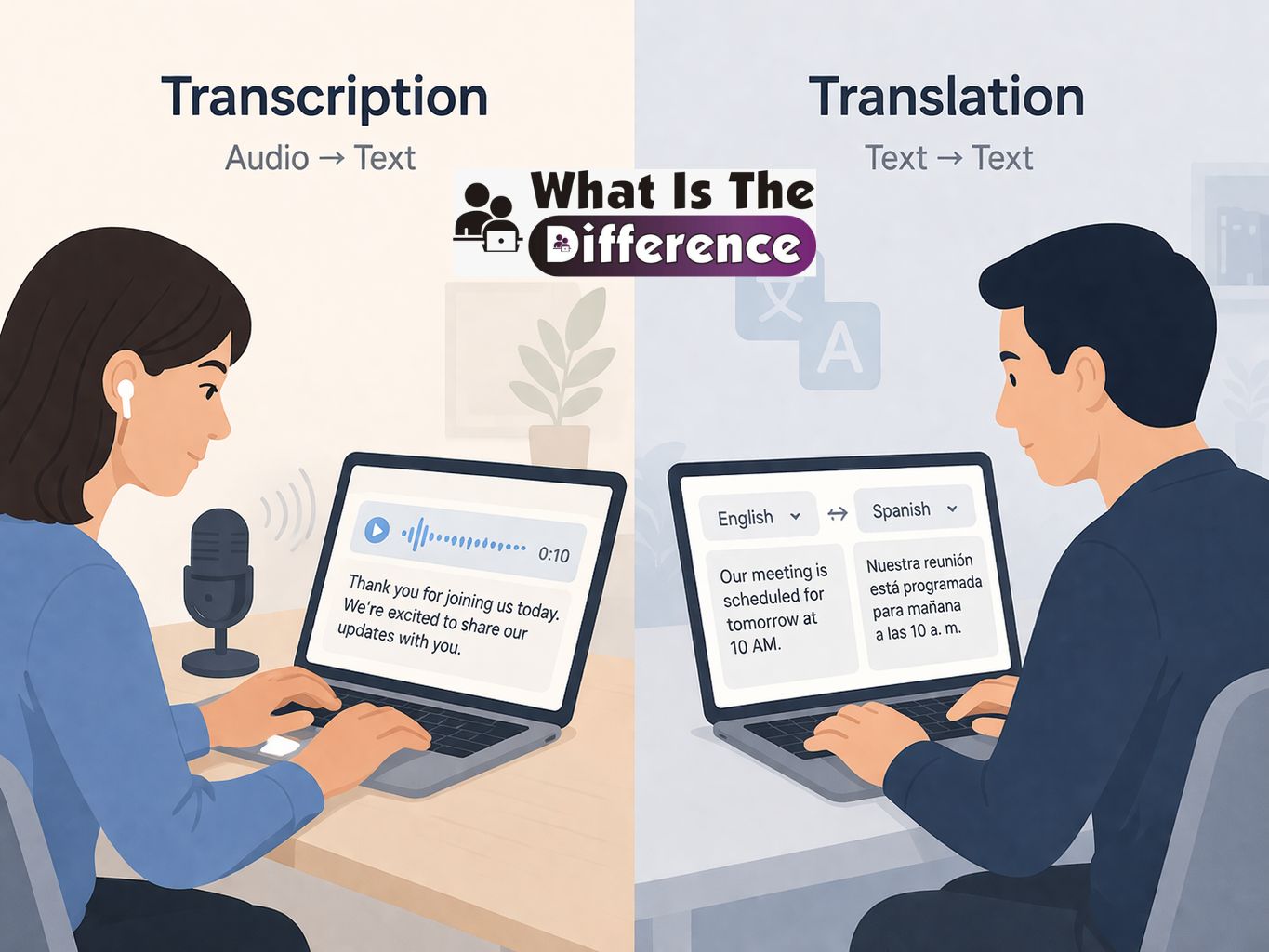
If you’ve ever worked with audio recordings, videos, or multilingual content, you’ve likely come across the terms transcription and translation. While they may sound similar, they serve very different purposes—and confusing them can lead to costly mistakes.
Understanding what is the difference between transcription and translation is essential for students, businesses, content creators, and professionals working across languages. In this article, we’ll break down both concepts in simple terms, explore real-life examples, and help you decide when to use each.
Bio
| Feature | Transcription | Translation |
|---|---|---|
| Definition | Converts speech into written text | Converts content into another language |
| Language Used | Same language | Different language |
| Main Purpose | Record spoken words accurately | Convey meaning across languages |
| Input Type | Audio or speech | Text or speech |
| Output Type | Written text | Text in another language |
| Focus | Exact words and details | Meaning, tone, and context |
| Skills Required | Listening and typing | Language and cultural knowledge |
| Tools Used | Audio players, transcription software | Dictionaries, CAT tools |
| Complexity | Moderate (depends on audio clarity) | Higher (requires interpretation) |
| Time Required | Usually faster | Can take longer |
| Common Use Cases | Interviews, meetings, captions | Websites, documents, global content |
| Accuracy Goal | Word-for-word accuracy | Meaning and clarity accuracy |
| Can Be Combined | Often done before translation | Often follows transcription |
What Is Transcription? (Simple Explanation)
Definition of Transcription
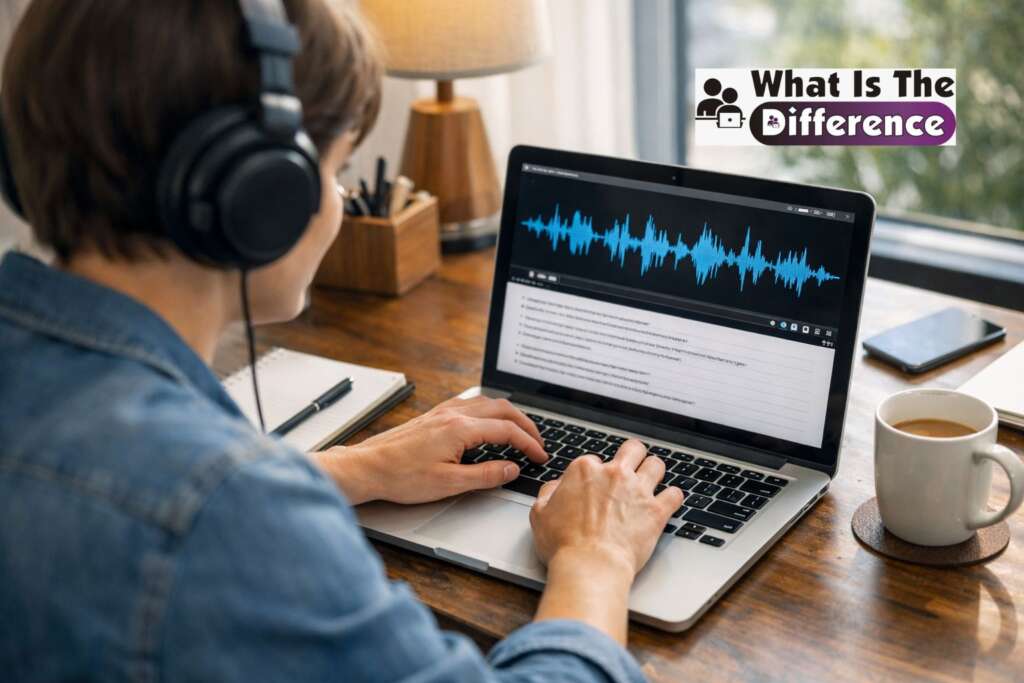
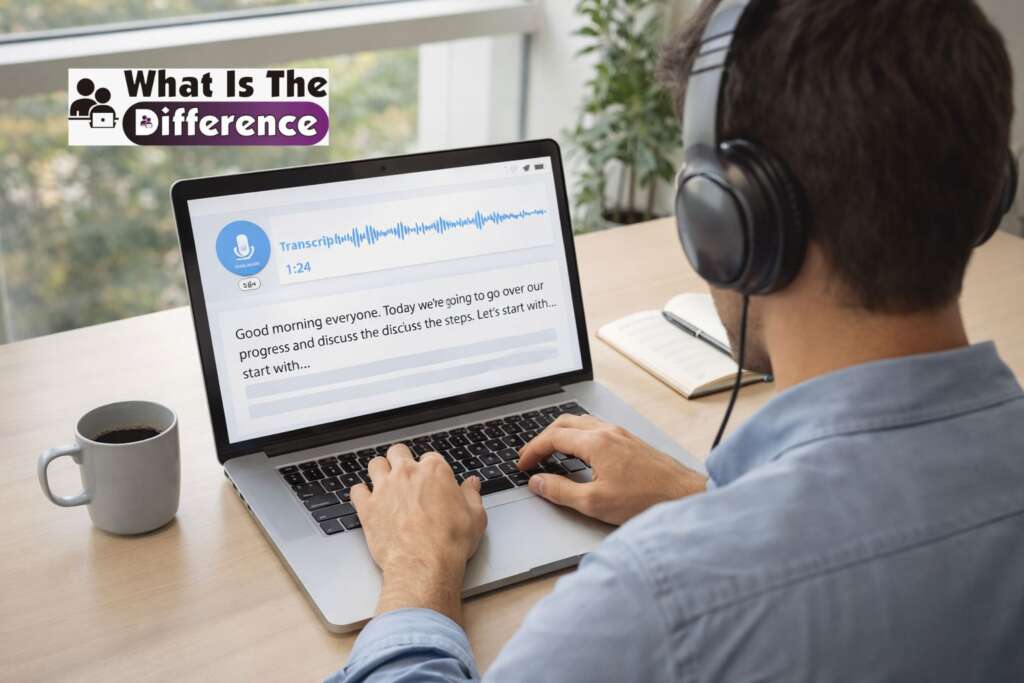
Transcription is the process of converting spoken language into written text in the same language. The goal is to capture what was said as accurately as possible.
For example, turning a podcast episode into a written blog post is transcription.
Common Types of Transcription
There are several types of transcription, depending on how detailed the output needs to be:
- Verbatim transcription – captures every word, filler, and pause
- Clean transcription – removes filler words for readability
- Intelligent transcription – summarizes the content while keeping the meaning
Each type serves a different purpose depending on whether accuracy or readability is the priority.
Where Transcription Is Used in Real Life
Transcription plays a key role in everyday situations:
- Converting interviews into written articles
- Creating subtitles or captions for videos
- Documenting meetings and lectures
- Legal and medical record keeping
It’s especially valuable for accessibility, helping people who are deaf or hard of hearing access spoken content.
What Is Translation? (Clear Breakdown)
Definition of Translation
Translation is the process of converting text or speech from one language into another while preserving its meaning and context.
For example, translating an English website into Spanish or Urdu.
According to , translation involves transferring meaning between languages rather than simply replacing words.
Types of Translation
Translation can take different forms depending on the content:
- Literal translation – word-for-word conversion
- Contextual translation – focuses on meaning and tone
- Specialized translation – legal, medical, or technical content
Good translation requires not just language skills, but also cultural understanding.
Real-Life Uses of Translation
Translation is essential in a globalized world:
- Websites and apps for international users
- Books, movies, and subtitles
- Business communication across countries
- Government and legal documents
Without translation, communication across languages would be nearly impossible.
What Is the Difference Between Transcription and Translation?
Understanding what is the difference between transcription and translation comes down to one key idea: language vs meaning across languages.
Key Differences at a Glance
- Transcription: Converts speech to text in the same language
- Translation: Converts content into a different language
- Focus:
- Transcription → accuracy of spoken words
- Translation → meaning, tone, and context
Transcription vs Translation: Side-by-Side Comparison
| Aspect | Transcription | Translation |
|---|---|---|
| Language | Same | Different |
| Input | Audio or speech | Text or speech |
| Output | Written text | New language version |
| Goal | Accuracy | Meaning and clarity |
| Skills | Listening & typing | Language & cultural expertise |
For a broader comparison of similar concepts, you can explore this detailed guide on .
How Transcription and Translation Work Step by Step
How Transcription Works
- Listen carefully to the audio or video
- Convert speech into text word by word
- Edit and format for clarity and readability
Accuracy is crucial, especially in legal or medical contexts.
How Translation Works
- Understand the source language deeply
- Convert meaning into the target language
- Adjust for tone, culture, and context
Unlike transcription, translation is not just about words—it’s about conveying the same message in a natural way.
Real-Life Examples of Transcription and Translation
Example 1: Podcast Content
- Transcription: Turning spoken audio into a blog post
- Translation: Converting that blog into another language
This helps creators reach both local and global audiences.
Example 2: Business Meetings
- Transcription: Recording meeting notes
- Translation: Sharing those notes with international teams
Many companies use both services together.
Example 3: Media and Entertainment
- Transcription: Closed captions for accessibility
- Translation: Subtitles or dubbing for different languages
This is how movies and shows reach global audiences.
When Do You Need Transcription vs Translation?
Situations Where Transcription Is Best
- You want to convert audio into text
- You need accurate records of conversations
- You’re improving accessibility (captions, subtitles)
Situations Where Translation Is Needed
- You’re targeting a global audience
- You need multilingual communication
- You want to localize content for different cultures
Can You Use Both Together?
Yes—and this is very common.
For example:
- First, transcribe a video into text
- Then, translate that text into multiple languages
This approach is widely used in education, marketing, and media.
Common Mistakes People Make
Confusing Transcription with Translation
One of the biggest mistakes is assuming both terms mean the same thing. They are completely different processes.
Ignoring Context in Translation
A word-for-word translation can lead to awkward or incorrect meaning. Context is everything.
Poor Audio Quality in Transcription
If the audio is unclear, the transcription will likely be inaccurate. Clear recordings are essential.
Tips for Choosing the Right Service
How to Decide Between Transcription and Translation
Ask yourself:
- Do I need the content in the same language? → Choose transcription
- Do I need it in a different language? → Choose translation
What to Look for in a Professional Service
- High accuracy
- Fast turnaround time
- Subject expertise (legal, medical, technical)
Tools vs Human Services
- AI tools: Fast and cost-effective, but may lack accuracy
- Human experts: More reliable, especially for complex content
A combination of both often works best.
What Is the Difference Between Semaglutide and Tirzepatide for Weight Loss
FAQ: Transcription vs Translation Explained
1. Is transcription the same as translation?
No. Transcription converts speech into text in the same language, while translation changes the language.
2. Which is easier: transcription or translation?
It depends. Transcription requires strong listening skills, while translation requires deep language knowledge.
3. Can transcription be translated later?
Yes. This is a common workflow—first transcribe, then translate.
4. Do I need both transcription and translation?
In many cases, yes—especially if you want to reach a global audience.
5. Are AI tools reliable for transcription and translation?
They can be helpful, but they may struggle with accents, context, or complex language.
6. What skills are needed for transcription and translation?
- Transcription: listening, typing, attention to detail
- Translation: language fluency, cultural understanding
Conclusion
So, what is the difference between transcription and translation in real life?
- Transcription is about converting speech into written text in the same language
- Translation is about converting meaning from one language to another
Both play essential roles in communication, content creation, and global connectivity. Whether you’re documenting conversations or reaching international audiences, choosing the right approach makes all the difference.
Understanding these two processes not only improves your workflow—it ensures your message is clear, accurate, and accessible to the right audience.