Introduction
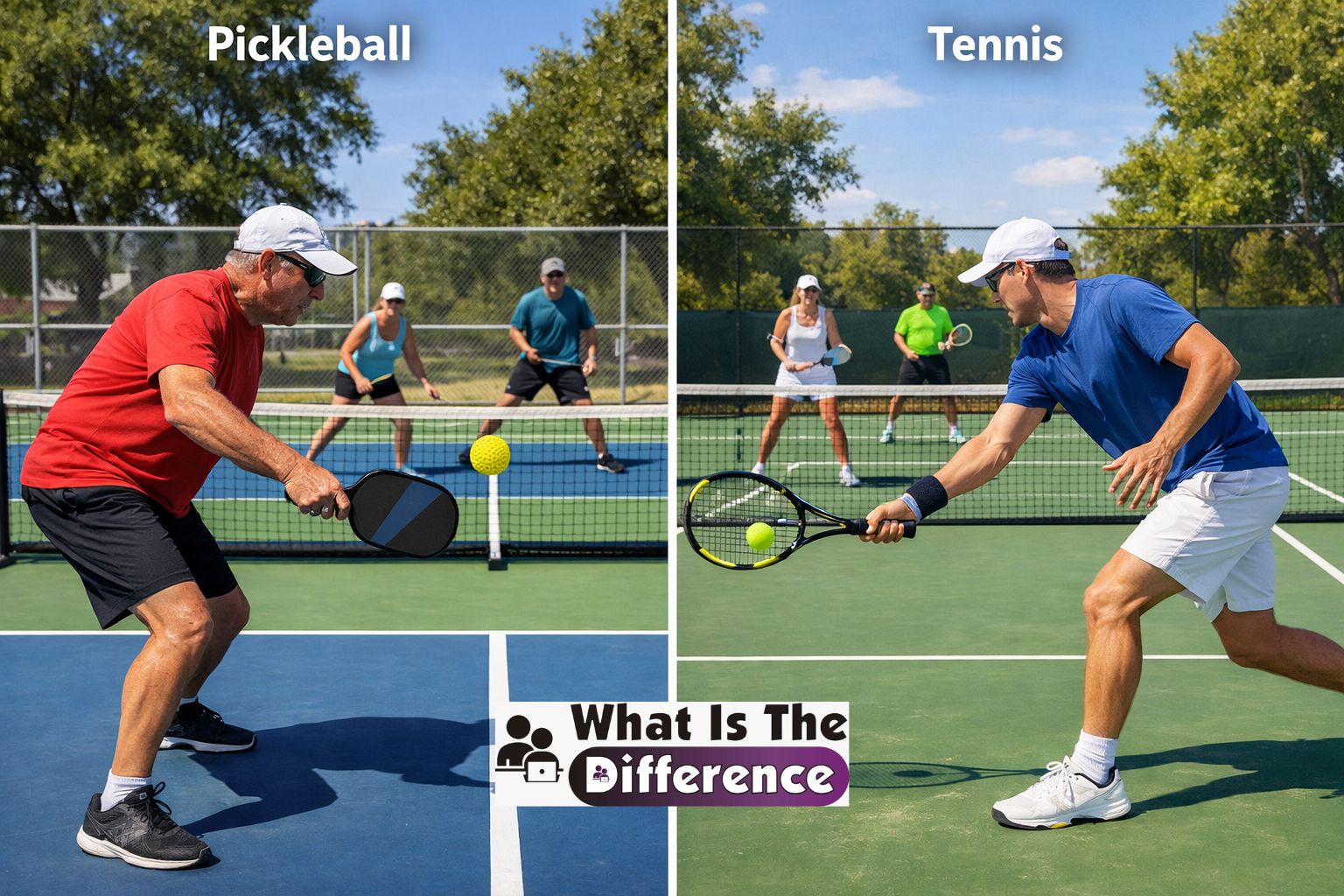
In recent years, a growing number of people have been asking the same question: what is the difference between pickleball and tennis? Both sports involve rackets, courts, and nets, yet they offer very different playing experiences.
Pickleball has surged in popularity due to its accessibility and social nature, while tennis remains a globally established sport with deep competitive roots. If you’re trying to decide which one to play or simply want to understand how they compare this guide breaks it all down clearly.
By the end of this article, you’ll understand the key differences in rules, equipment, gameplay, and physical demands, helping you choose the sport that suits you best.
| Feature | Pickleball | Tennis |
|---|---|---|
| Court Size | Smaller court (20×44 ft) | Larger court (78 ft long) |
| Equipment | Solid paddle | Stringed racket |
| Ball Type | Lightweight plastic ball | Pressurized rubber ball |
| Net Height | Slightly lower net | Slightly higher net |
| Serve Style | Underhand serve | Overhand serve |
| Scoring System | Simple and easy | Complex (15, 30, 40, deuce) |
| Gameplay Speed | Slower-paced | Faster-paced |
| Physical Demand | Low to moderate | High intensity |
| Learning Curve | Easy for beginners | Takes time to master |
| Movement Required | Less running | More running and coverage |
| Popularity | Fast-growing sport | Globally established sport |
| Player Demographic | All ages, beginner-friendly | More competitive and athletic |
What Is Pickleball?
Basic Overview of Pickleball
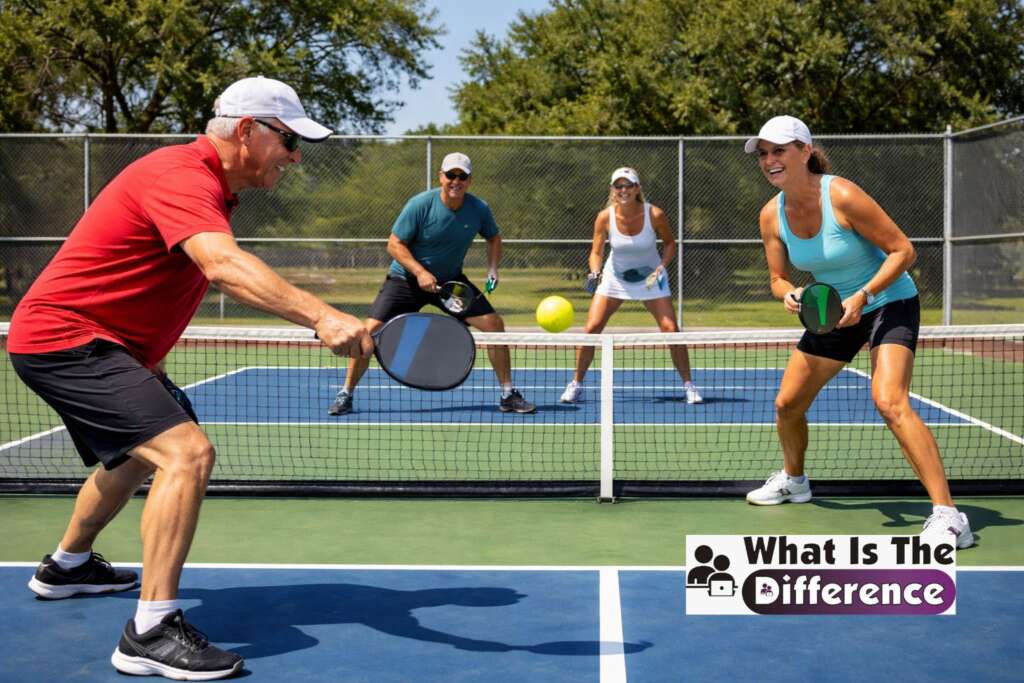
Pickleball is a paddle sport that combines elements of tennis, badminton, and table tennis. It was invented in the 1960s and has quickly become one of the fastest-growing sports worldwide.
It’s typically played on a smaller court, making it more accessible for beginners, older adults, and casual players.
Key Rules of Pickleball
- Played on a smaller court (20×44 feet)
- Uses an underhand serve
- Points are usually scored only by the serving team
- Features a unique “non-volley zone” (also called the kitchen)
The rules are relatively simple, which is why many people pick it up quickly.
Equipment Used in Pickleball
- Paddle: Solid and smaller than a tennis racket
- Ball: Lightweight plastic ball with holes
- Net: Slightly lower than a tennis net
What Is Tennis?
Basic Overview of Tennis
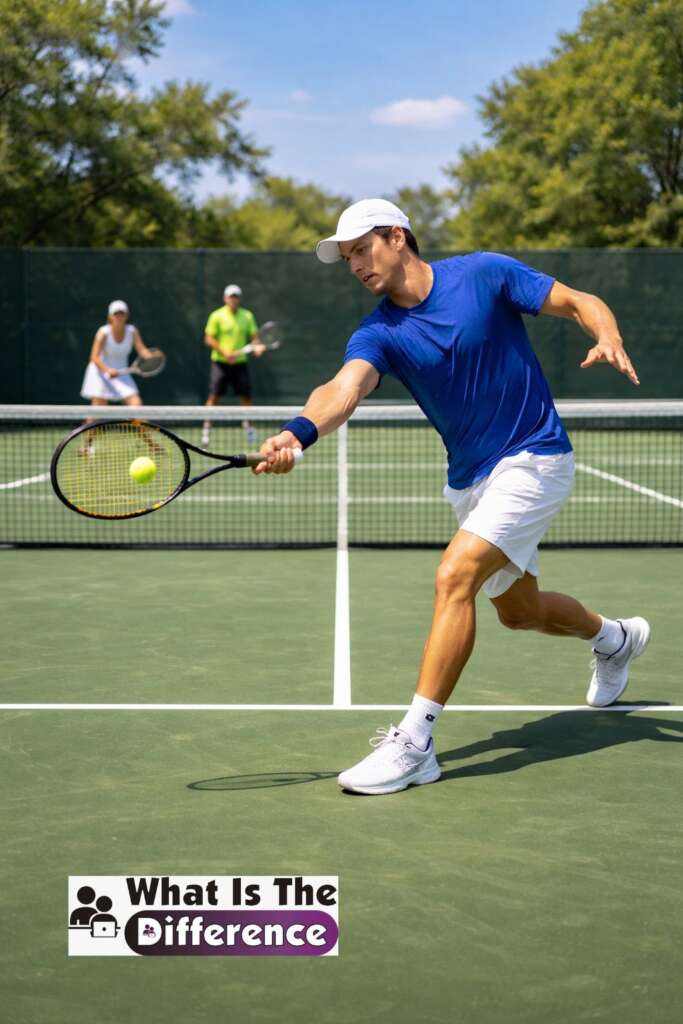
Tennis is a well-established sport played globally, both recreationally and professionally. It has a long history and is featured in major tournaments like Wimbledon and the US Open.
Players compete in singles or doubles matches, with a strong emphasis on skill, endurance, and strategy.
Key Rules of Tennis
- Played on a larger court (78 feet long)
- Uses overhand serves
- Complex scoring system (15, 30, 40, deuce)
- Matches can be longer and more physically demanding
Equipment Used in Tennis
- Racket: Larger, strung racket
- Ball: Pressurized rubber ball
- Court surfaces: Grass, clay, or hard court
What Is the Difference Between Pickleball and Tennis?
Understanding what is the difference between pickleball and tennis comes down to several key factors:
Court Size and Layout
One of the most noticeable differences is the court size.
- Pickleball courts are much smaller, making movement easier
- Tennis courts are larger, requiring more running and stamina
This difference alone significantly affects how each game feels.
Equipment Comparison
The equipment used in both sports also varies:
- Pickleball uses a solid paddle, while tennis uses a stringed racket
- Pickleball balls are lighter and slower, while tennis balls bounce higher and move faster
Rules and Scoring
Pickleball is simpler:
- Easier scoring system
- Fewer rules to learn
Tennis, on the other hand, involves:
- Traditional scoring (love, deuce)
- More complex serving and rally rules
Gameplay and Speed
Pickleball tends to be:
- Slower-paced
- More focused on placement and control
Tennis is:
- Faster-paced
- Requires power, speed, and endurance
Physical Demand
- Pickleball: Lower impact, less physically intense
- Tennis: Higher intensity, more demanding on stamina
This makes pickleball ideal for beginners or those looking for a less strenuous activity.
Learning Curve
Pickleball is generally easier to learn. Many players can start enjoying games within a few sessions.
Tennis requires more time to master due to its technical skills and physical demands.
Pickleball vs Tennis: Which Is Better for You?
Based on Fitness Goals
- Choose tennis if you want a full-body workout and high cardio intensity
- Choose pickleball if you prefer a moderate, low-impact activity
Based on Age and Skill Level
- Beginners and older adults often find pickleball more approachable
- Younger or competitive athletes may prefer tennis
Based on Social vs Competitive Play
Pickleball is often more social and community-focused.
Tennis offers more structured competition and professional pathways.
How to Choose Between Pickleball and Tennis
If you’re still unsure, here’s a simple step-by-step guide:
Step 1: Consider Your Fitness Level
If you’re just starting out or want something less intense, pickleball is a great choice. Tennis suits those comfortable with running and endurance.
Step 2: Evaluate Available Space
Pickleball courts are smaller and more widely adaptable. Tennis requires a full-sized court.
Step 3: Think About Equipment Cost
Pickleball equipment is generally cheaper. A paddle and ball cost less than a quality tennis racket.
Step 4: Define Your Goals
Ask yourself:
- Do you want casual fun? → Pickleball
- Do you want competitive play? → Tennis
Real-Life Examples and Use Cases
Why Beginners Prefer Pickleball
Many beginners enjoy pickleball because:
- It’s easy to learn
- Games are shorter
- Less physical strain
Why Athletes Often Choose Tennis
Athletes often prefer tennis due to:
- Higher intensity
- Competitive opportunities
- Skill development
Community and Social Benefits
Pickleball is often played in groups, making it highly social. Tennis can also be social but is typically more structured.
Tips for Beginners Starting Either Sport
Start with Basic Rules
Understanding the fundamentals will help you improve faster and avoid frustration.
Invest in the Right Equipment
Using proper gear can make a big difference in performance and comfort.
Focus on Consistency
Instead of hitting hard, aim for controlled and consistent shots.
Join Local Communities
Playing with others accelerates learning and makes the experience more enjoyable.
Common Mistakes to Avoid
Choosing the Wrong Equipment
Using the wrong paddle or racket can hinder your progress.
Ignoring Technique
Proper form is essential, especially in tennis where technique matters more.
Skipping Warm-Ups
Both sports require movement, so warming up helps prevent injuries.
Not Learning the Rules Early
Understanding rules early prevents confusion during gameplay.
Additional Insights: Why Pickleball Is Growing Fast
Pickleball’s rapid growth is no coincidence. According to its overview on
the sport has gained popularity due to its accessibility and ease of play.
Compared to tennis, pickleball requires less space and physical strain, making it attractive to a wider audience.
If you enjoy comparing sports and understanding key differences, you might also find this helpful:
FAQ About Pickleball vs Tennis
Is pickleball easier than tennis for beginners?
Yes, pickleball is generally easier to learn due to its simple rules and smaller court.
Can tennis players switch to pickleball easily?
Most tennis players adapt quickly because many skills are transferable.
Which sport burns more calories?
Tennis typically burns more calories due to its higher intensity and larger court.
Is pickleball less physically demanding than tennis?
Yes, pickleball is lower impact and requires less running, making it less demanding.
Can you play pickleball on a tennis court?
Yes, many tennis courts can be adapted for pickleball with temporary lines and nets.
Conclusion
So, what is the difference between pickleball and tennis? While both sports share similarities, they differ significantly in court size, equipment, rules, gameplay, and physical demands.
Pickleball is easier to learn, more accessible, and highly social. Tennis, on the other hand, offers a more intense and competitive experience.
Ultimately, the best choice depends on your goals, fitness level, and personal preferences. If possible, try both—you might discover that each sport offers its own unique appeal.