prime rib vs ribeye: You’re standing at the butcher counter, eyeing those gorgeous marbled cuts of beef. One looks like a massive roast ready for a crowd, the other like a perfect single steak for the grill. Is it prime rib or ribeye tonight? Both come from the same spot on the cow, yet they cook up differently and suit different meals. This guide breaks it all down so you can pick the right one every time, whether you’re feeding the family or treating yourself to a steakhouse-style dinner at home.
I’ve cooked both plenty of times, and the choice always comes down to a few key factors: how much time you have, who you’re feeding, and what kind of texture and flavor you’re craving. Let’s walk through everything step by step.
What Is Prime Rib?
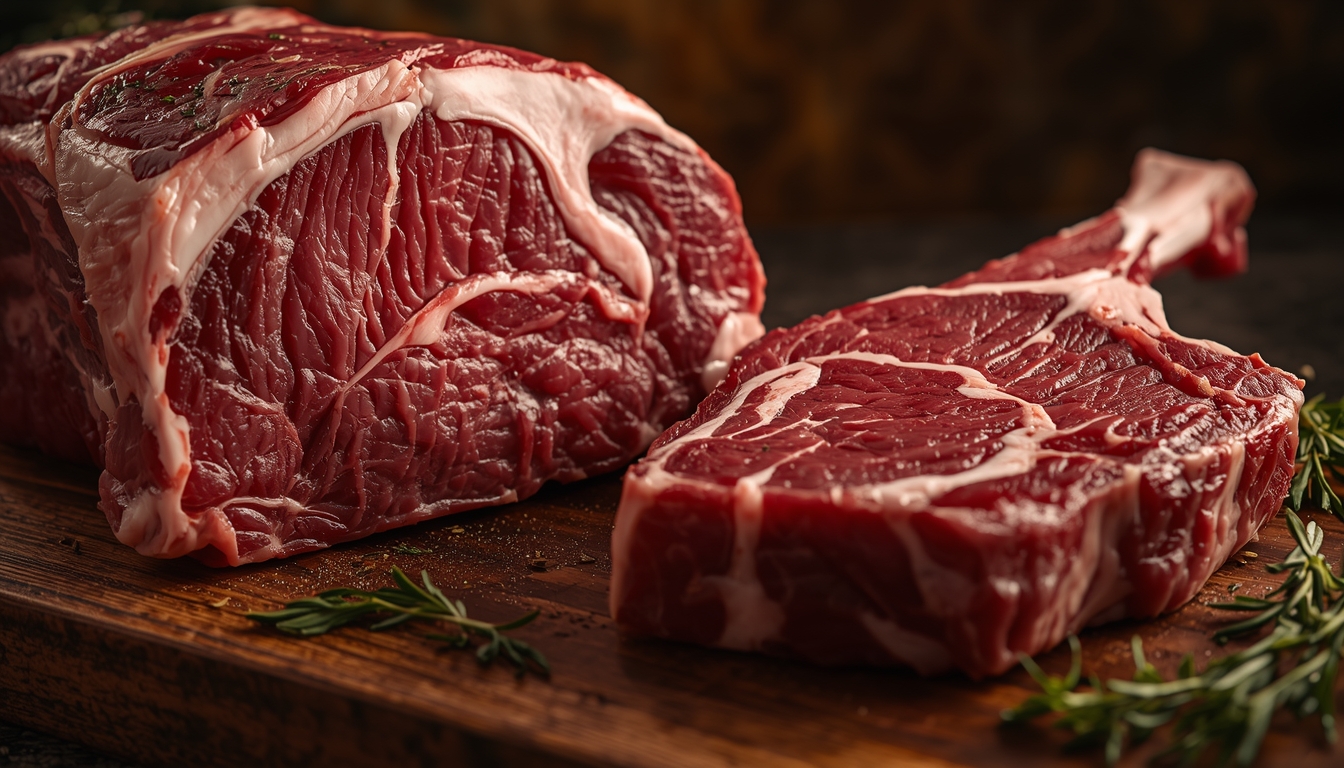
Prime rib, also known as a standing rib roast, is a large cut taken from the rib primal section of the cow—specifically ribs six through twelve. It’s usually sold bone-in, though you can find boneless versions labeled as ribeye roast. The whole thing can weigh anywhere from four to fifteen pounds, depending on how many ribs it includes.
What makes it special is the high marbling and the fat cap that runs along the outside. That fat renders slowly during cooking, keeping the meat incredibly juicy. Because it’s a big roast, the bones add extra flavor and help the meat cook more evenly. People often call it a holiday favorite because one roast can easily feed eight to twelve people.
The term “prime” here doesn’t always mean USDA Prime grade—it’s just the common name for the cut. But higher-grade meat with good marbling will taste even better.
What Is Ribeye?
A ribeye steak is basically the prime rib broken down into individual portions before it’s cooked. It comes from the exact same rib primal area, so it shares that rich, beefy flavor and generous marbling. You can buy it bone-in (sometimes called a cowboy or tomahawk steak if the bone is long) or boneless.
Each ribeye usually runs one to two inches thick and weighs about twelve to sixteen ounces—perfect for one hungry person. The prized part is the ribeye cap, or spinalis dorsi, a buttery, highly marbled strip that wraps around one side. It’s often considered the most tender and flavorful bite on the entire steak.
Ribeyes shine because they’re quick to prepare and develop a beautiful crust when seared hot.
How Do They Compare Head to Head
Both cuts deliver serious flavor thanks to their location on the cow. The rib section doesn’t get much exercise, so the muscles stay tender naturally. But the way you prepare them changes everything.
Size and structure set them apart first. Prime rib is a massive roast meant to be cooked whole and then sliced at the table. Ribeye is the same meat, just portioned out ahead of time into steaks.
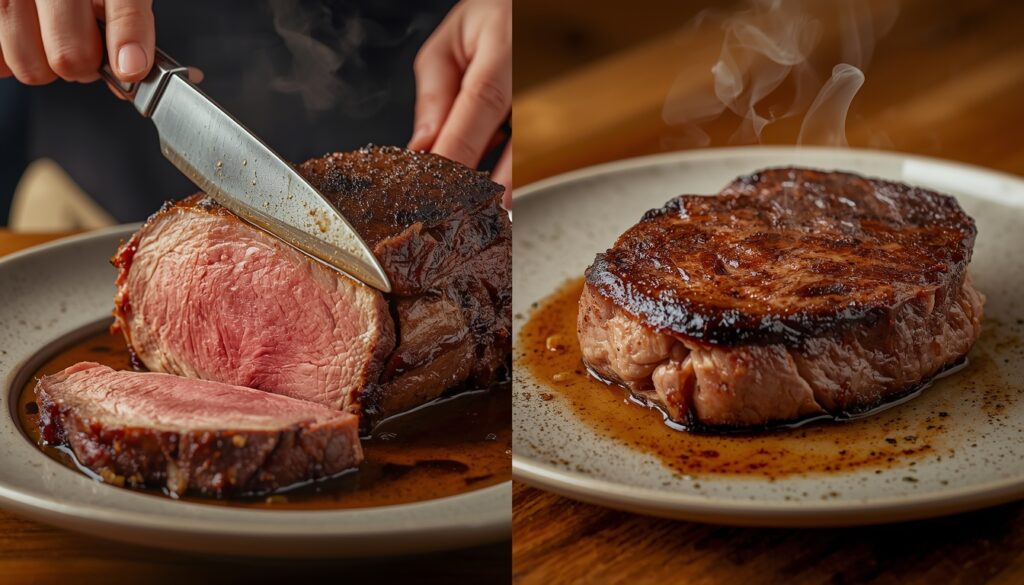
Texture and tenderness feel similar at first glance because of the marbling, but cooking method makes the difference. Slow-roasting a prime rib breaks down any remaining connective tissue over hours, resulting in meat that practically melts. A ribeye cooked hot and fast keeps a firmer bite with a crisp exterior while staying juicy inside.
Flavor starts the same—deep, beefy, with that signature richness from fat. Prime rib often tastes a bit milder and more uniform because the low heat lets the fat render gently. Ribeye can develop more intense charred notes and caramelization from high-heat searing.
Cooking methods couldn’t be more different. Prime rib loves low-and-slow roasting after an initial sear. Aim for an oven at 325°F after a quick blast at 450°F, cooking about thirteen to twenty minutes per pound until the internal temperature hits 120–125°F for rare or 130–135°F for medium-rare. Let it rest at least thirty minutes so the juices redistribute.
Ribeye, on the other hand, wants high heat. Sear it in a screaming-hot cast-iron skillet or on the grill for four to six minutes per side. Many cooks use the reverse-sear method—low oven first, then a final hot blast—to get even cooking and a perfect crust. Pull it off the heat at the same internal temps as prime rib.
Price and value vary by location and grade, but here’s the reality: prime rib often gives you more meat for your money when feeding a group. Ribeye tends to cost more per pound because it’s already portioned and convenient, but you get that premium steak experience without the wait.
Servings and occasion matter a lot. A single prime rib roast turns a Sunday dinner or holiday gathering into something special. Ribeye fits weeknight meals or date nights when you want something fast and impressive.
Nutrition lines up closely since they share the same muscle. A typical four-ounce serving of either offers around 250 calories, 20–25 grams of protein, and 18–22 grams of fat, depending on marbling. Prime rib might edge out slightly higher in fat because of the larger fat cap, but portion control keeps them even. Both deliver iron, zinc, and B vitamins—solid choices for a protein-packed meal.
Pros and Cons of Each Cut
Prime rib shines when you want to impress a crowd. It stays incredibly tender after slow cooking, and the bones add flavor while making a dramatic presentation. Leftovers make fantastic sandwiches or hash the next day. On the downside, it takes hours to cook and requires a bigger oven and more planning. Carving it properly takes a little practice.
Ribeye wins for speed and convenience. You get that steakhouse crust and juicy center in under fifteen minutes. It’s easy to season and cook exactly to your preferred doneness. The trade-off is higher cost per serving and less meat overall. It’s not ideal for big groups unless you buy a lot of steaks.
When to Choose Prime Rib vs Ribeye
Think about your situation. Hosting Thanksgiving or a backyard party? Go with prime rib. It feeds everyone without you standing at the grill flipping steaks all night. Budget-conscious but still want flavor? A well-priced prime rib roast often stretches further.
Craving a quick Tuesday night steak after work? Grab ribeye. It’s ready in minutes and feels like a treat. Grilling outdoors or cooking indoors on a cast-iron pan? Ribeye handles both beautifully. Oven-only night with company? Prime rib is your friend.
If you’re watching your wallet, compare prices that week—sometimes prime rib goes on sale around holidays, making it the smarter buy. For pure convenience and that perfect individual steak experience, ribeye rarely disappoints.
Cooking Tips for Prime Rib and Ribeye
Start with quality. Look for good marbling, bright red color, and USDA Choice or Prime if your budget allows. Bring the meat to room temperature before cooking—about an hour on the counter—so it cooks evenly.
Season simply. Kosher salt, fresh cracked pepper, and maybe a little garlic powder or fresh herbs are all you need. For prime rib, some cooks swear by a salt crust or herb butter rubbed on the outside.
Resting is non-negotiable. Give prime rib at least thirty minutes (up to two hours loosely tented) and ribeye ten minutes. This keeps the juices where they belong.
For a classic prime rib, try the reverse-sear method: cook low and slow until you hit your target internal temperature, rest, then blast it at 500°F for a quick crust. Pair it with homemade au jus made from the pan drippings, red wine, and beef stock.
Ribeye loves a hot pan. Pat it dry, season generously, and sear in a little avocado oil or clarified butter. Finish with a pat of compound butter—garlic herb or blue cheese—for extra richness. Grilled version gets even better with a simple chimichurri on the side.
Common mistakes to avoid: don’t skip the rest, don’t overcook (use a good meat thermometer), and don’t crowd the pan or grill when cooking multiple ribeyes.
Common Questions About Prime Rib vs Ribeye
People often wonder if they’re basically the same cut. In raw form, yes—they come from the same primal. But once cooked, the results differ because of timing and technique.
Can you cut ribeyes from a prime rib roast? Absolutely. Many home cooks buy a roast on sale and slice their own steaks to save money.
Which is more tender? Both rank high, but slow-cooked prime rib often feels more melt-in-your-mouth because of the extended time breaking down tissue.
Bone-in or boneless—which wins? Bone-in adds flavor and looks impressive, but boneless is easier to carve and portion.
How do you store leftovers? Wrap tightly and refrigerate for up to four days. Reheat gently in a low oven to avoid drying them out.
Wrapping It Up
Prime rib and ribeye both deliver that deep, satisfying beef flavor we crave, but they serve different purposes in the kitchen. One is the star of big celebrations, cooked low and slow for melt-in-your-mouth tenderness. The other is the weeknight hero, ready for a quick sear and a perfect crust.
The best part? You don’t have to choose forever. Try prime rib for your next family gathering and ribeye for a solo splurge. Experiment with grades, cooking methods, and seasonings until you find your personal favorite. Either way, you’re working with one of the most forgiving and flavorful parts of the cow.
Difference Between Quartz and Quartzite: Easy Guide
FAQs
Are prime rib and ribeye the same cut of beef?
No, they come from the same rib primal section of the cow, but prime rib is a large bone-in roast cooked whole, while ribeye is an individual steak sliced before cooking. This difference in preparation leads to distinct textures and best uses.
Which one is more tender, prime rib or ribeye?
Both rank among the most tender cuts thanks to natural marbling and low muscle use in that area. Prime rib often feels melt-in-your-mouth after slow roasting breaks down tissues, while ribeye delivers excellent tenderness with a satisfying chew from hot, fast cooking.
Can I cut my own ribeye steaks from a prime rib roast?
Yes, many home cooks do exactly that to save money. Buy a whole roast on sale, trim it, and slice into steaks before cooking. It gives you fresh ribeyes at a better value.
What’s the best way to cook each one?
Prime rib shines with low-and-slow roasting after an initial sear—aim for 325°F and pull at 120–125°F internal for rare. Ribeye loves high-heat searing on the grill or in a cast-iron pan for a perfect crust, finished to the same internal temperature.
Which is better for a crowd versus a quick meal?
Prime rib is ideal for feeding groups or holidays since one roast serves many and looks impressive. Ribeye works better for fast weeknight dinners or individual portions when time is short.