Introduction
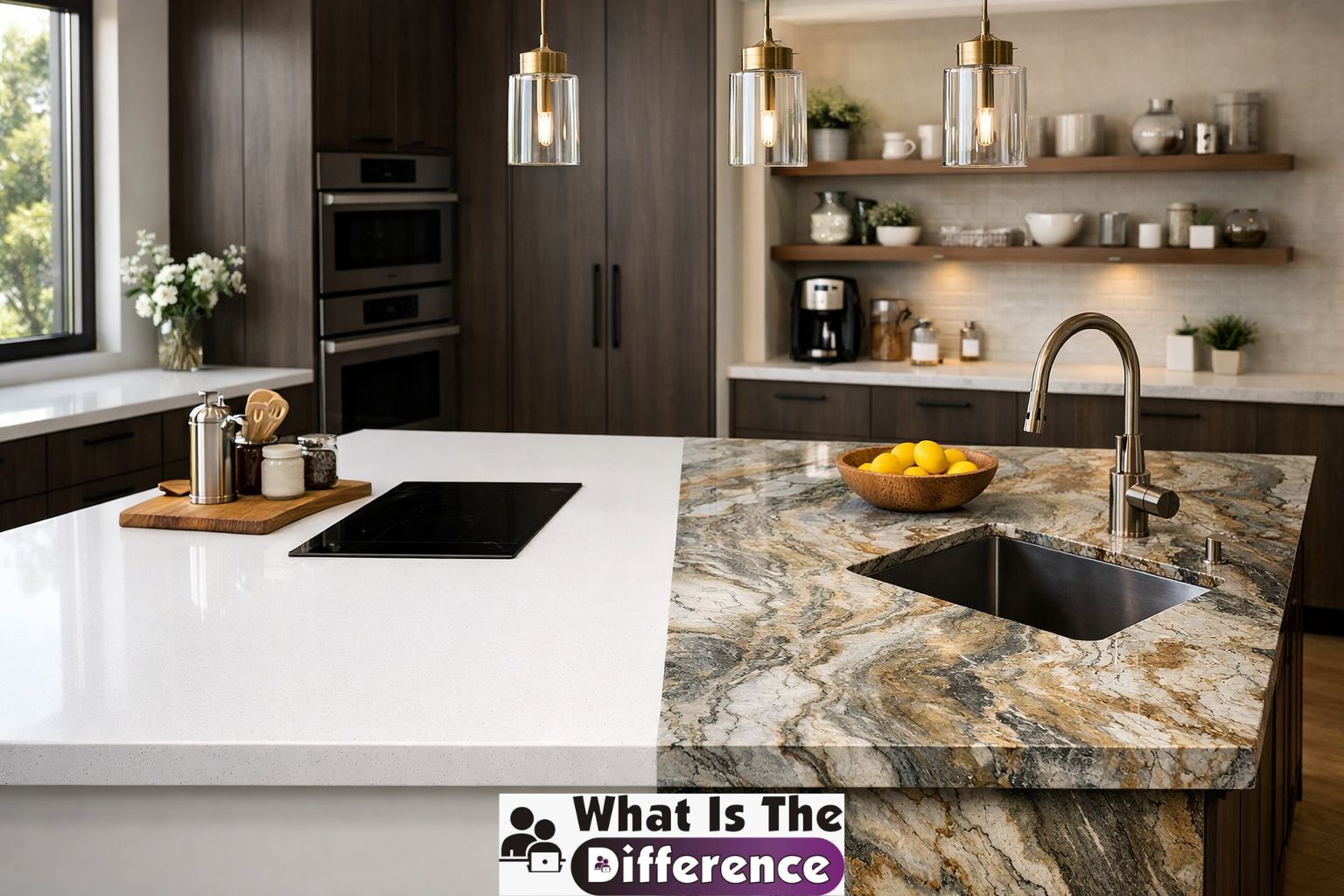
Choosing the right countertop material can completely change the look and functionality of your space. If you’ve been researching options, you’ve probably come across quartz and quartzite two materials that sound similar but are very different in reality.
Understanding the difference between quartz and quartzite is essential before making a decision for your kitchen, bathroom, or any surface in your home. This guide breaks everything down in a simple, practical way from how they’re made to how they perform in real life so you can choose with confidence.
| Feature | Quartz | Quartzite |
|---|---|---|
| Material Type | Engineered stone | Natural stone |
| Composition | Crushed quartz + resin | Metamorphosed sandstone |
| Appearance | Uniform and consistent | Unique, natural patterns |
| Color Options | Wide variety | Limited, natural tones |
| Durability | Strong and scratch-resistant | Extremely hard and durable |
| Heat Resistance | Moderate (can be damaged by heat) | High (resists heat well) |
| Maintenance | Low, no sealing needed | Requires regular sealing |
| Porosity | Non-porous | Porous |
| Stain Resistance | Highly stain-resistant | Can stain if not sealed |
| Cost | Mid-range, more predictable | Higher, varies by slab |
| Best Use | Indoor kitchens and bathrooms | Kitchens, luxury spaces, outdoors |
| UV Resistance | May fade in sunlight | UV-resistant, good for outdoors |
What Is Quartz?
How Quartz Is Made
Quartz countertops are engineered stone, meaning they are manufactured rather than taken directly from nature. They are made by combining crushed natural quartz crystals with resins, polymers, and pigments.
This process allows manufacturers to control the final appearance, resulting in consistent colors and patterns. For a deeper understanding of the mineral itself, you can explore quartz on Wikipedia:
Key Features of Quartz
Quartz is popular for modern homes because of its practical benefits:
- Non-porous surface (resistant to stains and bacteria)
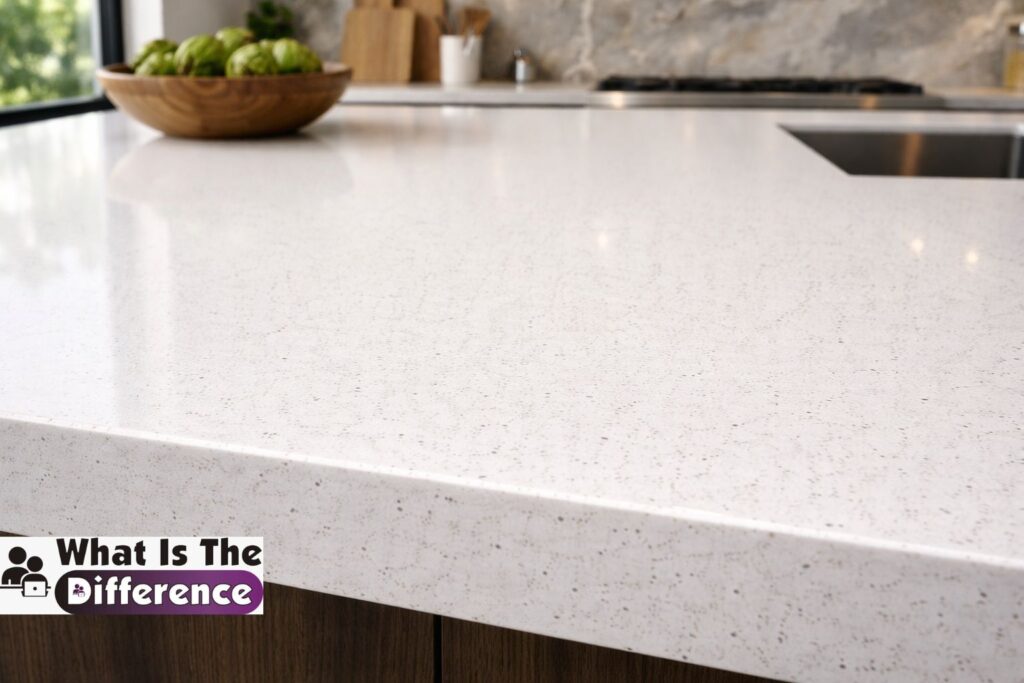
- Wide range of colors and patterns
- Uniform, consistent appearance
- Low maintenance requirements
Pros and Cons of Quartz
Pros:
- Extremely easy to clean
- No sealing required
- Highly durable and scratch-resistant
- Ideal for busy households
Cons:
- Not as heat-resistant as natural stone
- Can look less “natural” compared to stone slabs
- May discolor under prolonged UV exposure (not ideal for outdoors)
What Is Quartzite?
How Quartzite Forms
Quartzite is a natural metamorphic rock formed when sandstone undergoes intense heat and pressure over time. This process transforms it into a dense, hard stone.
Unlike quartz, quartzite is quarried directly from the earth and cut into slabs.
Key Features of Quartzite
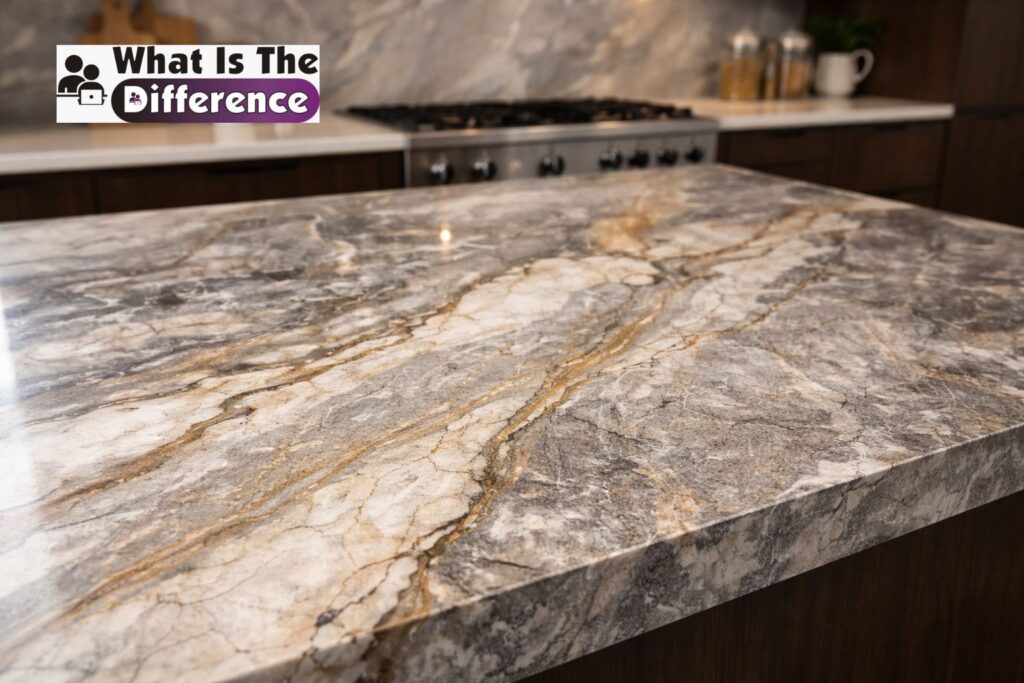
Quartzite stands out for its natural beauty and strength:
- Unique, one-of-a-kind patterns
- Marble-like appearance with higher durability
- Excellent heat resistance
- Natural stone authenticity
Pros and Cons of Quartzite
Pros:
- Extremely hard and durable
- High resistance to heat
- Luxurious, natural appearance
- Ideal for high-end designs
Cons:
- Requires sealing to prevent stains
- Higher maintenance compared to quartz
- Typically more expensive
- Limited color consistency
Difference Between Quartz and Quartzite
Understanding the difference between quartz and quartzite comes down to five key factors:
Appearance and Design
- Quartz: Offers consistent patterns and colors due to its engineered nature
- Quartzite: Features natural veining and unique patterns no two slabs are identical
If you prefer a sleek, modern look, quartz is ideal. For a natural, high-end aesthetic, quartzite is often the better choice.
Durability and Strength
Both materials are durable, but they behave differently:
- Quartz: Strong and resistant to scratches, but sensitive to heat
- Quartzite: Harder than quartz and highly heat-resistant
Quartzite is often considered one of the toughest natural stones available.
Maintenance and Care
Maintenance is where the biggest difference lies:
- Quartz:
- No sealing required
- Easy to clean with soap and water
- Quartzite:
- Needs regular sealing
- Requires more careful maintenance
If convenience matters most, quartz has the advantage.
Cost Comparison
Costs can vary based on quality and location, but generally:
- Quartz: Mid-range pricing, more predictable
- Quartzite: Often higher due to natural sourcing and installation complexity
Installation costs for quartzite may also be higher because it’s heavier and harder to work with.
Best Uses in the Home
- Quartz:
- Kitchen countertops
- Bathroom vanities
- Indoor surfaces
- Quartzite:
- High-end kitchens
- Outdoor kitchens (due to UV resistance)
- Feature walls and luxury spaces
How to Choose Between Quartz and Quartzite
Making the right choice depends on your lifestyle, design goals, and budget.
Consider Your Lifestyle
If you have a busy household with kids or frequent cooking:
- Quartz is more forgiving and easier to maintain
- Quartzite requires more care and attention
Budget Considerations
- Quartz offers a more predictable and often lower cost
- Quartzite may involve higher upfront and maintenance costs
Think beyond installation long-term care matters too.
Design Preferences
- Love clean, uniform designs? Go for quartz
- Prefer natural, organic beauty? Quartzite is unmatched
Climate and Usage Factors
- Quartz is best suited for indoor use
- Quartzite performs better in outdoor or high-heat environments
Real-Life Use Cases and Examples
Quartz for Modern Kitchens
Quartz is a favorite for contemporary kitchens. Its consistent finish pairs well with minimalist cabinets and modern appliances.
Example: A white quartz countertop with subtle veining creates a clean, bright look.
Quartzite for Luxury Spaces
Quartzite is often used in upscale homes where natural beauty is a priority.
Example: A dramatic quartzite slab with bold veining can become the centerpiece of a kitchen island.
Bathroom and Outdoor Applications
- Quartz works well in bathrooms due to its non-porous surface
- Quartzite is better for outdoor kitchens because it resists sunlight and heat
Tips and Best Practices
Maintenance Tips for Quartz
- Use mild soap and water for cleaning
- Avoid placing hot pots directly on the surface
- Use cutting boards to prevent scratches
Maintenance Tips for Quartzite
- Seal the surface regularly (usually once a year)
- Clean spills quickly to prevent staining
- Use stone-safe cleaners only
Common Mistakes to Avoid
- Confusing quartzite with marble: They may look similar, but quartzite is much harder
- Skipping sealing for quartzite: This can lead to permanent stains
- Using harsh cleaners: Especially on quartzite, this can damage the surface
Difference Between Lease and Finance Car Explained Clearly
Frequently Asked Questions
Is quartz or quartzite better for kitchen countertops?
Quartz is better for low maintenance, while quartzite is better for heat resistance and natural beauty.
Which is more expensive: quartz or quartzite?
Quartzite is usually more expensive due to its natural origin and installation complexity.
Does quartzite need sealing?
Yes, quartzite is porous and requires regular sealing to prevent stains.
Can quartz withstand heat?
Quartz is somewhat heat-resistant but can be damaged by high temperatures, so trivets are recommended.
How can I tell quartz from quartzite?
Quartz has a more uniform look, while quartzite shows natural variations and unique patterns.
Conclusion
The difference between quartz and quartzite ultimately comes down to how they’re made, how they perform, and what kind of lifestyle they suit.
- Quartz is engineered, low-maintenance, and perfect for busy homes
- Quartzite is natural, highly durable, and ideal for those who value unique beauty
There’s no one-size-fits-all answer. The right choice depends on your priorities whether that’s convenience, aesthetics, or long-term durability. By understanding these differences, you’re in a much better position to choose a material that truly fits your home and lifestyle.