
Introduction
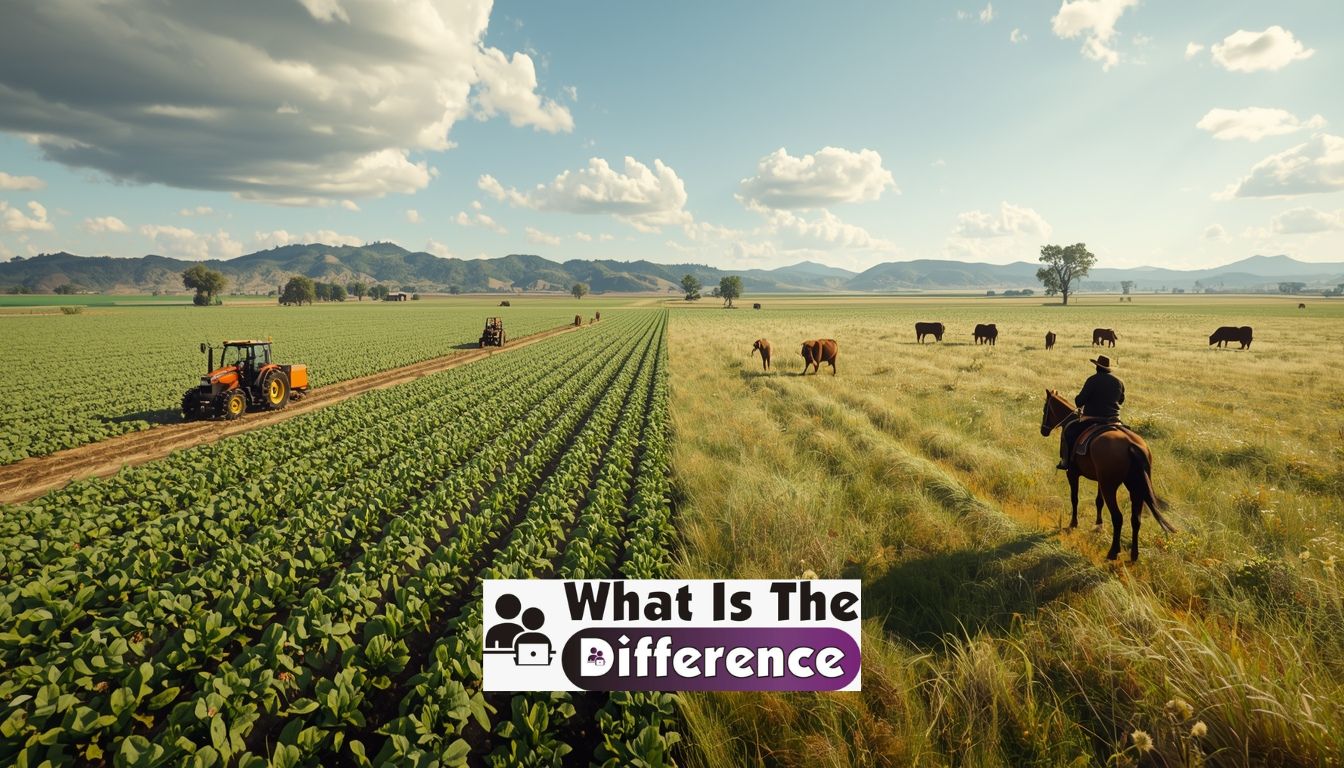
Many people use the terms ranch and farm as if they mean the same thing. At a glance, both involve land, animals, and agricultureso it’s easy to see why the confusion exists.
But in reality, there is a clear difference between ranch and farm, and understanding it can help you better appreciate how food is produced and how land is used around the world.
In this guide, we’ll break down the definitions, key differences, real-life examples, and practical insights so you can easily tell them apart.
| Feature | Ranch | Farm |
|---|---|---|
| Main Focus | Raising livestock | Growing crops and/or animals |
| Primary Purpose | Animal production | Food production (crops + animals) |
| Land Use | Open grazing land | Cultivated fields and barns |
| Typical Size | Usually large | Small to very large |
| Main Products | Meat, wool, livestock | Crops, dairy, poultry, meat |
| Daily Activities | Herding, grazing, breeding | Planting, harvesting, feeding animals |
| Machinery Use | Less machinery, more manual work | More machinery for crops |
| Animal Type | Large herds (cattle, sheep) | Mixed animals (cows, chickens, etc.) |
| Crop Production | Minimal or none | Primary or partial focus |
| Work Style | Outdoor, livestock-focused | Mixed (fieldwork + animal care) |
| Location | Common in open regions | Found worldwide |
| Flexibility | Mostly livestock-based | Can combine crops and animals |
What Is a Farm?
Simple Definition of a Farm
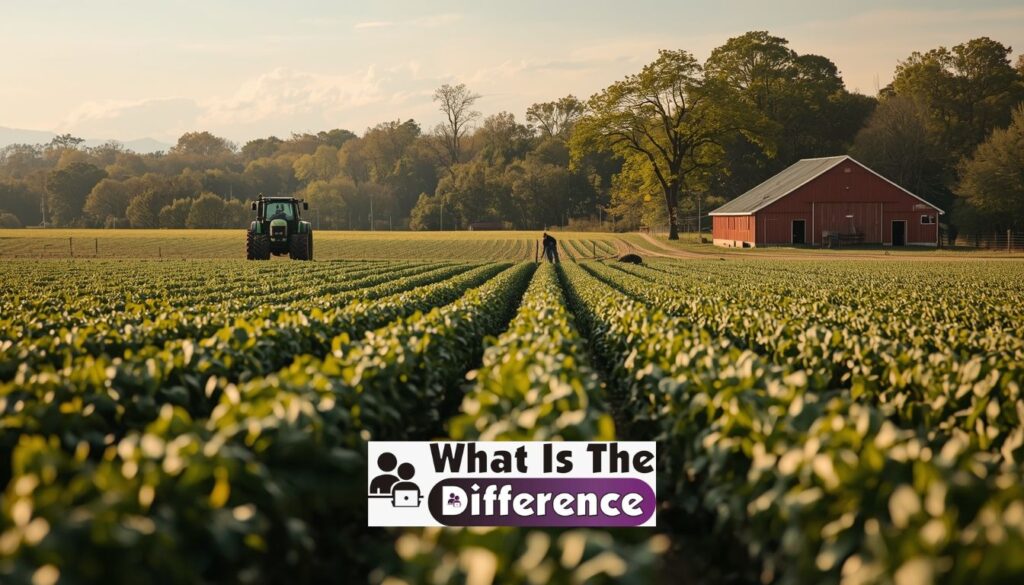
A farm is a piece of land used primarily for growing crops, raising animals, or both. The main goal of farming is food production whether that’s vegetables, grains, fruits, milk, or meat.
Farms can vary greatly in size, from small family-run plots to large commercial operations.
Types of Farms
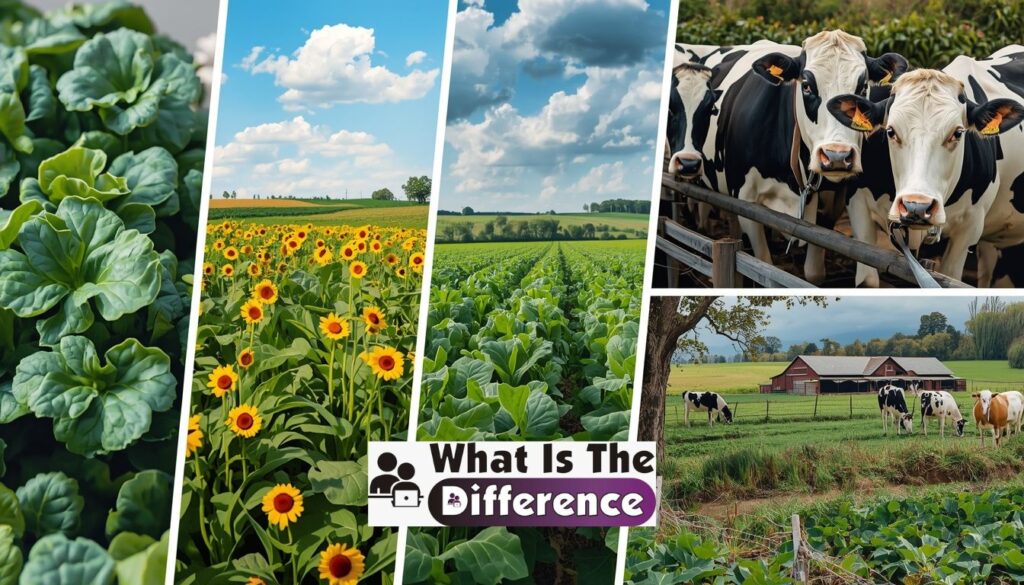
Farms are diverse and often specialize in specific areas:
- Crop farms – Focus on growing grains, vegetables, or fruits
- Dairy farms – Produce milk and related products
- Mixed farms – Combine crops and livestock
Each type serves a different purpose but shares the same core goal: producing food or raw agricultural products.
Common Activities on a Farm
Daily life on a farm depends on its type, but typically includes:
- Planting and harvesting crops
- Irrigation and soil management
- Feeding and caring for animals
- Maintaining equipment and storage
Farming often follows seasonal cycles, especially for crops.
What Is a Ranch?
Simple Definition of a Ranch
A ranch is a large area of land used mainly for raising and managing livestock, such as cattle, sheep, or horses.
Unlike farms, ranches focus less on crops and more on animal grazing and livestock production.
Types of Ranches
Ranches also come in different forms:
- Cattle ranches – The most common type
- Sheep ranches – Focused on wool and meat
- Horse ranches – Used for breeding or training horses
Some ranches may include small-scale crop production, but livestock remains the main priority.
Common Activities on a Ranch
Ranching involves a different set of daily tasks, such as:
- Managing grazing land
- Herding and monitoring livestock
- Breeding and branding animals
- Protecting animals from predators
Ranching often requires large open spaces where animals can roam freely.
Difference Between Ranch and Farm (Key Comparison)
Understanding the difference between ranch and farm becomes much easier when you compare their core features.
Purpose and Focus
- Farm: Produces crops, animals, or both
- Ranch: Focuses mainly on raising livestock
This is the most important distinction.
Land Size and Layout
- Farms: Can be small or large, often divided into fields
- Ranches: Typically larger, with wide open grazing areas
Types of Products
- Farms: Vegetables, fruits, grains, dairy, poultry
- Ranches: Meat, wool, leather, and livestock products
Daily Operations
- Farming: Involves planting, harvesting, and machinery use
- Ranching: Focuses on animal care, grazing, and herd management
Geographic Differences
Farms are found all over the world, while ranches are more common in regions with vast open land, such as the United States, Australia, and parts of South America.
For a broader definition of farming, you can refer to this overview on agriculture:
Ranch vs Farm: Which One Is Right for You?
If you’re considering agriculture as a lifestyle or business, knowing the difference can help you make better decisions.
Lifestyle Differences
- Farm life often involves structured schedules tied to planting and harvesting
- Ranch life is more focused on animal care and outdoor work across large areas
Investment and Resources Needed
- Farms require equipment like tractors, irrigation systems, and storage
- Ranches need large land areas, fencing, and livestock management tools
Skill Requirements
- Farming requires knowledge of crops, soil, and weather patterns
- Ranching demands expertise in animal behavior, breeding, and grazing systems
Choosing between the two depends on your interests, resources, and long-term goals.
Real-Life Examples of Ranches and Farms
Example of a Typical Farm
A small vegetable farm might grow tomatoes, lettuce, and carrots while also raising chickens for eggs. It uses irrigation systems and seasonal planting schedules.
Example of a Typical Ranch
A cattle ranch may span thousands of acres, where cows graze freely. Ranchers monitor their health, manage breeding, and prepare them for market.
Blended Operations
Some properties combine both approaches. For example, a farmer might grow crops while also raising cattle. In such cases, the land can function as both a farm and a ranch.
How to Tell the Difference Between Ranch and Farm
If you’re unsure whether a property is a ranch or a farm, here’s a simple guide.
Quick Identification Tips
- Look for crops: If crops dominate, it’s likely a farm
- Look for livestock: If large herds are the focus, it’s probably a ranch
Questions to Ask
- What is the primary product being produced?
- Is the land used more for growing or grazing?
Answering these questions usually makes the distinction clear.
Common Mistakes People Make
Using the Terms Interchangeably
Many people assume ranch and farm mean the same thing, but they serve different purposes.
Assuming Size Defines Everything
While ranches are often larger, size alone doesn’t determine the difference. Purpose matters more than land size.
Ignoring Regional Differences
In some regions, the terminology may vary, which adds to the confusion.
Why Understanding the Difference Matters
Knowing the difference between ranch and farm isn’t just about terminologyit has practical value.
- It helps in making informed business decisions
- It improves understanding of agriculture and food systems
- It allows better communication in real estate or land use discussions
For anyone interested in agriculture, this distinction is essential.
Frequently Asked Questions (FAQ)
Is a ranch considered a farm?
Yes, a ranch can be considered a type of farm, but it specifically focuses on livestock rather than crops.
What animals are usually found on a ranch?
Common animals include cattle, sheep, goats, and horses.
Can a farm also be a ranch?
Yes, some properties combine both crop production and livestock, making them both a farm and a ranch.
Which is more profitable: ranch or farm?
Profitability depends on factors like location, market demand, and management. Both can be profitable if run efficiently.
Are ranches always larger than farms?
Not always, but ranches are generally larger due to the need for grazing land.
Conclusion
The difference between ranch and farm comes down to one simple idea:
- Farms focus on crops (and sometimes animals)
- Ranches focus mainly on livestock
While they may overlap in some cases, their purpose, operations, and land use set them apart.
Understanding this distinction makes it easier to navigate agriculture, whether you’re exploring it as a career, investment, or simply out of curiosity.