
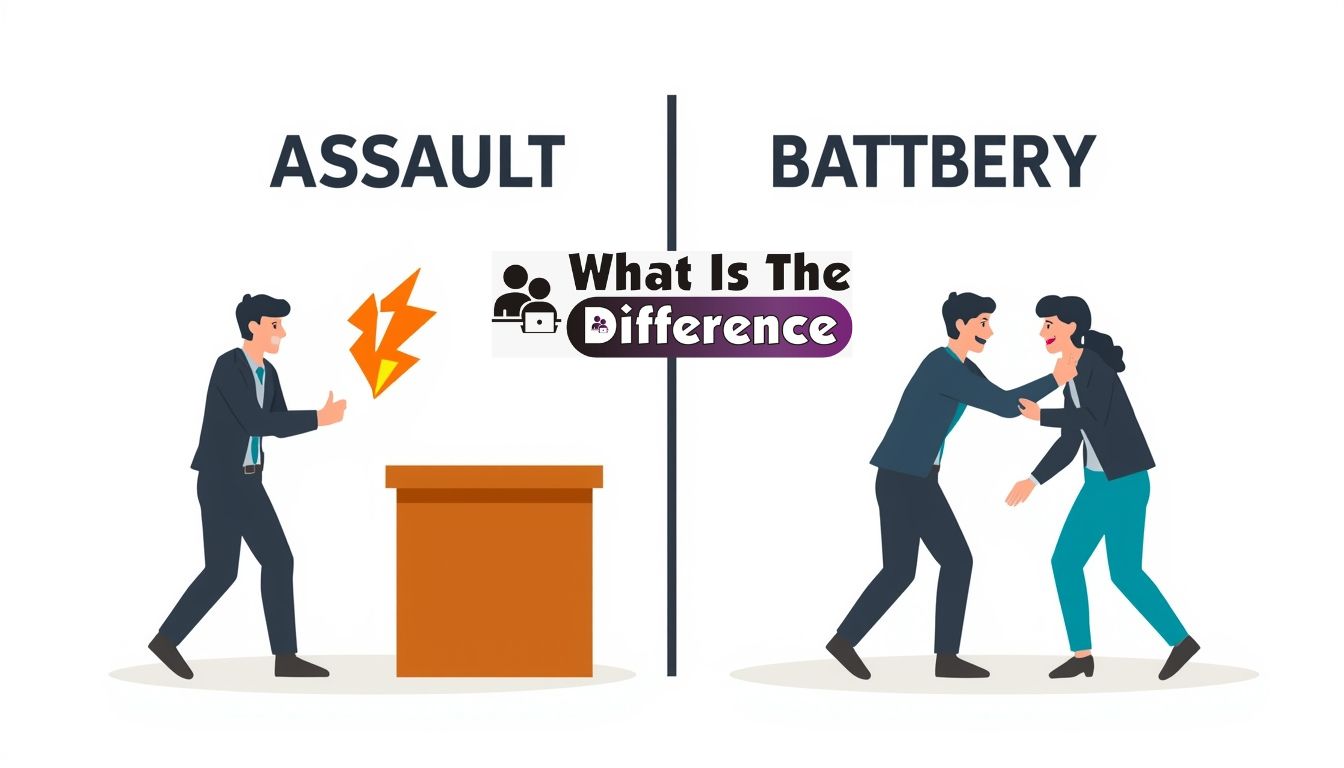
Many people use the words assault and battery as if they mean the same thing. In everyday conversation, phrases like “assault and battery” are common, especially in movies, news reports, or casual discussion. However, in legal terms, these words have specific meanings and describe different types of criminal behavior.
Understanding what is the difference between assault and battery is important because the law treats these offenses separately. Each charge has its own legal elements, requirements, and consequences. While both crimes involve harm or the threat of harm to another person, they occur in different ways.
In simple terms, assault generally involves the threat or attempt to cause harm, while battery involves actual physical contact that is harmful or offensive.
Although the two offenses often happen together in real situations, they remain legally distinct concepts. This article explains the definitions, examples, legal principles, and penalties related to these crimes so readers can clearly understand what is the difference between assault and battery and why the distinction matters in criminal law.
BIO
| Feature | Assault | Battery |
|---|---|---|
| Basic Meaning | Threat or attempt to cause harm | Actual physical harm or contact |
| Physical Contact | Not required | Required |
| Main Element | Creates fear of immediate harm | Intentional harmful touching |
| Nature of Act | Threatening behavior | Physical action |
| Timing | Happens before contact | Happens when contact occurs |
| Example | Raising a fist to threaten someone | Punching or pushing someone |
| Victim’s Experience | Fear or anticipation of harm | Physical impact or injury |
| Legal Focus | Threat of violence | Use of force |
| Proof Required | Evidence of fear or threat | Evidence of physical contact |
| Injury Requirement | Injury not necessary | May or may not cause injury |
| Possibility Together | Can occur alone | Can occur after assault |
| Legal Classification | Criminal threat offense | Physical violence offense |
Understanding the Legal Meaning of Assault
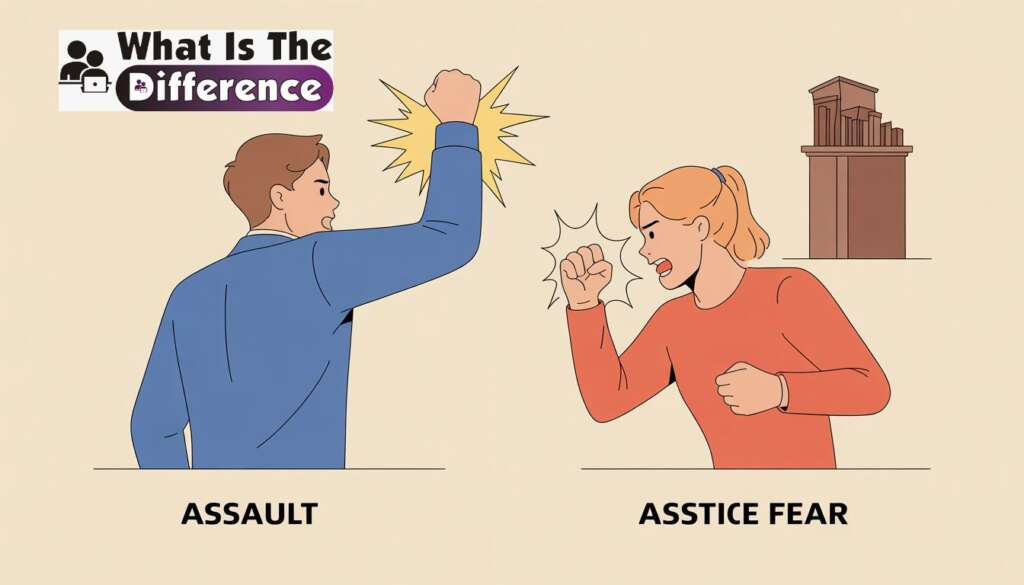
In criminal law, assault refers to an action that causes another person to reasonably fear imminent harm or offensive physical contact. This means a person can commit assault even if no physical injury occurs.
The key element of assault is the creation of fear or apprehension of immediate harm. If someone threatens another person in a way that makes them believe an attack is about to occur, the act may qualify as assault.
For example, imagine someone raising a fist and threatening to strike another person. Even if the punch never lands, the threatening act alone may still be considered assault under many legal systems.
Intent and Threat
One of the most important components of assault is intent. The individual must intentionally act in a way that causes another person to fear harm. If someone accidentally frightens another person without intending to threaten them, it typically does not meet the legal definition of assault.
Assault also usually requires an immediate threat of violence. A vague or distant threat may not qualify as assault unless the situation makes the danger appear immediate and realistic.
Examples of Assault
Some common examples that may be considered assault include:
- Threatening someone while raising a weapon
- Swinging a fist at someone but missing
- Making threatening gestures that suggest an attack is about to occur
In these situations, the victim experiences a reasonable fear of imminent harm, even though physical contact may never occur.
Understanding the Legal Meaning of Battery
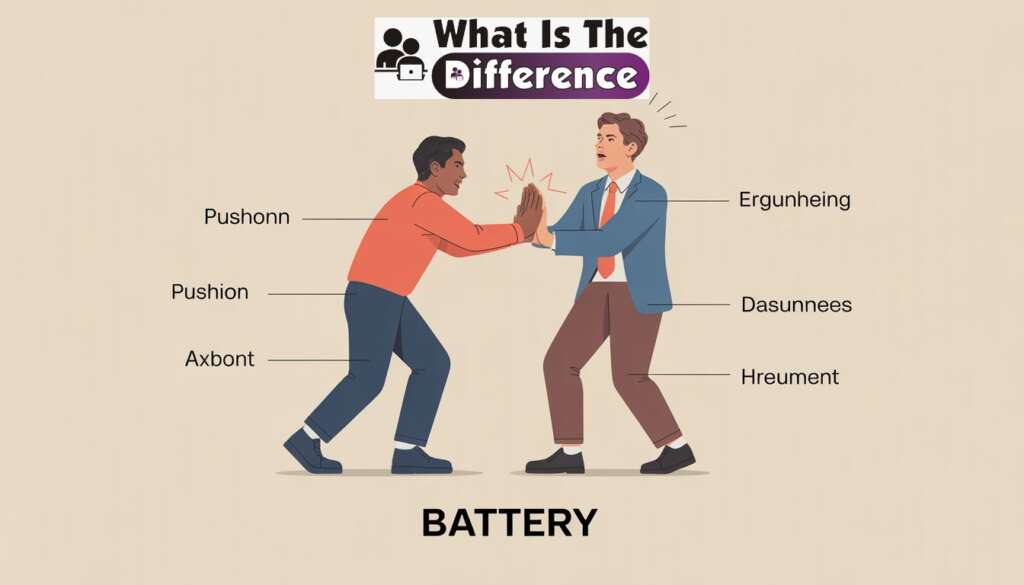
While assault focuses on the threat of harm, battery refers to the actual physical act of harming or touching another person without consent.
Battery involves the intentional application of force that is harmful or offensive. The contact does not always need to cause serious injury; even minor unwanted touching can sometimes qualify as battery under the law.
The central element of battery is physical contact. Without that contact, a charge of battery generally cannot exist.
Intentional Contact
To prove battery, prosecutors must show that the accused person intentionally made physical contact with another person and that the contact was harmful or offensive.
For example, if someone punches another person during a fight, that act clearly qualifies as battery. However, if someone accidentally bumps into another person in a crowded place, it would not usually count as battery because there was no intent to cause harm.
Examples of Battery
Common situations that may qualify as battery include:
- Punching or slapping someone
- Pushing another person during an argument
- Throwing an object that hits another person
- Unwanted physical touching that causes offense or harm
These actions involve direct or indirect physical contact, which distinguishes them from assault.
What Is the Difference Between Assault and Battery
To fully understand what is the difference between assault and battery, it helps to compare their essential elements.
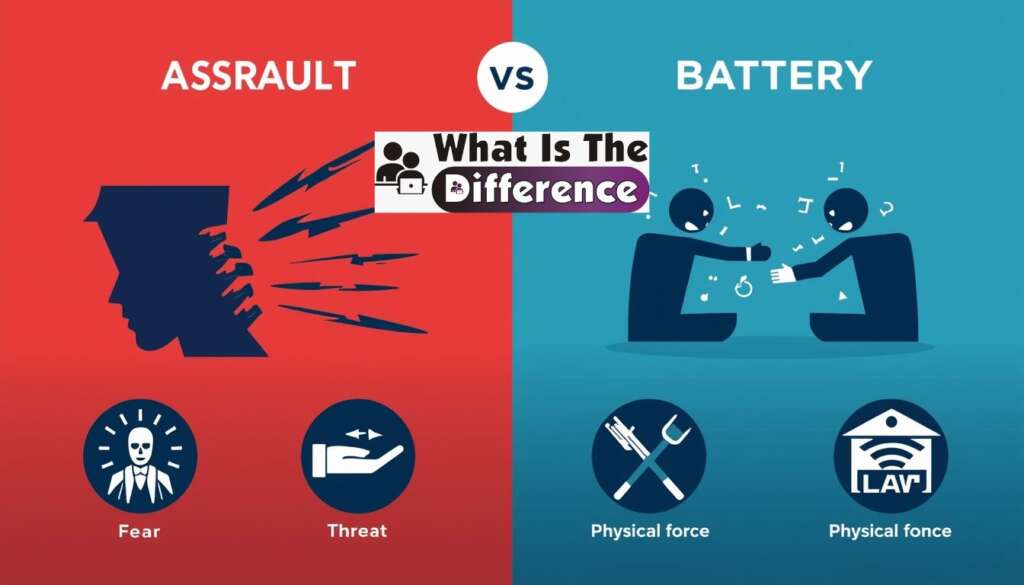
The main difference lies in the presence of physical contact. Assault occurs when a person threatens or attempts to harm someone in a way that creates fear of immediate violence. Battery occurs when that threat becomes reality and the person actually makes harmful or offensive physical contact.
In other words, assault is about fear or anticipation of harm, while battery is about the actual act of harm.
Another way to think about it is that assault often happens before battery. If someone threatens to punch another person, that threat may constitute assault. If the punch is actually delivered, the act becomes battery.
Legal scholars sometimes describe battery as the completion of assault, because the threatened harm has finally taken place.
However, it is also possible for one offense to occur without the other. For example:
- A person could commit assault by threatening someone without ever touching them.
- A person could commit battery by striking someone from behind without any warning.
These situations show why the law distinguishes between the two crimes.
Situations Where Assault and Battery Occur Together
Although assault and battery are separate offenses, they often occur in the same incident.
Consider a scenario where one person raises their fist and threatens another person before punching them. In this situation:
- The threatening gesture creates fear, which constitutes assault.
- The physical punch creates harmful contact, which constitutes battery.
Because both elements are present, prosecutors may charge the offender with both crimes.
This overlap is one reason the terms are frequently used together in everyday language. However, legally speaking, the crimes remain distinct.
Legal Penalties for Assault and Battery
The penalties for assault and battery vary widely depending on the jurisdiction and the severity of the offense. In many legal systems, both crimes can be charged as either misdemeanors or felonies depending on the circumstances.
Penalties for Assault
Simple assault charges often involve situations where the threat of violence occurred but no serious injury resulted. Possible penalties may include:
- Fines
- Probation
- Short jail sentences
- Community service
More serious cases, such as assault with a weapon, can lead to harsher punishments.
Penalties for Battery
Battery charges often carry stronger penalties because they involve actual physical contact and potential injury.
Punishments may include:
- Higher fines
- Longer jail or prison sentences
- Mandatory anger management programs
If the battery results in serious injury, the crime may be classified as aggravated battery, which carries even more severe penalties.
Aggravated Offenses
Many legal systems also recognize aggravated forms of assault or battery. These occur when additional factors are present, such as:
- Use of a weapon
- Serious bodily injury
- Attacks on vulnerable victims
Aggravated charges often result in felony convictions and significant prison time.
Civil and Criminal Consequences
Assault and battery are not only criminal offenses; they can also lead to civil lawsuits.
In criminal cases, the government prosecutes the accused person for violating the law. If convicted, the offender may face jail time, fines, or probation.
In civil cases, the victim can sue the offender for damages related to the harm they suffered. These damages may include:
- Medical expenses
- Emotional distress
- Lost income
- Pain and suffering
Civil lawsuits allow victims to seek compensation for the harm caused by the offense.
Why Understanding the Difference Matters
Knowing what is the difference between assault and battery is important for several reasons.
First, it helps people understand their legal rights and responsibilities. Many individuals misunderstand the law and assume physical injury must occur for assault to exist, which is not always true.
Second, this distinction is essential for law students, legal professionals, and anyone interested in criminal justice. Assault and battery are fundamental topics in criminal law and frequently appear in legal cases.
Finally, understanding these concepts helps clarify news reports and public discussions about violent crimes. When people know the difference, they can better interpret how the law applies in specific situations.
Common Misconceptions About Assault and Battery
Because of the way these terms are used in everyday language, several misconceptions often arise.
One common misunderstanding is that assault always involves physical contact. In reality, assault can occur without any physical touching if the victim reasonably fears immediate harm.
Another misconception is that battery requires serious injury. In fact, battery can occur even if the physical contact causes only minor harm or offense.
People also often believe that assault and battery are always charged together. While they frequently occur in the same incident, they can also occur separately depending on the circumstances.
Clarifying these misconceptions helps people better understand how criminal law defines and treats these offenses.
Conclusion
The question what is the difference between assault and battery is an important one in criminal law. Although the terms are often used interchangeably in everyday conversation, they describe two different legal concepts.
Assault refers to actions that create a reasonable fear of immediate harm or offensive contact. Battery refers to the actual physical contact that causes harm or offense.
While these crimes often occur together in real-life situations, the law treats them as distinct offenses with separate elements and consequences.
Understanding the difference between assault and battery helps individuals better grasp how the legal system addresses threats, violence, and personal safety. By recognizing how these crimes are defined, people can gain a clearer perspective on the principles that guide criminal law and protect individuals from harm.
What Is the Difference Between Mass and Weight? The Concept Explained Clearly
FAQs
1. What is the difference between assault and battery in simple terms?
The main difference is that assault involves the threat or fear of immediate harm, while battery involves actual physical contact. A person can commit assault without touching someone, but battery requires intentional physical contact.
2. Can someone be charged with assault without physical contact?
Yes. In many legal systems, assault occurs when a person intentionally creates a reasonable fear of harm. For example, threatening someone with a raised fist or weapon can be considered assault even if no physical contact happens.
3. Can assault and battery happen at the same time?
Yes, both crimes often occur together. If someone threatens another person and then hits them, the threat may qualify as assault and the physical strike may qualify as battery.
4. Is battery always a more serious crime than assault?
Not always, but battery often carries stronger penalties because it involves actual physical contact. The seriousness of both offenses usually depends on factors such as injury, use of weapons, or the circumstances of the incident.
5. What is aggravated assault or aggravated battery?
Aggravated offenses occur when the crime involves more serious factors, such as the use of a weapon, serious injury, or attacks on vulnerable victims. These charges usually lead to more severe legal penalties.